Happy Tanabata!

Tanabata (July seventh, in Japan) is a holiday that originated in China (long, long ago!) and now is also celebrated in other Asian countries like Japan. In Japan, people hang their wishes on branches of bamboo. (Bamboo is plentiful in Japan.)
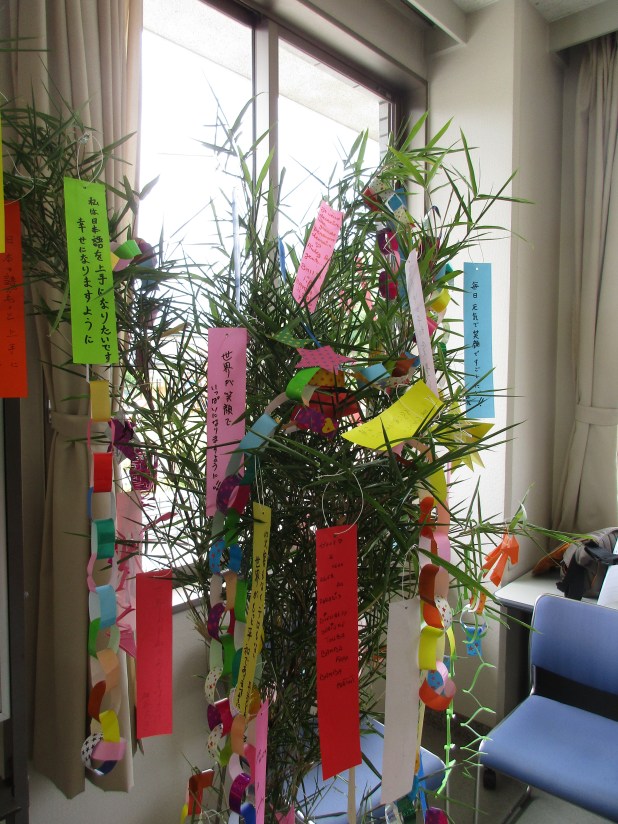
The photo above is from last year. Every year my Friday Japanese teachers organize a Tanabata celebration. ありがとう、せんせい!

Thank you to my teachers.
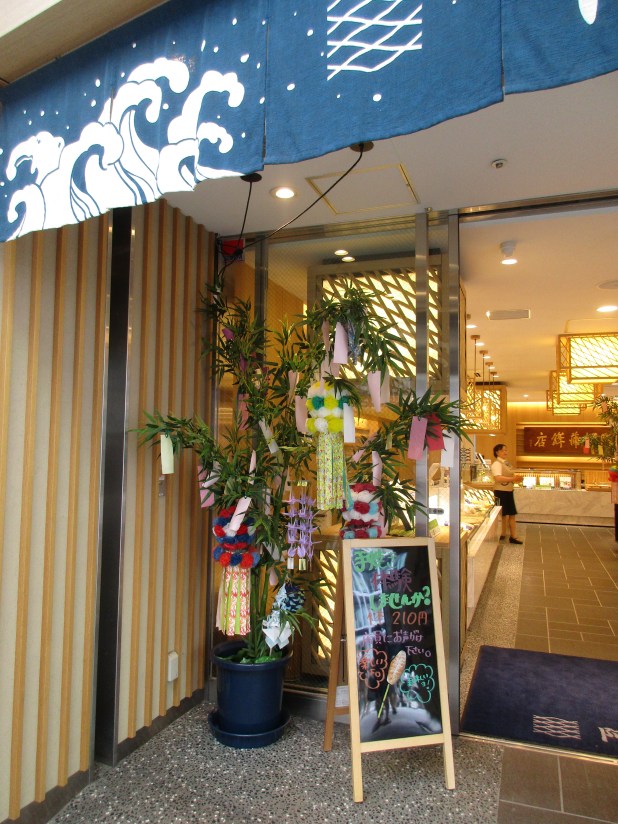
The photo above was taken last year in Sendai City. Sendai holds a huge Tanabata festival every summer–but it is in August. Why is it in August and not July?

REASON:

Years ago, Japan used a different calendar system and Tanabata fell in August.  In the 1800’s, Japan switched over to the western calendar, and thus many holidays (like January first–New Year’s Day and July seventh–Tanabata) were changed to correspond with the western calendar. However, many people will still use the old calendar, thus making the holidays approximately a month later.

(This is also the reason why Chinese people celebrate their New Year Festival some time in February, but Japanese people celebrate it January first.)

This is Fukushima City train station.

The above photo is from years ago in Comu Comu, a place for kids in Fukushima City.


Tanabata is a fun festival because we can write down whatever we want! The wish can be selfish, silly, or philanthropic. You can sign your name, but you don’t have to.

We can read the wishes that are on the branches if they are in public locations. Some wishes will make you cry!  And many are by children and quite funny.

What am I wishing for this summer?

My philanthropic wish: I wish for world happiness.

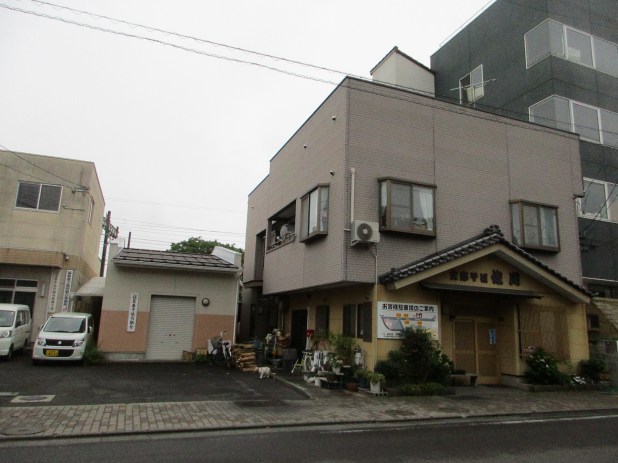
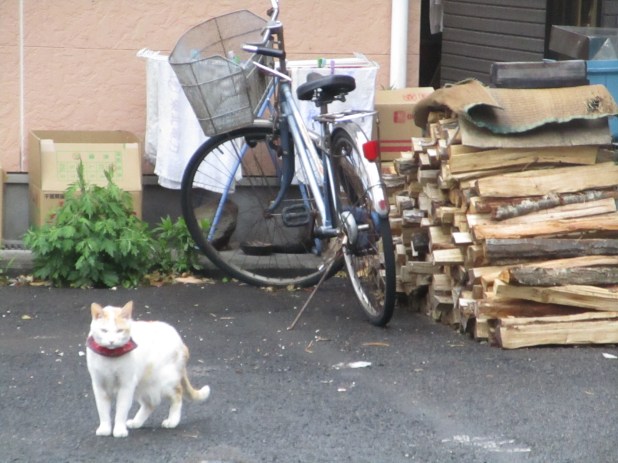
My silly wish: I wish that the stray cat that hangs around our house would let me touch her! (Instead of staying always at a distance.)

My selfish wish: I want to get my manuscript published!
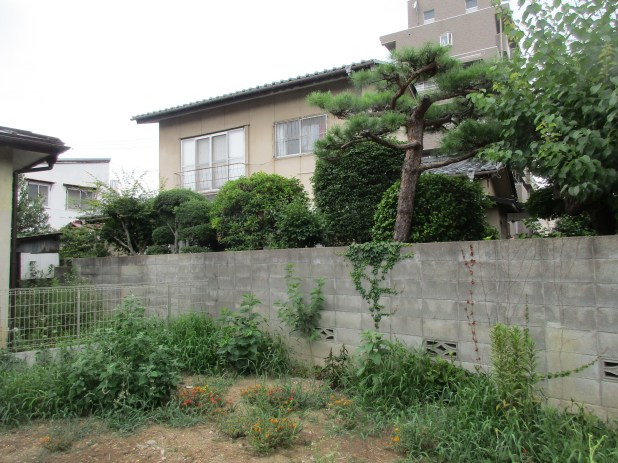
Cement Walls in Fukushima City

Yesterday I posted about a cement wall that fell on a girl during a recent earthquake in the Osaka area, killing her. (The wall was not constructed using modern safety standards, and therefore was inherently unsafe. It stood much taller than the walls in the following photos.)

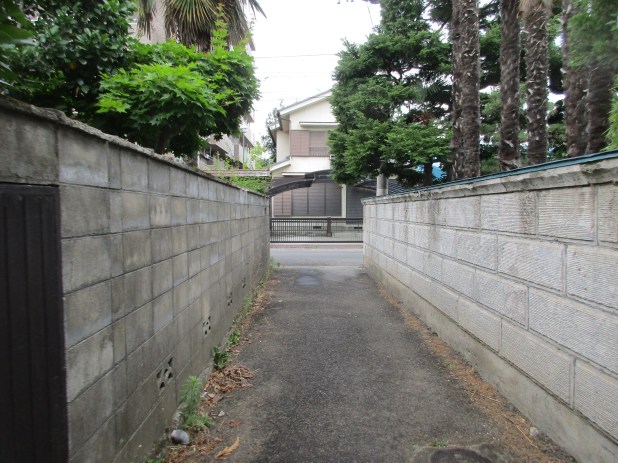
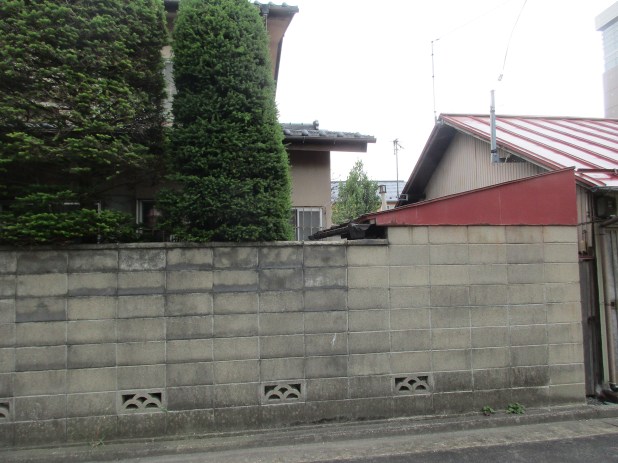
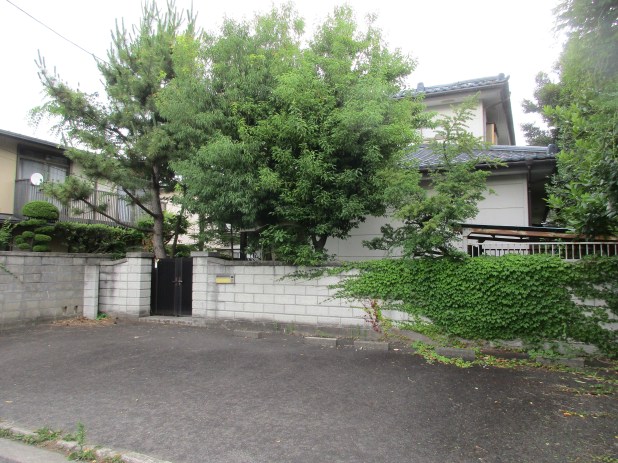
If you come from an area that doesn’t have a lot of cement walls, you might not understand why there was a cement wall along her walking path. It is common in many areas of Japan to use cement walls to separate boundaries. Yesterday after writing the post, I rode my bike to a shopping center. These are walls near my home, which is located in the downtown area. There are LOTS more walls than this. My neighborhood has many cement walls.

Constructions such as these (as well as trees, powerlines, heavy roof shingles, and so on) are why it is considered safer to stay inside during a heavy quake than to head outside.

Just outside my home.

The path leading to the street.

Out on the street where cars drive.

More walls…

And more….


There are so very many walls in my neighborhood, it’s impossible for me to take a photos of them all! So, of course stay away from walls (and other heavy structures that may fall on you) during an earthquake.

June 18 quake in Osaka area

This news is slightly old now, although I guess it’s not because it’s now the beginning of July, so that means it’s only two weeks old. I wanted to discuss it earlier, but didn’t have the time.

There was an earthquake north of Osaka on June 18, 2018. Here is a link:

https://www.cbsnews.com/news/japan-earthquake-osaka-today-2018-06-17/

It was a 6.1 quake. Being so far south of me, it did not affect the me or the Fukushima area at all.

Still, 6.1 is a very big quake. Modern buildings and constructions here are supposed to be constructed to withstand intense shaking. The best technology is used.

However….  sometimes construction is NOT quake-proof. A nine-year-old girl was killed during the quake on June 18 when a tall and heavy cement wall collapsed onto the top of her. I’ve heard that that wall was NOT up to industry standards.

https://mainichi.jp/english/articles/20180620/p2a/00m/0na/016000c

From the above editorial from the Daily Mainichi: the wall was “well above the height allowable under the Building Standards Act. No efforts were made to bring the wall up to code. ” So basically something was awry here.

Anyway, we in Japan are told it is safer to remain indoors (generally speaking) than to go outside, due to items that may fall on a person outdoors.

I feel so sorry for the girl who was killed and hope that architects, builders and the people who approve structures all stay honest and do their jobs well in the future.

Rainy Day Dolls

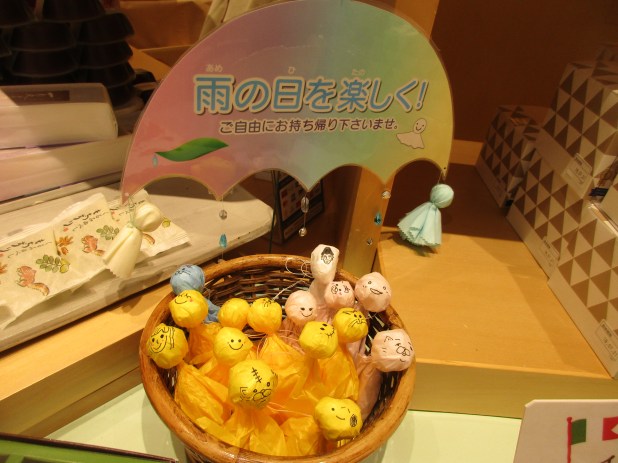
I was shopping and I saw this basket of……  Do you know what they are?

If you don’t know, can you guess?

Look at the sign above the basket. It is in the shape of an umbrella. It says:

雨の日を楽しく

Ame no hi o tanoshiku.

Enjoy rainy days.

(Below that, it says “Go ahead and feel free to take one.)

Those dolls are part of traditional Japanese culture. They are called Teru Teru Bozu.

When it looks like rain, people (often children) make these dolls and hang them up. This is to hopefully keep the rain away.

If an outing is planned for the following day, for example, a child might make them in hopes that the outing won’t be cancelled.

Currently, it is June, so that is considered the rainy season in Japan. It doesn’t rain constantly, but it rains quite a bit. In July, the rainy season is said to end and the days get hotter and sunnier.

So in Japan, the symbols of June are often “rain” or “hydrangeas” or “teru teru bozu” and so on.


When I wrote my manuscript about Fukushima, I wrote the basic story first. Then I divided it into a trilogy and added more.

In the the second (as yet unpublished) book in the trilogy, I write about the custom of “teru teru bozu.”

“If you make the teru teru bozu and hang them up, it’ll stop for sure,” said Baba Flap. “It always works. It may take a day or two or three, sometimes even four or five, but it eventually works.”

Melons

In the summer (and also winter), Japanese people have a tradition of giving, and receiving, gifts.

When I first came to Japan, during the last century in the days of rotary phones, and automobiles with no GPS, and airport security so lax you could get a parade of elephants through it, and–what else?  Oh, there were no self-check-out lanes at grocery stores. We used videocassettes instead of DVD’s and now we don’t even use DVD’s much any more.

Back then, Americans didn’t know anything about Japan except that we had fought a war with them. And that they were keen businesspeople. (Seriously. Manga and anime did not exist in mainstream America at all.)

Anyway, in those days, I worked in a small rural town in Chiba Prefecture. If you fly into the New Tokyo International Airport, and look down as you are landing, you’ll see it. It’s the one with the goat living behind its Town Hall.

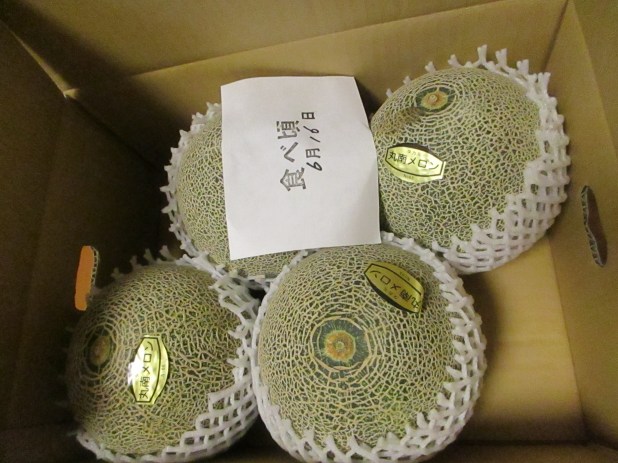
My boss there was a woman named Ms. Sase, and she was/is very kind. She sent us these melons as our summer present! Wow! So nice!!!!!

In America, we call them honeydew melons. (I think.) In the Japanese language, they are just called メロンMeron (Melon.)

A sweet older woman lives near me. Mrs. H. owns a dog named Melon!!!!!!!!! I gave her one of the melons.

Melon is a very elderly dog with failing health.  She has no vision, but you can tell by the photograph that she was so happy to smell me!

“Nice to sniff you!”

“Nice to sniff you, too. Hope you have an aromatic day.”

At Doiaidate Park in Matsukawa


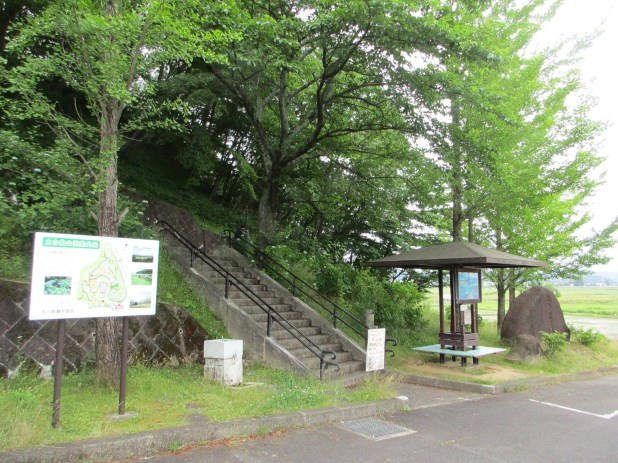
The front entrance of Doiaidate Park in Matsukawa. It is famous for its hydrangea flowers in June and July.

map of the park itself.

I talked to the man taking photos. We agreed it was too early yet in the season–later the hydrangeas would be at their best.

I said I wanted to come to the park before it got too hot. (And indeed today, six days later, the weather is many degrees warmer. So I’m glad I went when it wasn’t hot yet.)

It was quite early in the day–about nine a.m.–and he said that after Matsukawa’s park he was going to drive to Nihonmatsu’s hydrangea park and take photos there, too. I told him that after this I would return to Fukushima City by train and clean my house!

THE SLIDE

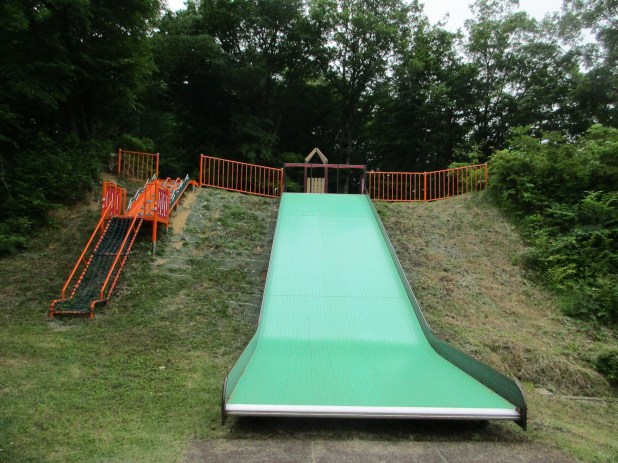
A few years ago, I visited this park by myself and was astounded by the intense beauty of its hydrangeas. (It was the perfect time for them, not too early and not too late.) So then I took my son because I wanted him to see them. Anyway, we were goofing around in this play area inside the park. As you can see–the slide is VERY wide! I slid down from its top, sitting in its center. Well, it was wet (from previous night’s rain) and I had nothing to stop myself. The rails were too far for me to reach. I slid way, way too fast and landed on my bottom very hard! It hurt, and hurt about a year. (Mostly when I was sitting down.) I even went to a doctor who X-rayed it, and said nothing was broken.
I learned my lesson! Do not go down wide slides like this where you can not control your speed. Luckily, my rear end has healed completely, but it ached for about a year!
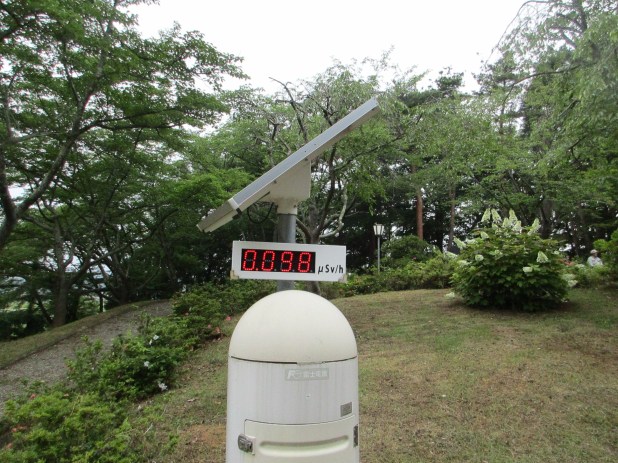
The droid (actually a radiation detector, which I have discussed in previous posts. They are at virtually every park here in Fukushima.)

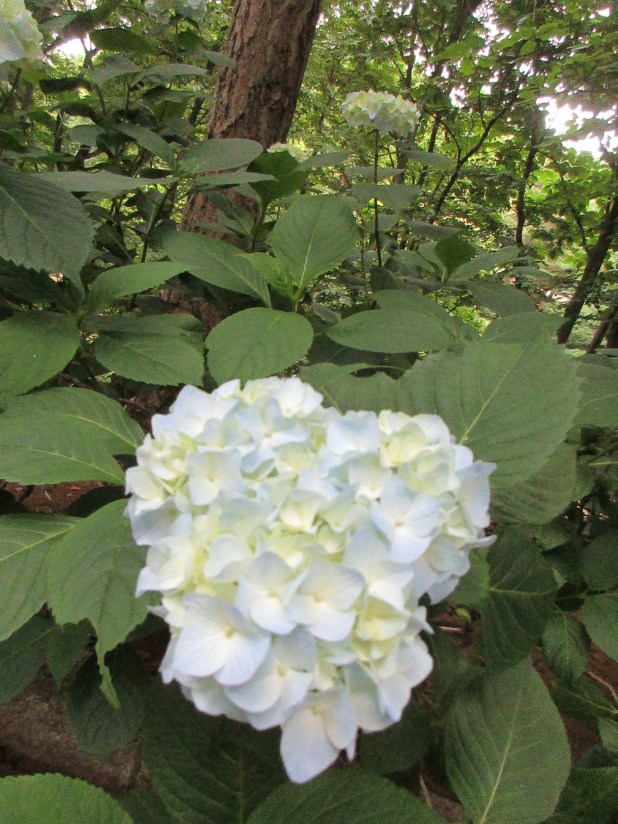
See the hydrangeas.

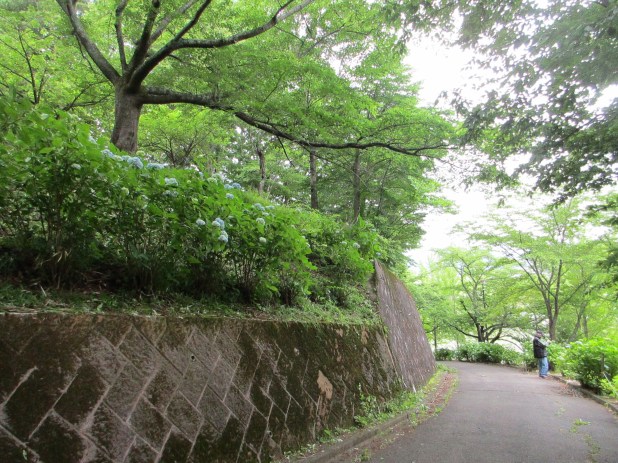
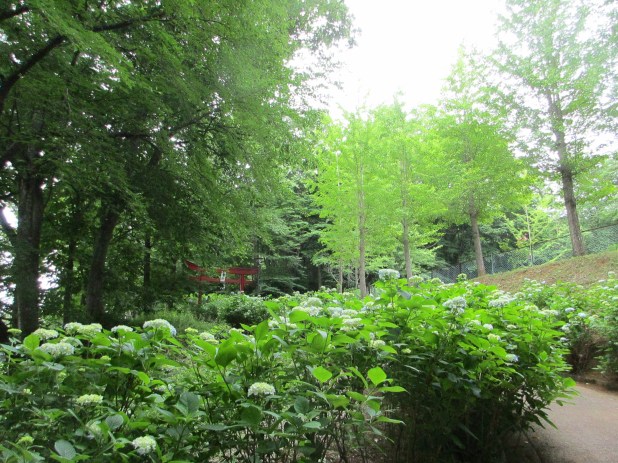
Hydrangea path. They were a very light blue, I remember them being deeper blue.

Close up.

A small cemetary? I’m not really sure. It’s probably very, very old, though. (very!)

Several gardeners were working on the park. A beautiful park like this doesn’t happen by magic!

View from the back of the park

I left the park through the back exit, as it was closer to the train station.

Goodbye park!

Walking back the train station. It’s a short walk–ten minutes? Unless you dawdle like me.

lovely, lovely

That mountain (hill?) is the park area.

I thought this tree was interesting.

defunct cigarette vending machines

map of my area

At this point, I was on the main road (yellow line) at the red box (which says in Japanese “You are here.” Well, not literally. Literally it says: Current Location.) The station is the box to the right with the word eki 駅.

Eki is the Japanese word for “train station.”

Kokeshi dolls in a home’s window

I’m back at the station now, inside it and waiting for my train.

The trains go either south toward Koriyama or north towards Fukushima City. They are local, of course. I think if you miss one you have to wait about forty minutes for the next one? (But the schedule varies.)

Goodbye, Matsukawa!

Walk to Doiaidate Park in Matsukawa (Part 2)

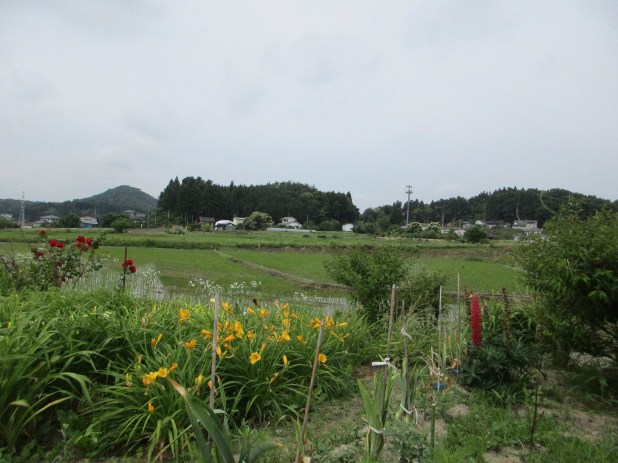
Here I am, taking a long cut along the rice paddies.

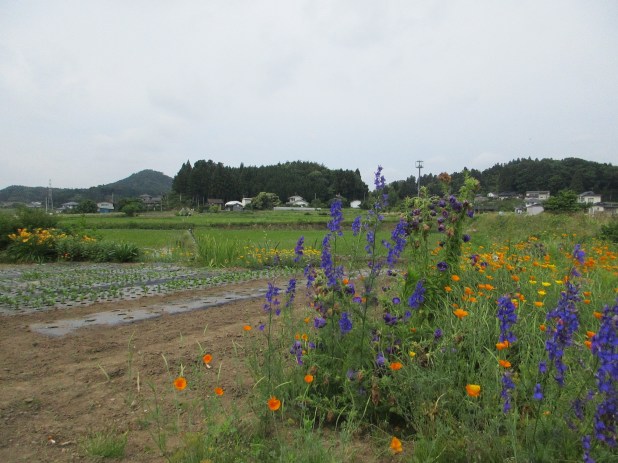
Don’t let it fool you that I live in Fukushima “City.” Fukushima Prefecture is really very rural, and also very mountainous. A lot of it is not inhabited by people because it is too mountainous.

Neat and even rows of growing rice.

You may have seen photos of terraced rice fields in Asia (on sides of mountains) but that’s not something I’ve ever seen here in Tohoku.

Farmers working outside.

Their crop

We can see the mountain I am headed toward, off to the right. I was walking around the back way.

More fields.

Currently all rice in grown Fukushima Prefecture is tested for radiation. Samples of other produce are checked.

From what I hear, the levels of the rice and other produce are at safe levels. No problem.

A little pond

Now I have circled round to the other side of the park on the hill. I’m in front of the front entrance of Doiaidate Park, facing away from it.

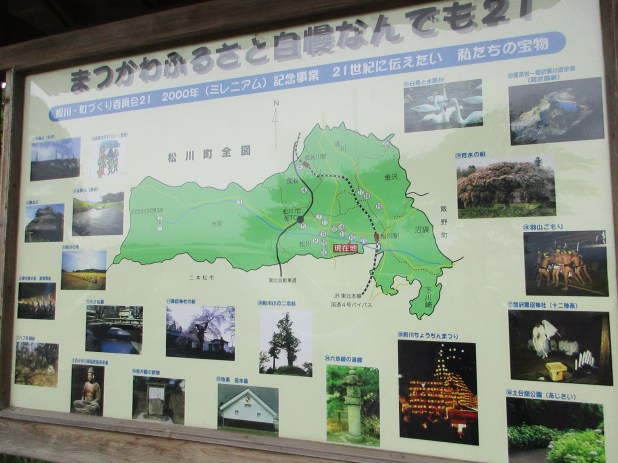
A map of the Matsukawa area. Doiaidate Park is bottom right.


Next I’ll show photos of the park itself. See you then!

Walk to Doiaidate Park in Matsukawa to see hydrangeas (Part 1)

This outing is picture heavy so I’m posting it in parts. Today I’ll show the first half of my walk to Doiaidate park in Matsukawa.

First I travelled by train to Matsukawa Station, three stops south of Fukushima Station.

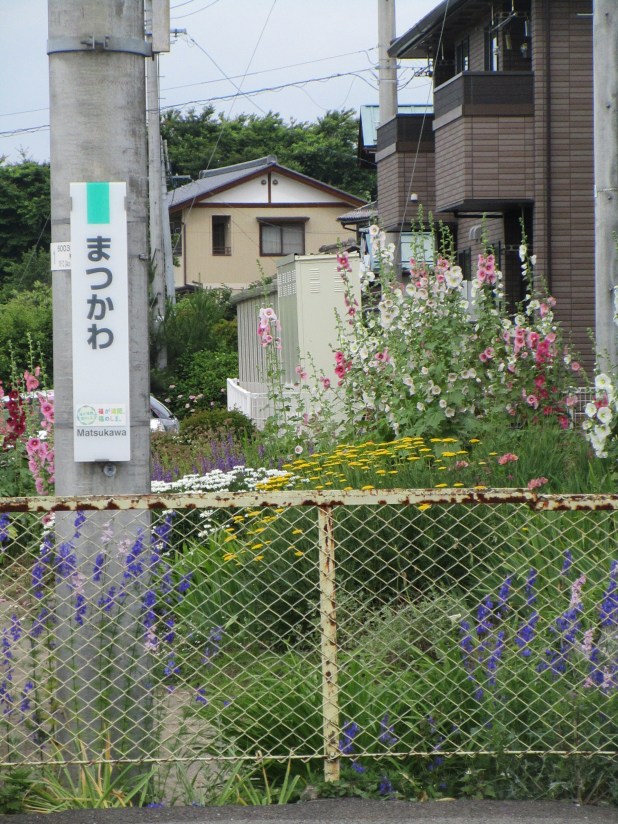
The sign in the photo is written from top to bottom.

ま Ma

つ Tsu

か  Ka

わ Wa

There is a map of tourist spots around Matsukawa. The one I’m going to (Doiaidate Park) is bottom, second from left.

I’m old school, so I don’t use a phone for directions EVER. I just use old-fashioned maps and then sort of guess and ask people if I’m in the right direction.

First I crossed the pedestrian bridge to reach the other side of the train station.

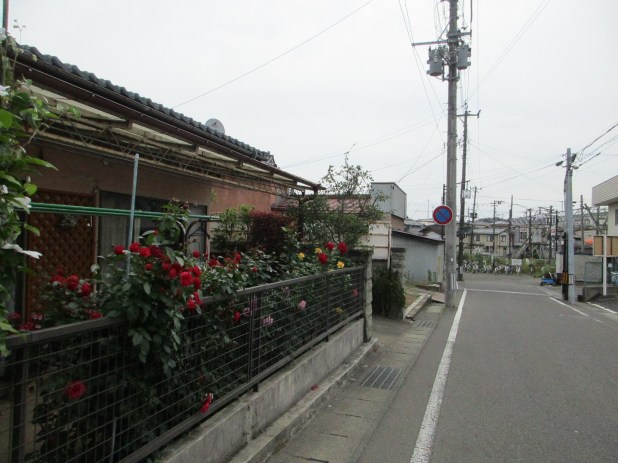
Some flowers along the way…

Not the park.

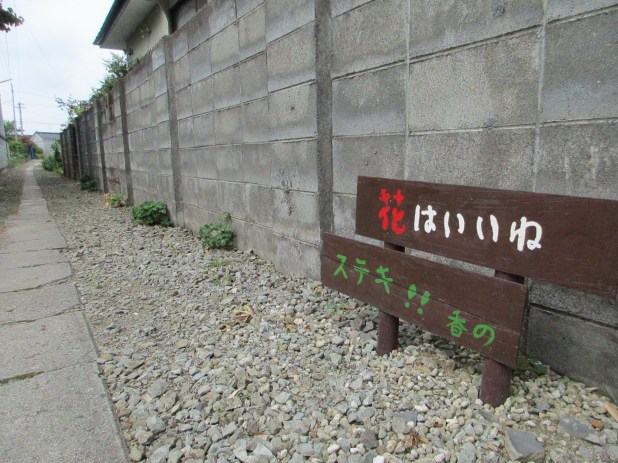
But I saw a sign that says,”Nice flowers. Great smell!”

So I took this path to see their flowers.

Their garden…it’s gorgeous.


The same garden….

Back on the main road, I took a photo of this sign. There will be a festival in Doiaidate Park from June 30 to July 1.

(That’s a kappa, a mythological creature which was shown in my last post. It was in the form of a statue.)

I stepped off the main road here, just to take a long cut and experience the charm of life in the countryside (rather than walk along the street next to passing cars and busses.)

Charming house!

Okay, next will be part two.  See you then!

Shinobu Yama (Mt. Shinobu) in Fukushima City

Last Saturday I walked up (a short ways) Mt. Shinobu. I love Mt. Shinobu. It’s very close to my home so I write about it on this blog frequently.

What do we see? And what is being seen by it?

A mountain cat

Another mountain cat

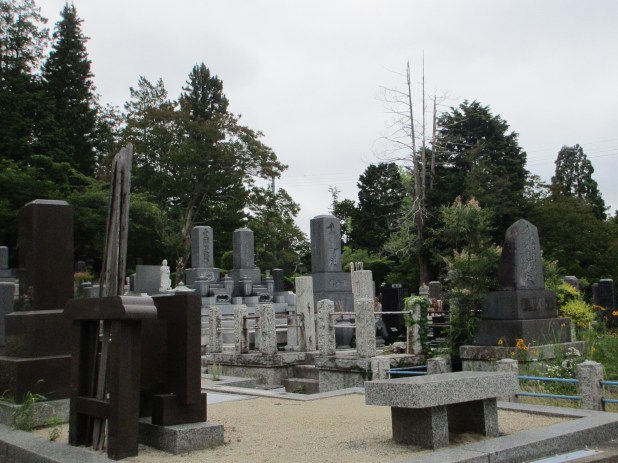
I came across a cemetary on the side of Mt. Shinobu.

Near the cemetary, there is a shop which sells stone sculpted objects…obviously to be put in the cemetary.

One of its statues: a kappa

More statues at the shop

a house

very pretty

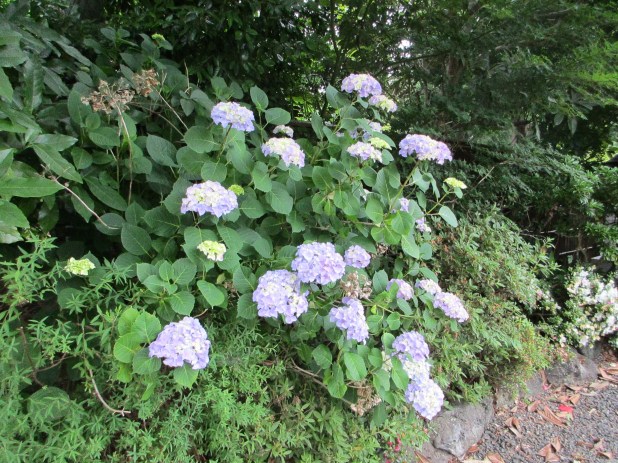
hydrangea…June is the hydrangea season in Fukushima

Fukushima City Kitties

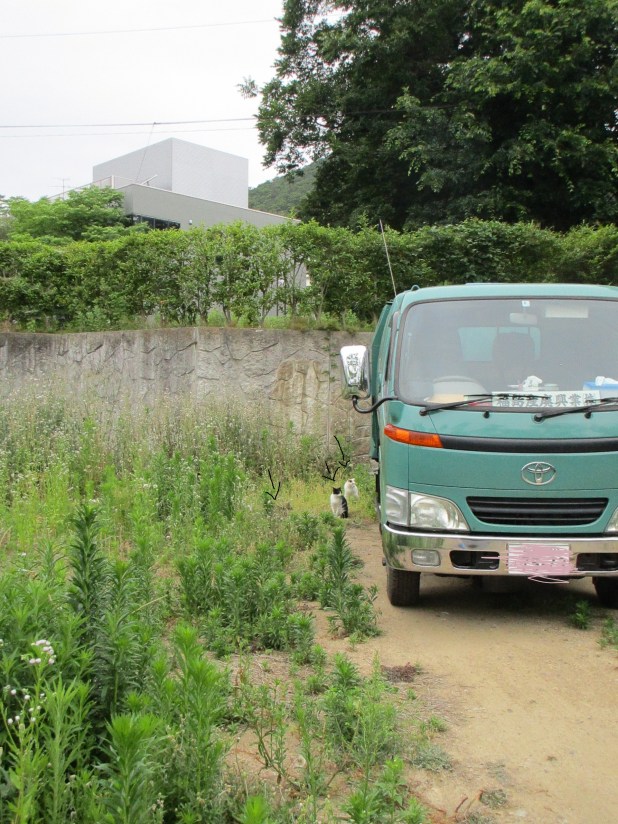
One early morning, what do we see?

It’s a lady looking at me!

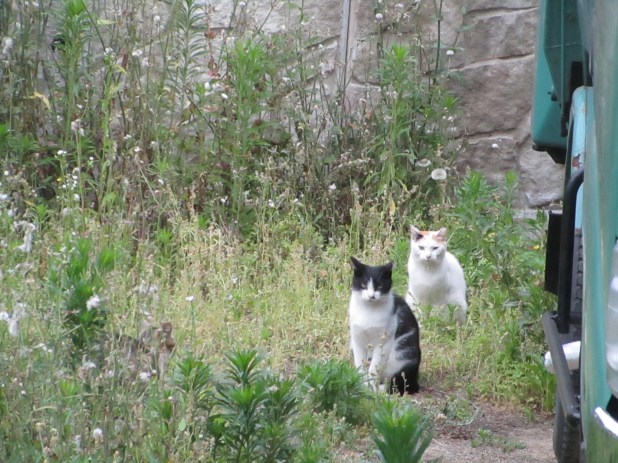
NO, SHE’S LOOKING AT ME! I’M CUTER!

Ugh, now she’s taking our photo!

Yes, she’s putting us on the internet. How human.

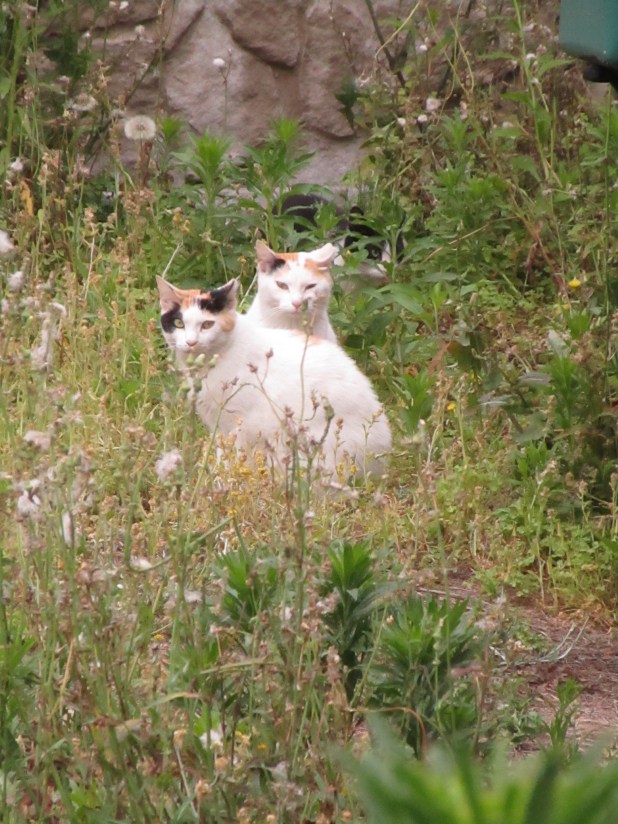
Don’t look behind you.

Why not?

We’re being attacked.

In another part of Fukushima City….

Aw, a human. How precious. With a camera. I guess I should smile.