S=N=O=W

Big news in Tokyo is that it snowed, and it was the largest snowfall in, I think, four years. Also it’s the coldest in Tokyo in over forty years.

But never mind that.

We haz cold in Tohoku, too!

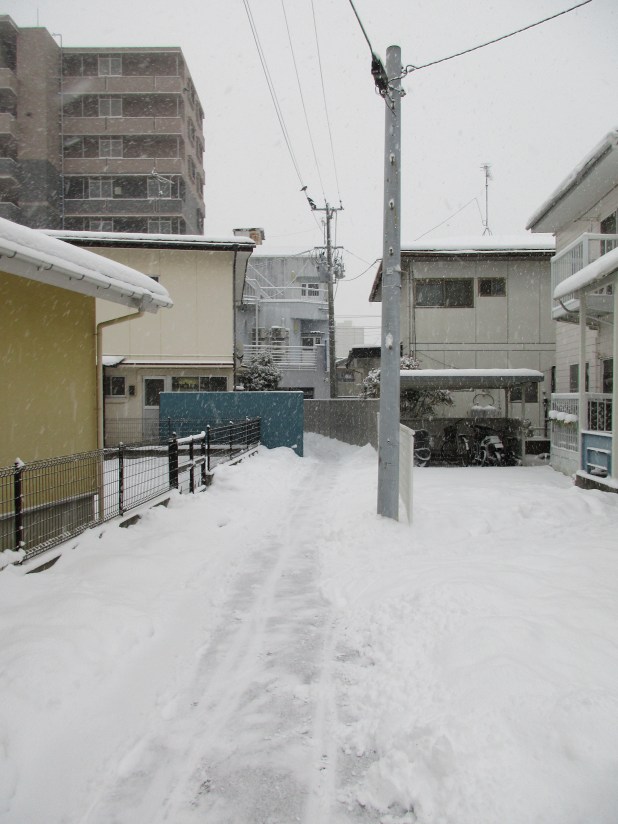
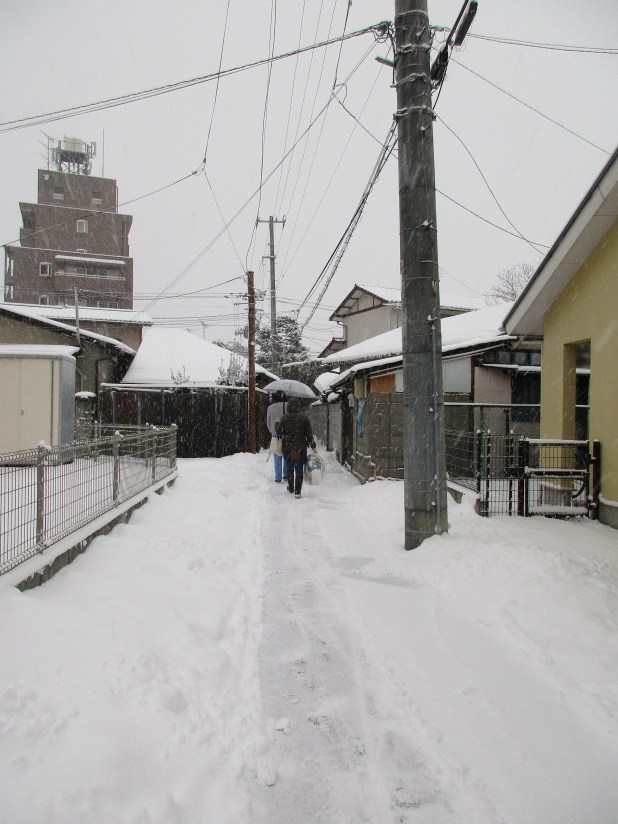
Looking out my front door…big sigh…more shovelling….It’s snowed heavily twice this week.  (And during winter vacation, it snowed quite a lot.) Nevertheless, Fukushima City has it much easier than many other parts of Tohoku (and, of course, Hokkaido.) It tends to get colder in the north, and also in the mountains, of course. Also, the west side of Japan is colder than the east side.

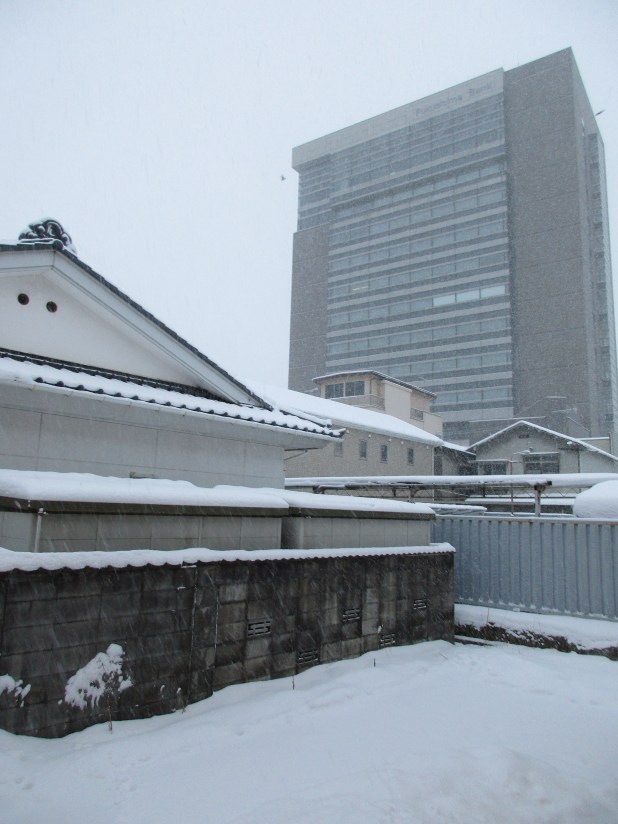
My husband shovelled late last night. It snowed all night, and so then I shovelled this up in the morning. (This photo was taken before I shovelled.)

Yes, a long path!!!!!!!!

How’s the weather where you live?

IMG_5885

Ah……the memories! (When we FIRST moved to Fukushima City)

Husband and I moved from Narita City (near Tokyo) to Fukushima City in April of 2006. April is when the new business year and the new school year start in Japan, so that’s why it was in April. (March and April is a VERY common time for Japanese people to move.)

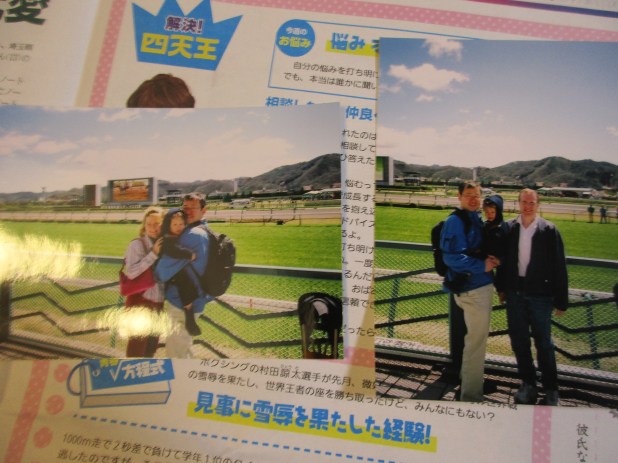
That very first week my cousin visited us. The first week!!!!!! LOL We didn’t even have our computer set up yet, and that was before everybody had an iphone and ipad and portable wifi…so he was trying to find a computer because he needed to check in for his job. I remember that!

The above photos are from the horse racing track in Fukushima City. I think my cousin enjoyed it? I don’t know! Fukushima City is not really an “exciting” town, so you take your tourist attractions where you can find them…..

My son was three years old when we first moved to Fukushima City. He was put in a preschool. Most little kids in Japan go to a preschool, either public or private. (Or a daycare, if the parents work and need full day childcare.) The one in the photo was private. It was in the mountains, and considered a great atmosphere for kids. It has (had?) a pony as you can see in the photo on the right. The school has an indoor slide (from second floor the the first floor) and I asked my son recently (he’s now a teen) if he remembers the slide and he says he doesn’t remember it.  LOL There are lots of private preschools here, all competing for business.

Month Old News Article about Power Plant (Not in Fukushima)

You may wonder how good I am at Japanese, and how I study. Well, my Friday Japanese teacher always reads my blog (and corrects it! She is so sweet.) so I will just say my Japanese ability is まだ下手です。。。

I study in various ways. I am no longer a beginner, but not nearly native-like.

One thing I do is attempt to read the newspaper. My husband subscribes to the Yomiuri Shinbun (Yomiuri newspaper) and reads it daily. We started taking the Kodomo Shinbun (Yomiuri’s newspaper for elementary school students) and then later the Yomiuri’s newspaper for junior high students. The main paper (my husband’s paper) arrives daily, but these newspapers for children arrive weekly.

The Kodomo Shinbun (literally: Children’s Newspaper) has furigana. This enables the reader to read the Kanji character.

The jhs newspaper does not have furigana, and because of this, it can be difficult for me. I usually resort to just reading the headlines.


The following two articles are the same news story. The news story is about a nuclear power plant in south Japan. (I took these photos during winter break, and sort of forgot about them, so I am posting them now.)

First, I’ll show it from the elementary school paper.

Then I’ll show it from the junior high paper. Ready? Okay!

In the elementary school paper, you can clearly see the little furigana over the kanji characters. They are not really supposed to be there–it’s an aid to reading the characters. They teach the pronuncation of the kanji.
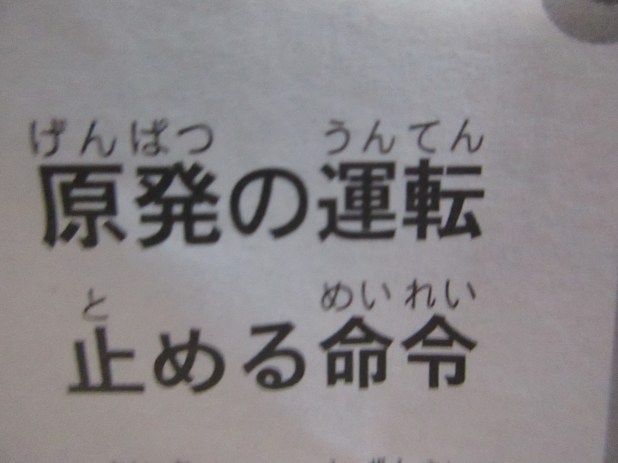
The above photo is still the elementary school newspaper. It’s the headline of the same article. It says: “Genpatsu no Unten Tomeru Meirei.” With the furigana there, it’s very easy for a beginner to read. (Although not necessarily to understand…. Nuclear energy is a difficult topic.)

In English, the headline reads: “It has been commanded that a Nuclear Power Plant’s Operations be Stopped.”

(REMEMBER: This is NOT the famous nuclear power plant that melted down. It’s a totally different plant in a different part of Japan.)

And why is the power plant’s operations going to be stopped? Volcanic activity nearby is threatening operations.

This is the same exact news story, but written at a more difficult level. This is the newspaper for junior high students.

You can clearly see that there is NO furigana. Nothing helps the reader to figure out the pronunciation of the characters. If the reader does not know how to pronounce a character, he or she will have to look it up.

This newspaper assumes the reader has a grasp on the characters in the article.


Does Japanese look FUN and EXCITING!!!!!???? One person explained to me that she likes studying Japanese because it is like a puzzle. I agree that it is like a puzzle, and sometimes it can be fun if you figure something out, but honestly I also find Japanese to be quite a frustrating language! Oh, well.

Good luck with whatever languages you choose to learn.
 

“They All Saw a Cat” by Brendan Wenzel

Every semester I choose a picture book to read in English to elementary school classes, part of my duties as a library volunteer.  I researched and chose “They All Saw a Cat.”

Usually, I myself will purchase the English version. (I ALWAYS get the Japanese version from the public library. If the library doesn’t have it, I don’t do it!)

But I felt that “They All Saw a Cat” was a book that so many people could enjoy, so I requested the library to purchase it in English. (And they did. Hooray!)

It’s a great book for me to use—VERY simple English, yet it is educational and interesting for all ages. (If you read the book, you’ll see what I mean. It’s about how different animals view the same cat.)

As usual (big sigh) the Japanese translation is not a literal translation of the original book.

The original title in English is: “They All Saw a Cat.”

The Japanese title is: Neko tte Konna Fuu?  “Is a Cat Like This?”

VERY DIFFERENT!

I can’t help but think the Japanese translators need to inject a little imagination into their titles.


Note–One of the animals in the book is a skunk. Well, while I think Japanese kids know of skunks….they are actually indigenous to North America, and they don’t exist in Japan outside of zoos. Skunks are not a part of Japanese culture.

I explained that growing up in the United States, I never saw an actual skunk in the wild (I lived in a housing area.) (Also, wiki says skunks are primarily nocturnal, and I imagine that when I was in the true countryside, I was very noisy and scared any wild creatures away.)

However, every so while in a car in America, especially in a more rural type of setting, I would smell the scent of a skunk. Not terribly often, but sometimes. And yes, it’s stinky!


Teacher in Minamisoma

Here is an article about a teacher from New Zealand who works in Minamisoma.  (You may see the name of this town spelled in English in various ways: Minami-Soma, Minamisouma, etc. Literally, the name means “South Soma.”)

Minamisoma is a small town that was hit by the tsunami, and many of its people died in that.  And then…most of the citizens had to leave because the town is/was too close to the nuclear disaster.  In recent times, it’s been declare safe, and its citizens have been returning.

http://www.stuff.co.nz/travel/destinations/asia/100224320/A-Kiwi-living-in-Japans-radiation-zone-around-Fukushima-finds-life-pretty-normal

A quote from the article by the teacher: “For comparison, spending a year in Minamisoma will expose me to about the same radiation as a single hip X-ray … I’m just about as close as it’s possible to be.”


UPDATE: If you click on the link below, you can see exactly where Minami Soma is. As far as a I know the map in the link is current. (It DOES not show how much of Minami Soma was forbidden soon after the earthquake.)

Fukushima


CUTENESS ALERT

You have been warned.

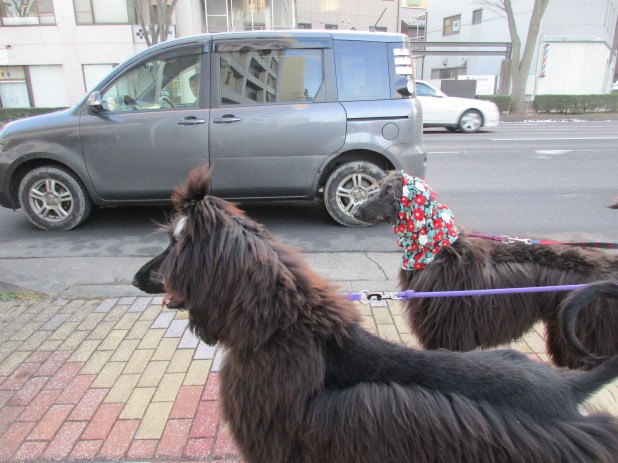
Two Afghan Hounds strolling down a street near my home in Fukushima City. Oh my goodness, I feel like I stepped out of a picture book!  I talked to their owner human friend and she said she and they come from Iizaka Town (a small town just outside of Fukushima City.)

I told her that there is a Borzoi that lives in our neighborhood. She was impressed.

Google just told me that, while there are several languages in Afghanistan, the most common one is Dari (Afghan Persian.) In Persian (or Farsi) “dog” is “sag.”

And in Japanese, “dog” is “inu.”

The two dogs were very friendly. I asked if it was okay to pet them, and she said yes, they don’t mind at all. They were sweet! And just as soft as they look. (They are obviously well-groomed.)

Are Afghan Hounds really from Afghanistan? Google says yes–Middle East, Persia, and Afghanistan. But the modern ones in western society descended from Afghan Hounds which were brought to the United Kingdom.

Even though the photo looks like the Mr. and Mrs. are out on a walk, I was told by their human friend that they are both male, and the one with the wrap over his head is wearing it due to some sort of ear problem (or maybe not a problem, exactly. The dog’s ears are very long.)

Interesting article by two physics scientists who visited the nuclear power plant in Fukushima

This is a very interesting article written by scientists from the U.K. They visited Fukushima, and went to the Daiichi power plant.  (The one that is owned by a Tokyo company and supplied energy to Tokyo. It melted down.)  It is an area I NEVER go to.  (It’s off limits unless you receive permission.) It’s a long article, but I recommend it.

http://physicsworld.com/cws/article/indepth/2018/jan/09/what-next-for-fukushima


New York Times article: “A Maverick Former Japanese Prime Minister Goes Antinuclear”

Koizumi was prime minister several years ago, and he was very popular with the people. He has a rather charismatic quality about him, like Ronald Reagan or Bill Clinton.

What’s ironic is that Koizumi is the same party as current leader Abe, a party that supports nuclear power, and also a party that is considered to be quite conservative. (Sort of Japan’s version of the Republican Party of the United States.)  (Koizumi’s switch to anti-nuclear feelings is recent, according to the article.)

Fukushima Children’s Paintings…

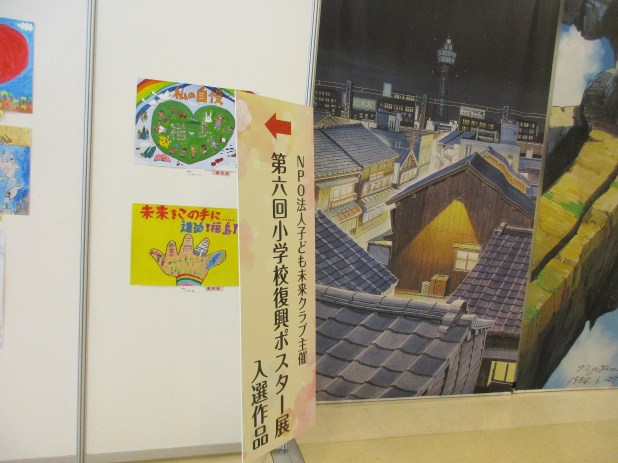
I wrote in my previous post that I went to the Bunka Center to see an exhibit of work by Yamamoto Nizou.

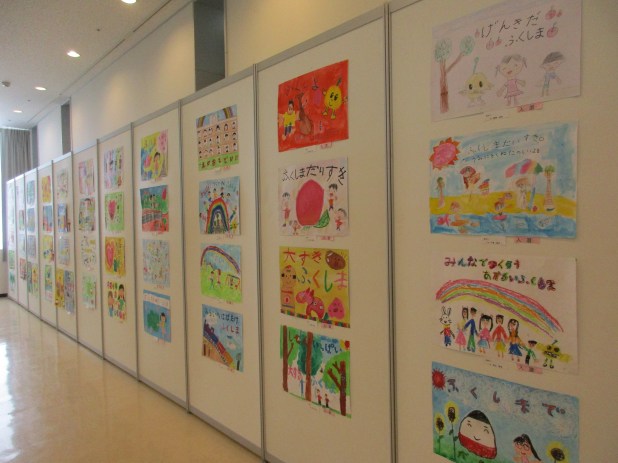
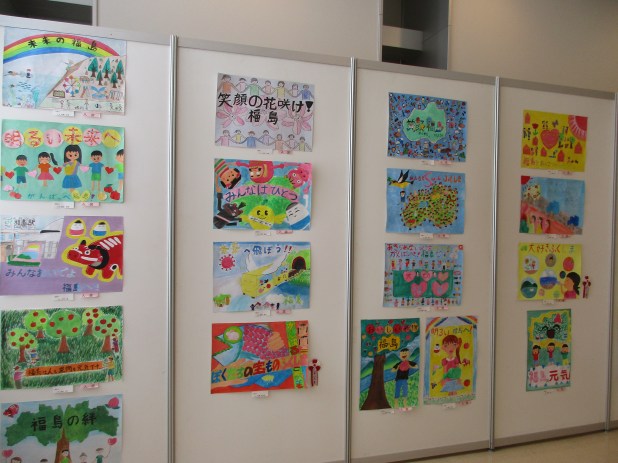
Next to that exhibit was a small exhibit of pictures by Fukushima elementary school kids. Photography WAS allowed.

Colorful pictures….

This one above says, “Thank you to the people of the world.”


All three of these say, “I love Fukushima.”

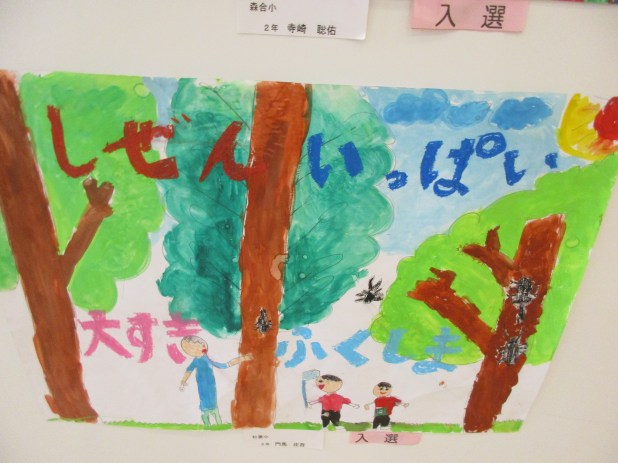
This one says, “(Fukushima has) a lot of nature…I love Fukushima.”

This one above says: “Fun Fukushima”

As we go down the exhibit, the artists are older (fifth and sixth graders in elementary school.)

Goodbye, Bunka Center! Thanks for the lovely exhibits!

Nizo Yamamoto

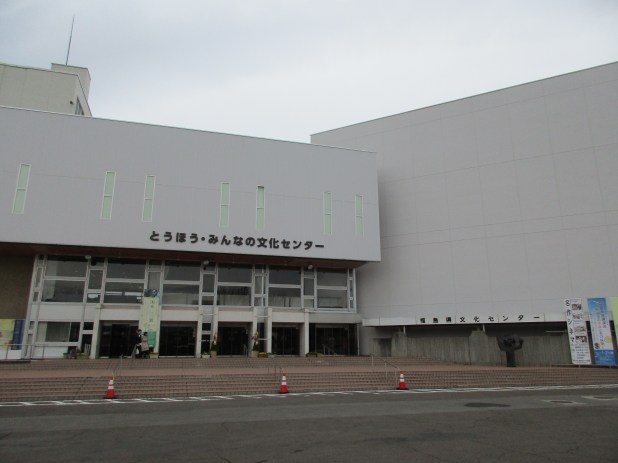
This is the Bunka Center in Fukushima City. (Prefectural Culture Center) It is about a twenty minute bicycle ride from the east side of the main station. (You can rent bikes.) Also, a one hundred yen bus stops near it (not directly in front of it. You won’t be able to see it from the bus stop, but is is a five minute walk away.)

I went to the Bunka Center yesterday to see an exhibit on its third floor.

Top left–It’s an exhibit of the famous movie animator, Yamamoto Nizo (山本二三).

I had not heard of him, but saw the poster downtown. The poster was beautiful, and made me want to go. My husband says Yamamoto Nizo is very famous.

This way! Follow me to the third floor! Don’t get lost!

As you can see, the exhibit runs until January 28, 2018.

Stop looking at the vending machines. You can get a drink later.

Here we are!!!!!!!!!  Exciting, isn’t it???

The exhibit costs 1,000 yen for an adult to enter.

Entrance——–> That way

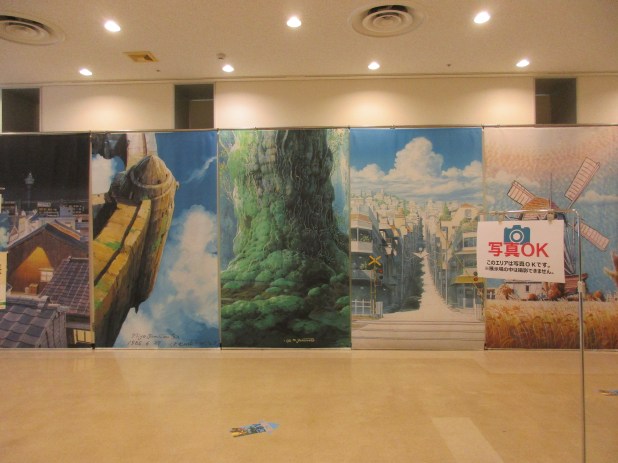
This is the lobby, and photos are okay here. (The sign says Syashin OK in red.  PHOTOS OK)

However, once I stepped in the actual exhibit, photos were prohibited. I put my camera away, and concentrated on the artwork. It was amazing! Such detail…

It’s set up movie by movie, with some Ghibli movies like Laputa and Mononoke. There was also Grave of the Fireflies, reputed to be one of the saddest films made. (It’s about a boy taking care of his young sister during World World II, although I have not seen it.)

Towards the end, there were paintings (? Is that what this artwork is called? I am not sure.) Anyway, there were paintings of Rikuzentakata, where the tsunami devastated the community. One tree was left standing. Yamamoto is trying to get a film made called “The Tree of Hope.” In Japanese, “希望の木”.


If you would like to see sample of Yamamoto’s art:

https://www.yamamoto-nizo.com/blank

http://all-that-is-interesting.com/yamamoto-nizo