Kimono vs. Yukata in Fukushima

Today is “Coming of Age” Day in Japan. It is a national holiday, meaning there is no school and no work (except certain jobs like police officers and nurses, who are needed every day of the year.)

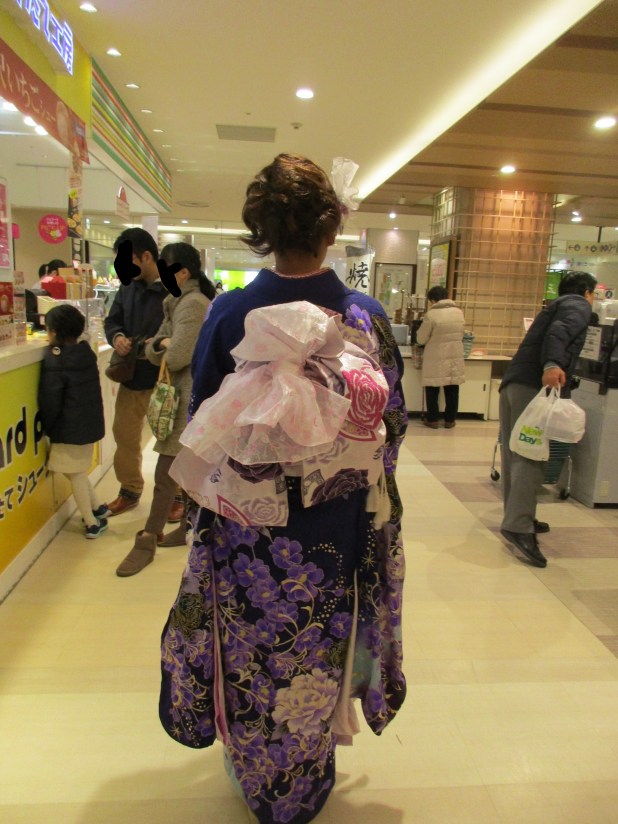
Coming of Age Day is a day that celebrates when a child becomes an adult. This is is considered to be twenty years old. On Coming of Age Day almost all twenty-year-old women wear beautiful kimonos. Twenty-year-old men usually wear suits, but some might wear kimono.

You’ll see these young people in Japan during this second Monday of January–the young women very noticeable in their elaborate kimono. (The men less noticeable in their suits.) I asked my husband what they do all day, and said, “Nothing. Drink.” I think they hang around with friends. Japanese high schools don’t have school dances so this is a great time for young people to really go all out and dress up.

The following photos are current photos. They show KIMONO.  Real kimonos, which are very expensive (and are thus often rented by the wearer.) They bear NO RESEMBLANCE to what Americans call “kimono” which is usually a cheap polyester robe with a dragon on the back.  Authentic kimonos are not always elaborate, though–in olden times, peasants wore plain kimonos. The following photos show gorgeous kimonos, not “every day” type kimonos.

See how very gorgeous it is?

And notice the young man is wearing a suit. Because the Coming of Age Day is in the midst of winter, the woman on the far right has a white stole.


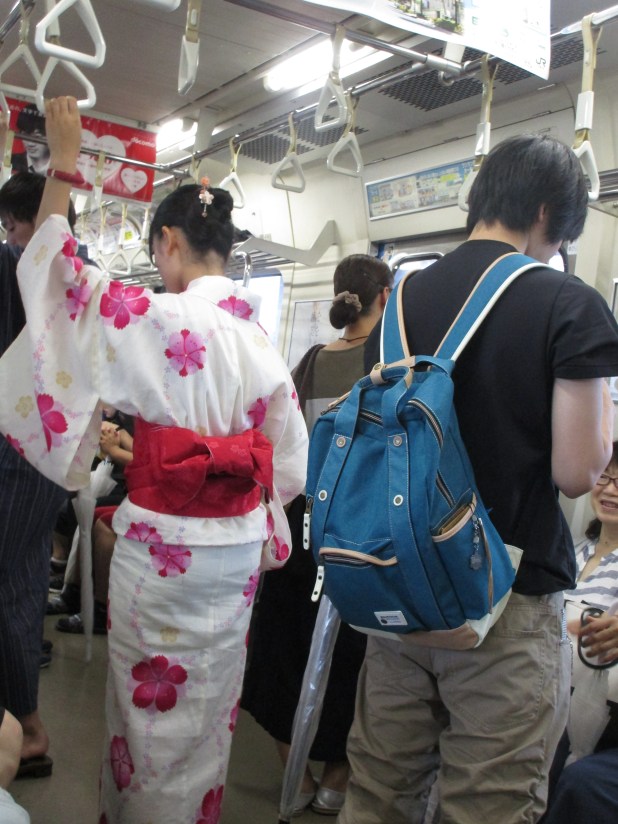
The following photos were taken during the summer, and they show YUKATA. These in the photos are festival yukatas. These are worn for festivals in warm and hot months. They are less expensive than the kimonos in the above photos. These yukatas are most likely owned by the young women, not rented, because they are affordable. Young men also wear these festival yukata, but not as often as women or girls.

着物 (kimono) literally means “a thing that is worn.”(Ki=wear Mono=Thing) (Please remember that word dates back long ago when western clothing did not exist in Japan.)

浴衣 (yukata) literally means “bath clothes” So you can tell by the word itself that a yukata is less formal than a typical modern kimono.

What a lovely yukata….

Pretty pretty girls in their pretty pretty yukatas


I took all photos in Fukushima.

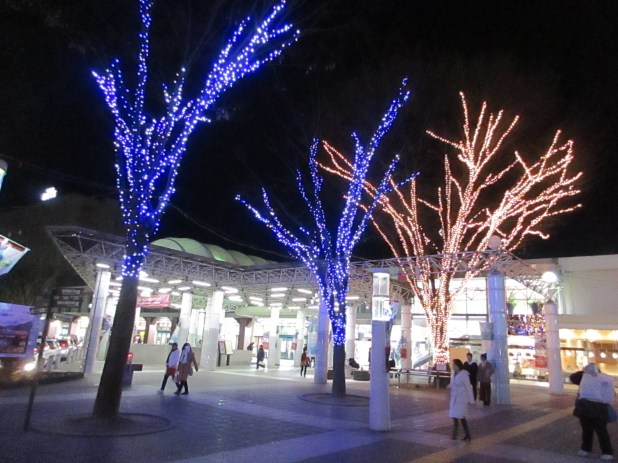
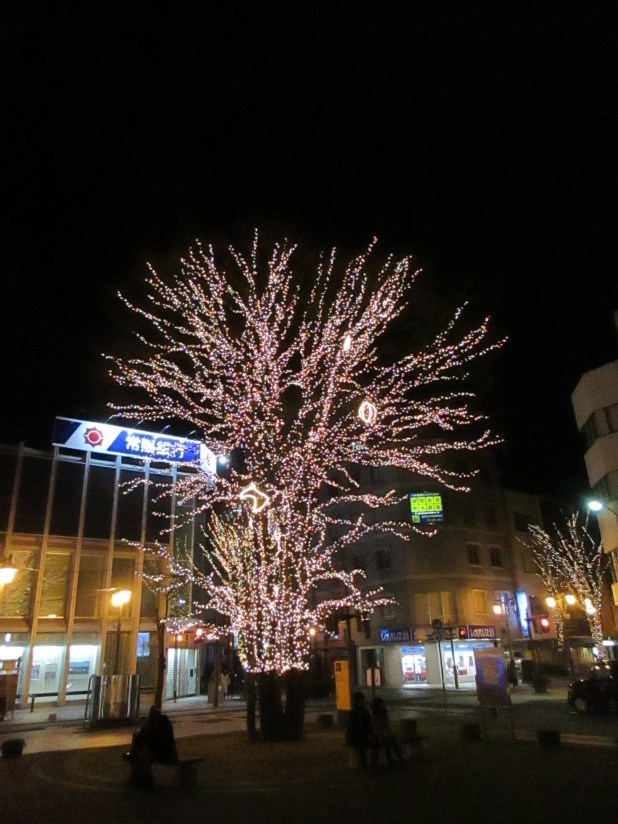
Fukushima City Illuminations 2018

Fairy Lights are not only during the holidays in Japan. Here in Fukushima City, they are a winter thang. So in January and February, you can see them.

When I very first lived in Japan, I lived in a small rural town of ten thousand people. It had a small train station, and outside the train station, white fairy lights (what I call “Christmas Lights”) were up outside the station year round and lighted at night. I found that very strange!

This is Fukushima City’s main train station, east side.

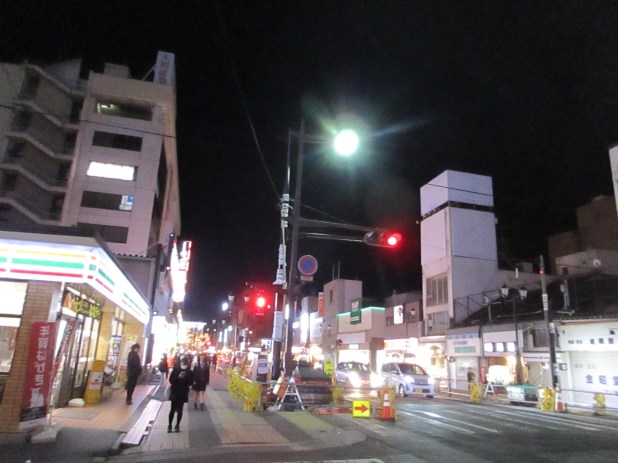
This street is perpendicular to the station. (There is construction going on.)

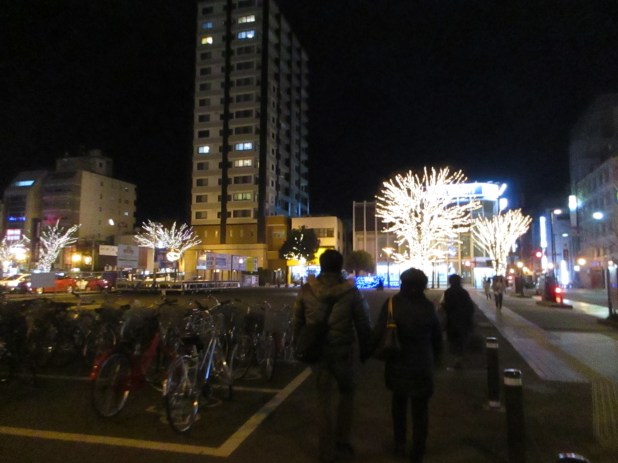
The street ahead (parallel to the station) is Paseo Dori and is a lovely street. The rest of the photos show Paseo Dori.

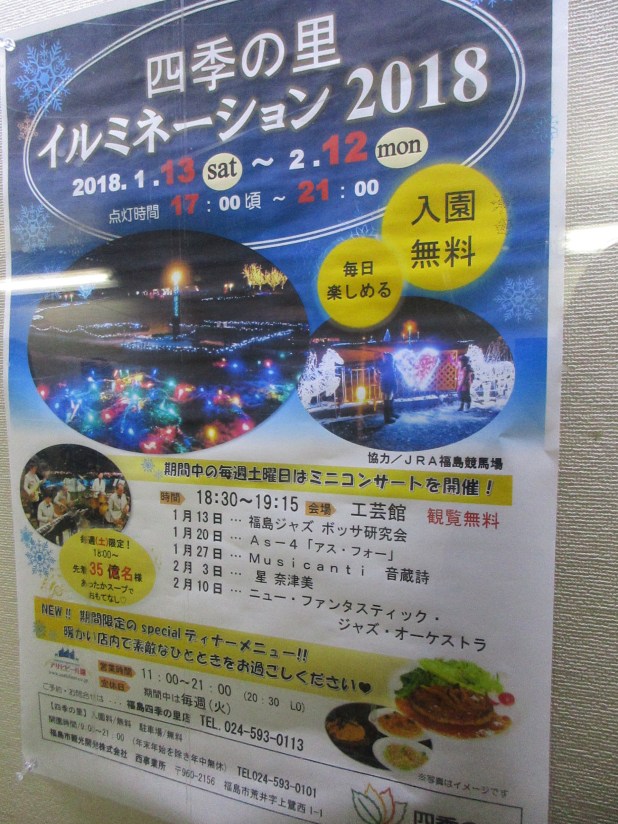
On the outskirts of Fukushima, there is a spot called “Four Seasons,” kind of a park. From January 13th to February 12th, they will have Fairy Lights.

My critique of NYT article “Would you play ball at Fukushima?”

Thanks to the tweet of Rod Adams, I became aware of a Fukushima-related New York Times article from December 29, 2017.  The article is entitled “Would You Play Ball at Fukushima?”

My instinct is to get really snarky at such a ridiculous question. Would I play ball at Fukushima? Uh no, I haven’t played ball in years and years and years. I hate playing ball. I am not going to play it anywhere.


I want to break down the article and critique it. These are my opinions (in italics), my opinions alone, and not the opinions of other Fukushimers (who may feel differently than me.) No snarkiness from here on out!


Would You Play Ball at Fukushima?

By SETH BERKMAN

FUKUSHIMA-Japan–A sea of brightly colored banners and advertisements decorated Fukushima train station in early November to celebrate coming road races and Fukushima United, the local soccer club.

(This is not unusual. We have had road races here since forever. Fukushima United has been around since 2002, well before the earthquake occured.)

There are new professional baseball and basketball franchises in the region, too. They carry inspirational names like the Hopes and the Firebonds, the latter signifying the spirt of a team connecting to the community, said 21-year-old point guard Wataru Igari.

(Yes. I checked the internet. The “Hopes” name was chosen to be a beacon of light to children affected by the tragedy. The Firebrands are based in Koriyama City,not Fukushima City. (I couldn’t figure are which city the Hopes are based in.))

For an area with a growing interest in sports, the biggest boon came in March when the International Olympic Committee approved Fukushima to host baseball and softball games during the 2020 Tokyo Olympics.

(Yes. Being considered part of the Olympics is considered a boon for Fukushima, bringing visitors to the area.)

Yet Fukushima remains defined by tragedy.

(Well, I guess it is–by American standards. Virtually no American had heard of Fukushima before the big earthquake. By Japanese standards, though–Fukushima is famous for a lot of things.)

The 2011 Tohoku earthquake and tsunami caused meltdowns and radiation leaks at the Fukushima Daiichi nuclear power plant. (Yes, true. It was the water from the tsunami though that really caused the plant to malfunction, not the shaking from the quake itself.) Devastation touches every corner of Fukushima Prefecture, which is about the size of Connecticut. (Not true. Many parts were/are unaffected by earthquake damage, by tsunami devastation or by nuclear radiation.  This article is grossly exaggerating here.) Among the populations of two million residents, more than 160,000 near the power plant fled or evacuated, (I don’t know the exact numbers myself, so I can’t comment. Actually, I doubt anybody knows the exact numbers. There is a difference between people who were forced to evacuate by the governmnent, and the people who were not forced to evacuate, but chose to do so. I am not quite sure if the article is referring to the former group, or to both groups.) while an estimated 16,000 died.  (This is misleading. The people who died in Fukushima died mainly because of the tsunami itself, drowning in it. As a prefecture, fewer people died here than in Miyagi and Iwate Prefectures. Sadly, these two other prefectures are often overlooked by western media because there wasn’t a nuclear meltdown there.)

The disaster also damaged the Fukushima name. Tourism declined. The rest of Japan shunned produce or materials from Fukushima. (This is very true.)

Almost seven years later, pockets of the prefecture–mainly in its namesake capital city–are attempting to change its perception through sports. (I am not a sports follower. I have no idea. )

“We are looked at like Chernobyl,” said Saito Nobuyuki, who was born in Fukushima and now owns Sportsland, a sporting goods store here. “It’s difficult to change.”(True. Although, although I am respectful of Nobuyuki, I believe it is obvious why we are looked at like Chernobyl. Only Chernobyl and Fukushima have had actual nuclear meltdowns. Pennsylvania has had a partial meltdown, at Three Mile Island, in the late nineteen seventies.)

Akinori Iwamura is among those hoping to rehabilitate Fukushima’s name. (Good for him.)

Iwamura was the starting second baseman for the Tampa Bay Rays in the 2008 World Series. He also won two World Baseball Classic championships with Japan and played in the Nippon Professional Baseball League for 13 years.

Today, Iwamura, 38, is toiling at the lowest levels of organized baseball. He is the manager of the Fukushima Hopes, a semipro team whose games are sparsely attend (This is Fukushima–mostly countryside. Of course they are sparsely attended. When I lived in Kansas, it was the same problem. Wichita Wings Professional Soccer Team, anybody remember?) Iwamura equated the level of play to Class AA baseball in the United States.

“I call myself a missionary,” Iwamura said. “Even though it’s a negative way many people know the name of Fukushima, we have to change it into a positive way.”  (Good for him.)


I am going to stop there…mostly because I realized that this article is really, really long–and I don’t have time to go through it all. But you can get the basic idea.

Here is the link to the article:

(Fukushimer Andy Coombs pointed out the grammar is off–“At Fukushima?”  Weird wording. “In Fukushima,” Seth. You don’t play baseball at California. You don’t play soccer at Spain. And you don’t play ball at Fukushima.)

************************************************************************

But how about some humor?

WOULD YOU EAT A DELICIOUS SNACK MADE BY YOUR DARLING HUSBAND IN FUKUSHIMA?

Yes, I would!  Yum!
Happy 2018!

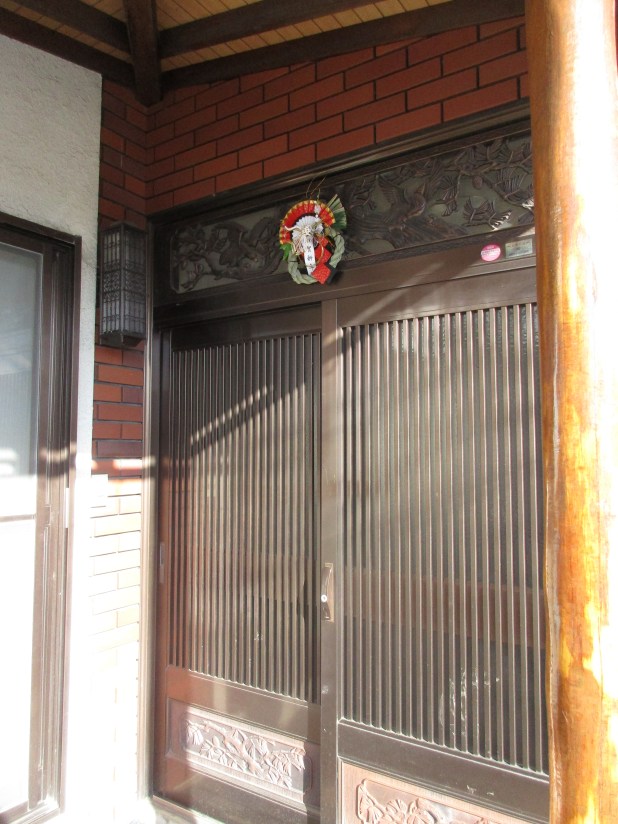
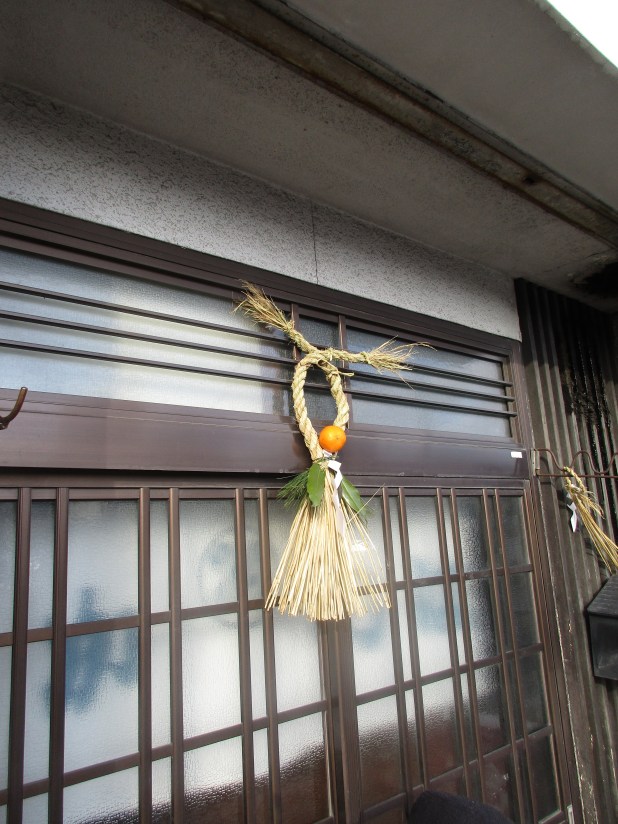
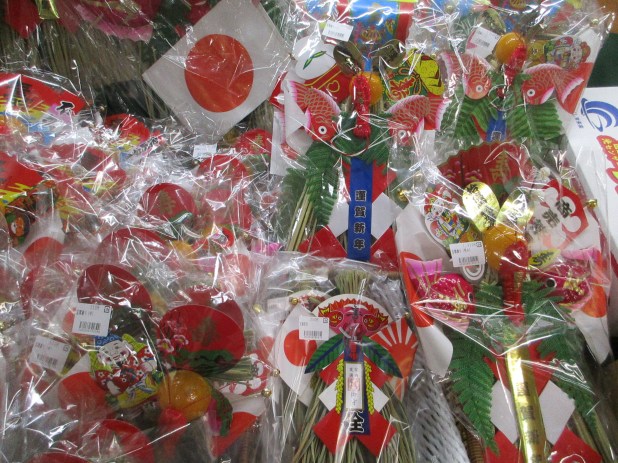
I took these photos last January. They are decorations around Fukushima City. The decorations are in honor of New Year’s Day, so they are only seen at this time.  (New Year’s Day is celebrated according to the western calendar in Japan, so it starts on January first.)

The decorations can be made by hand, but I think most people purchase them ready made. What do you think of them?

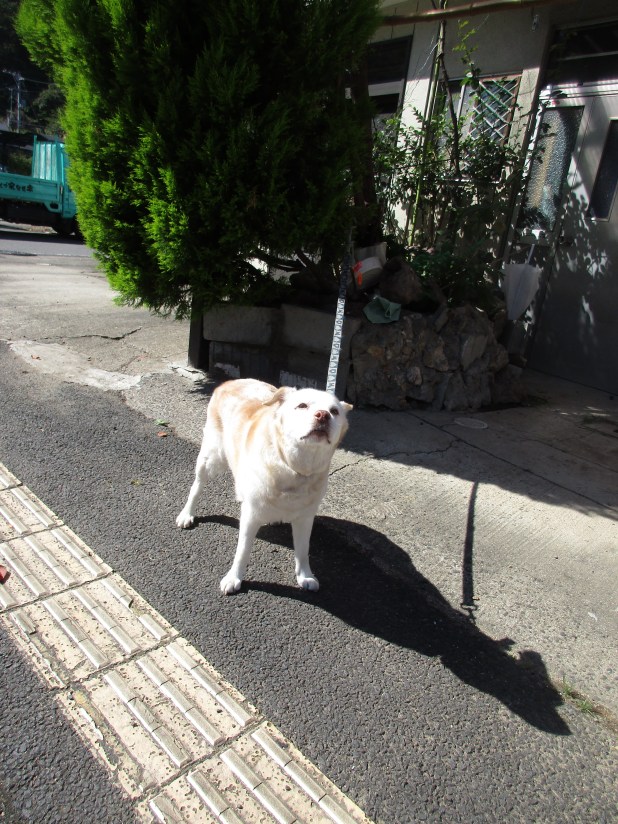
2018 is the year of the dog….so have a Bow Wow year!


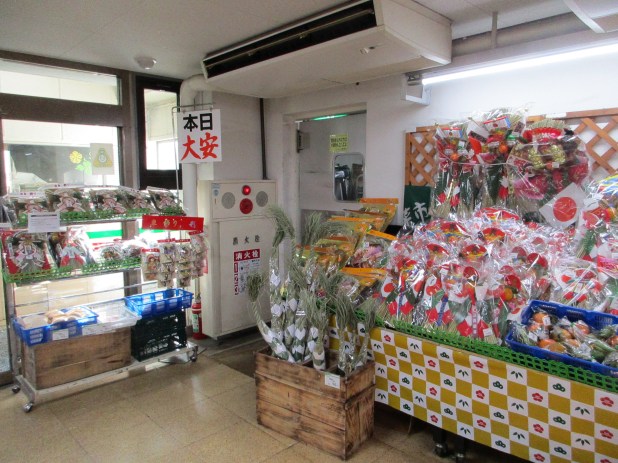
New Year Decorations at my local supermarket…

Most people in Japan, I think, do not make their New Year decorations. Most people buy them ready-made. They are sold in many places, especially grocery stores.  I got permission to take photos at my local supermarket:

This is the section where the New Year decorations are sold. I saw many shoppers with these decorations in their baskets.

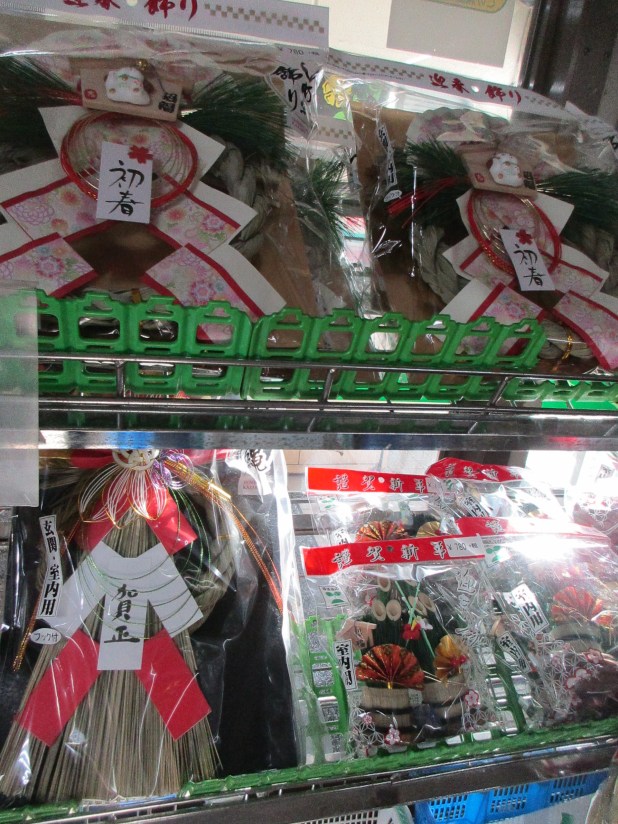
You can see different styles…..

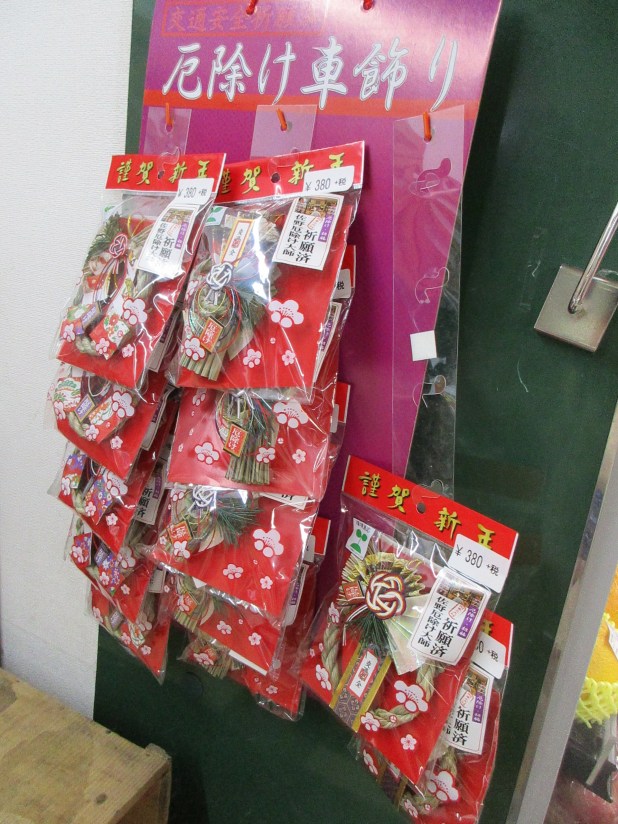
This last photo shows very small decorations. 380 yen is, according to today’s exchange rate: Three American dollars and thirty-eight cents.

New Year’s Decorations……

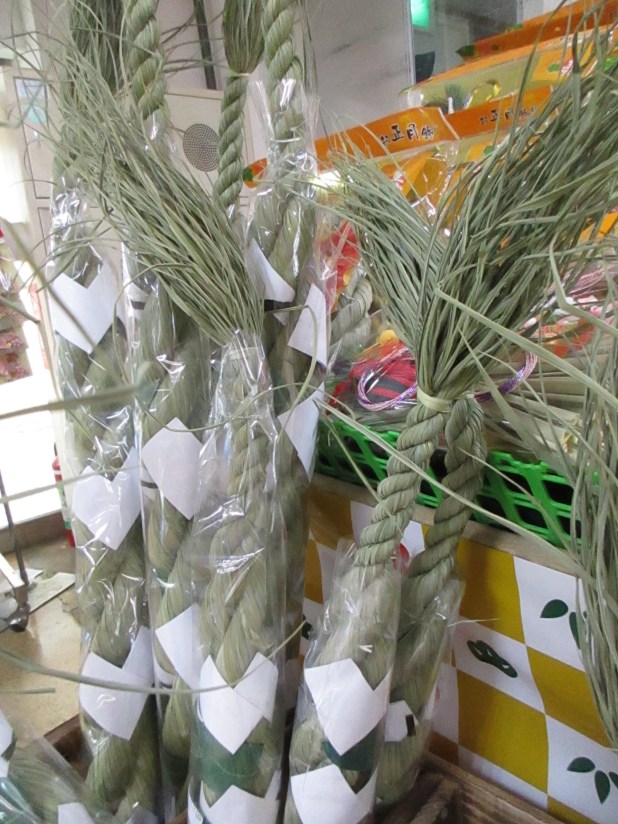
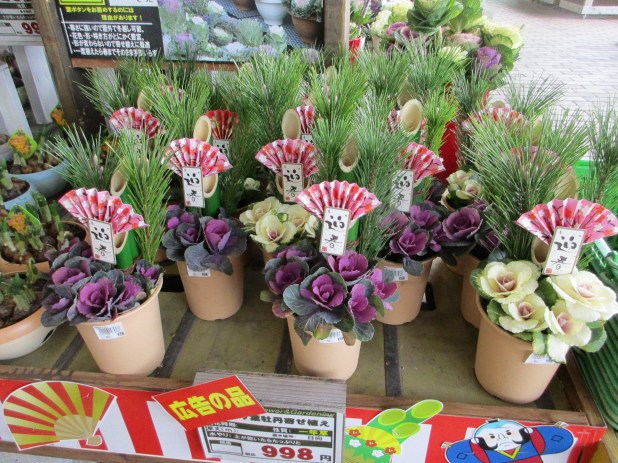
The following photos are from a store that sells miscellaneous goods for the home: gardening suppllies, cleaning supplies, heaters, etc. etc. etc.

A person can buy plant leaves which can then be made into New Year’s decorations. (Unlike many other Asian countries, Japan celebrates New Year on January first nowadays. NOT in February.)

The decorations are not kept long after the New Year’s celebrations are over. They are usually brought to a shrine and burned, or in my Obaasan’s more traditional area, the neighborhood has a bonfire and people throw in the decorations, along with anything else of sentimental value they want to dispose of. (I know this because my MIL took a stuffed toy that the cat often chewed on. Because it was sentimental, she threw it in the bonfire, rather than the garbage.)

Swans seen from the train in Yamagata Prefecture

Continuing on our train journey to the west coast of Tohoku.

View at a small train station. (A very small train station.)

That’s my husband. He’s saying, “Hey, Amy, there are swans out there! Look! Look!”

Northern Japan is known for its swans in the winter months. (In summer they are in Siberia.)

I said, “Do you see any cranes?” (I was joking!) He said, “No, cranes are only in Hokkaido.”

I knew this from my research. Despite being a symbol of Japan, the crane now only lives in the area of Hokkaido, a large island in the north of Japan.

I took this photo of the swans from the train. While I was taking it, I said, “Stop, train, stop!” It’s not a tourist train, though, and did not stop so I could take a better photo.

In Sakata City–my husband’s hometown. It’s quite historic, but well off the beaten path for most foreign sightseers. Nevertheless, I recommend it.

Wind Turbines in Yamagata Prefecture

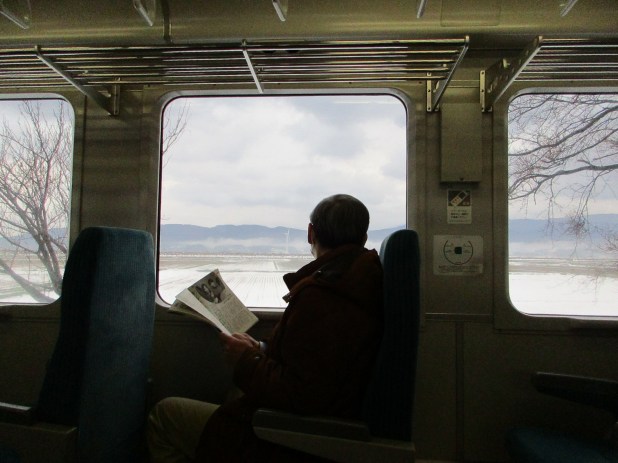
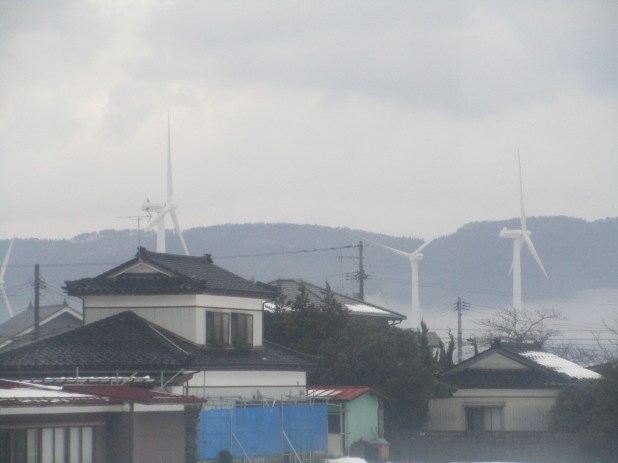
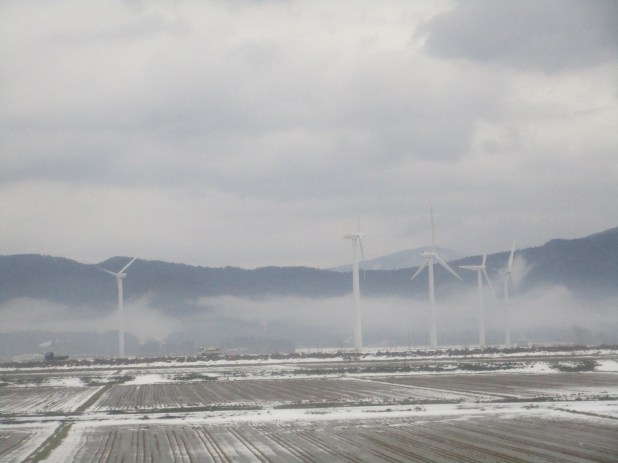
We travelled as a family to my husband’s hometown on the west coast of Yamagata Prefecture.  This is a view from the local train.

It was very misty.

Electricity from wind turbines

So pretty!

In case you are wondering: Why aren’t nuclear power plants replaced by these lovely wind turbines? The problem is that a nuclear power plant can produce much, much, much, much, much, much, much, much, MUCH more electricity than wind turbines can.  We definitely do need to research various alternatives to nuclear power, though, in my opinion. The future depends on it!


Editted: I originally wrote “Windmills” My mom’s best friend Mary Sue informed me that the actual word is wind turbine. Thanks, Mrs. T!

Here is a link on the difference between a windmill and a wind turbine:

http://wind.jmu.edu/communityengagement/millvsturbine.html

Quake predicted in Hokkaido area during next thirty years or so….

My husband spends part of his morning reading a newspaper, and on the TV in the background is Japanese news.  So sometimes I pay attention to the Japanese news on the TV, and sometimes I don’t.

Anyway, a couple days ago, the news was saying that experts are predicting a huge earthquake in the area of Hokkaido “soon.” (Soon means today in the afternoon or maybe hundreds of years from now. Nobody really knows. The news was saying thirty years.)

I’ll explain this. Hokkado is the northernmost part of Japan, one of its four main islands. It is north of where I live (Tohoku.) It is VERY north of cities like Tokyo, Kyoto, and Osaka. (Tokyo would not be directly affected by an earthquake in the Hokkaido area.)

Here is an article about it in English:

http://www.telegraph.co.uk/news/2017/12/20/japanese-government-warns-impending-mega-quake-large-one-caused/

Another article:

http://www.asahi.com/ajw/articles/AJ201712190028.html

The two biggest fears would be tsunami (which could kill many, many people). However, the first article focusses on the impact on nuclear power plants.

Look at this link to see a map of Japan’s nuclear power plants:

https://www.scientificamerican.com/gallery/map-reveals-status-of-japans-54-nuclear-reactors/

If you click on the map, you can see it up close. There is one nuclear power plant in Hokkaido. There is one very close to Hokkaido, on the northern tip of Tohoku.

Here is a different (old) map:

The link to the map above is:

https://www.oecd-nea.org/news/2011/NEWS-02.html


There is controversy in Japan about nuclear power. Some people want it and some people don’t. The current leader, Abe, is in favor of nuclear power.

The two illustrations may be copied and used if the source is acknowledged. The source is:

http://www.irasutoya.com/

ありがとうございます、いらすとや!

Thank you, Irasutoya!


Boris Johnson thinks Fukushima Peach Juice is Yum


In the news recently, British foreign minister Boris Johnson drank from a can of peach juice from Fukushima to show that he believes it is safe.

An article about it is here:

https://www.theguardian.com/politics/2017/dec/15/boris-johnson-swigs-can-of-peach-juice-from-fukushima

I wanted to explain a little about the peach juice that he was drinking.

Before March 11, 2011, Fukushima Prefecture was known for its succulent fresh fruit. Of course, the nuclear meltdowns completely ruined the reputation here.

Is food grown in Fukushima safe? Fukushima food is checked to make sure it is safe before it is sold. (A sample is checked to make sure that any radiation amount is within safe limits, and the rest in the batch is presumed to be the same as the sample. Oh, and by the way, all food–not just food from Fukushima–contains amounts of radiation.  Radiation comes naturally from the sun.  So what they are checking for in Fukushima’s foood is EXCESS amounts of radiation, unsafe amounts.)  So we are told that it is safe.

Do I believe it? Actually, yes I do.  Playing the odds, maybe? Putting my trust in politicians? I feel it is a risk benefit situation, which we apply in virtually every thing we do, whether we realize it or not.  Is the benefit of riding in this car worth the risk of being killed in a car accident? Usually we will say, heck yes.

It’s the same for me with food. Is the risk high? I think that Fukushima food is safe, so I feel that the benefit is higher than the risk.  I wouldn’t pick wild mushrooms in the forbidden zone…..but I will eat a Fukushima peach.

After the earthquake, I stayed with my mother-in-law who is a farmer. She would avoid buying vegetable and fruit from China because China has laxer rules about pesticides than Japan.  So for her, as a farmer, the amount of pesticides were important. (And yes, she and her husband do use pesticides, they are not organic farmers.  But their vegetables are raised with a lot of love and care, so they don’t use excessive amounts of pesticides.)


Back to the Fukushima peach juice. The juice that Boris Johnson was drinking was a gourmet peach juice.

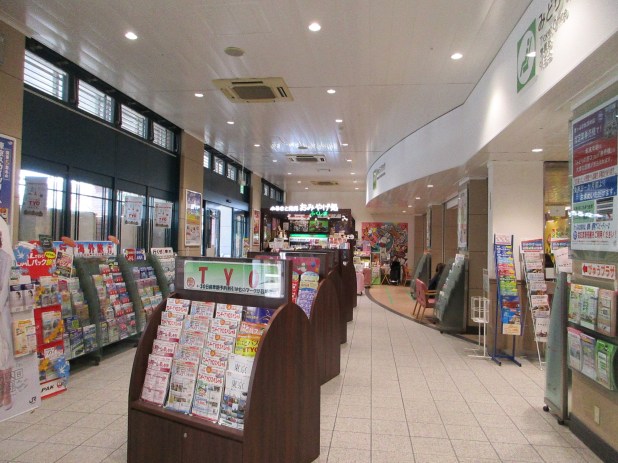
It can be bought at several places, but you won’t find it in a vending machine, or a discount store. I went to the station to purchase it. This is the lobby where one buys bullet train tickets. If you look to the very back, you can see a tiny shop which sells souvenir food products from Fukushima Prefecture.

Souvenir Shopping: Fukushima

I was given permission to photograph.  All the photos are Fukushima Prefecture products, so I won’t repeat myself by saying so with each photo.

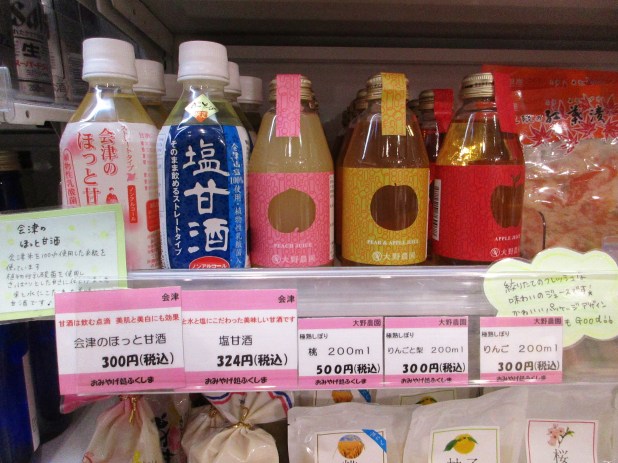
Various peach juices. The prices are a little more than one U.S. dollar per can.  I think Boris Johnson was drinking from the pink can on the far left.

Some pricier juices.

Alcoholic drinks

photos of Fukushima

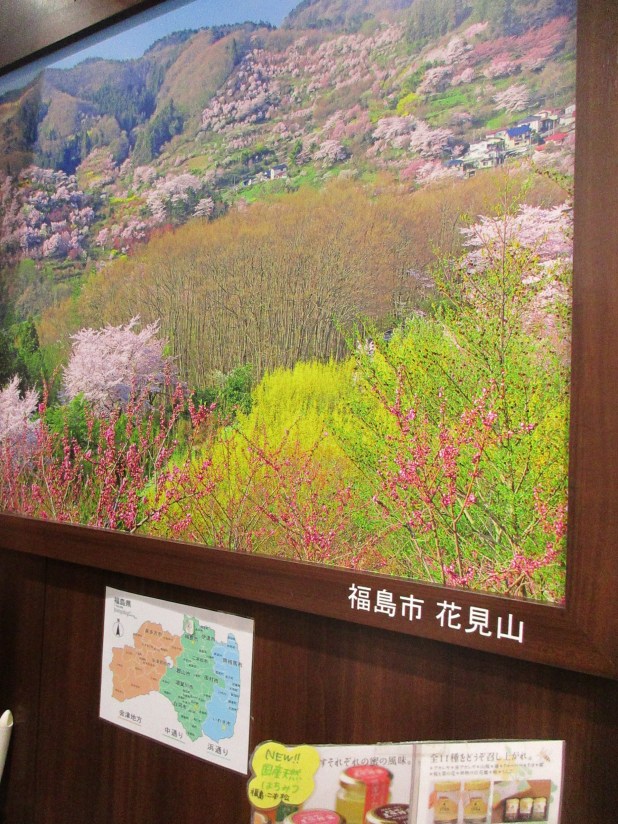
photo of Fukushima City’s famous sightseeing spot, Hanamiyama

Below that is a map of Fukushima Prefecture. (I live in the upper green part. The Pacific Ocean is to the east of the blue part.)

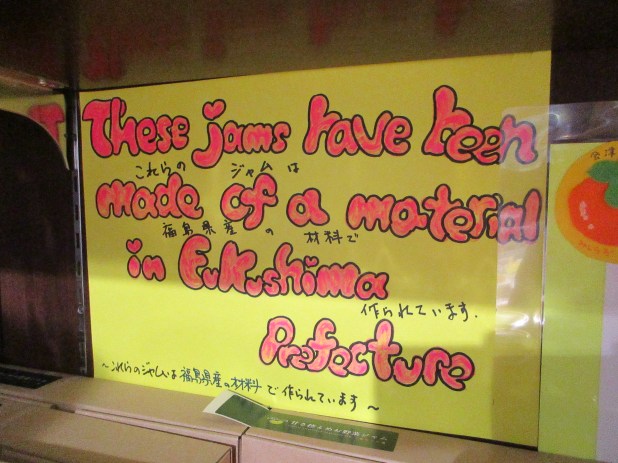
Expensive (gourmet, of course) jams

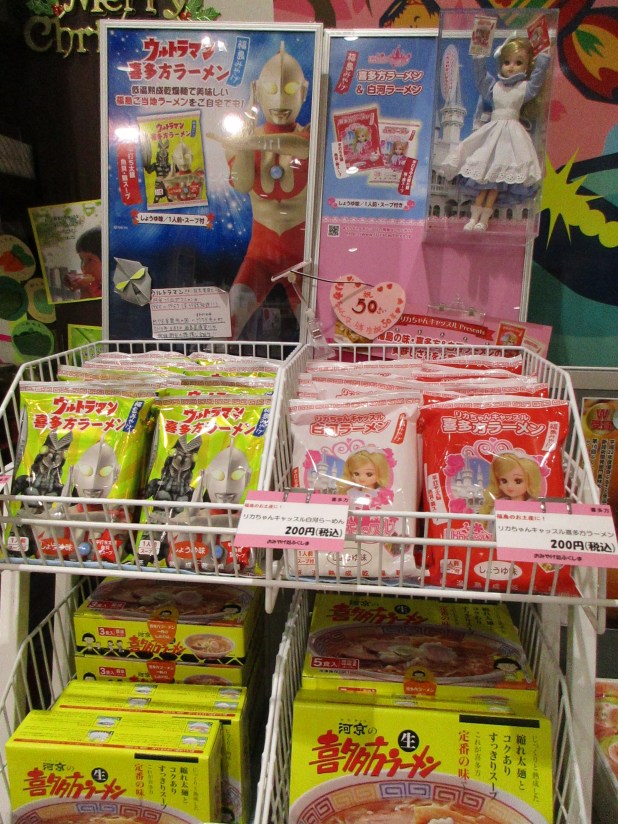
Ultraman (on left) is here because his creator is from southern Fukushima Pefecture.

Licca (a doll popular throughout Japan) is also from Fukushima

Since peaches are THE most famous fruit for Fukushima City, there are lots of peach products. Like peach cookies

More peach snacks–Everything you see is peachy

Not peachy, but I think this is cute

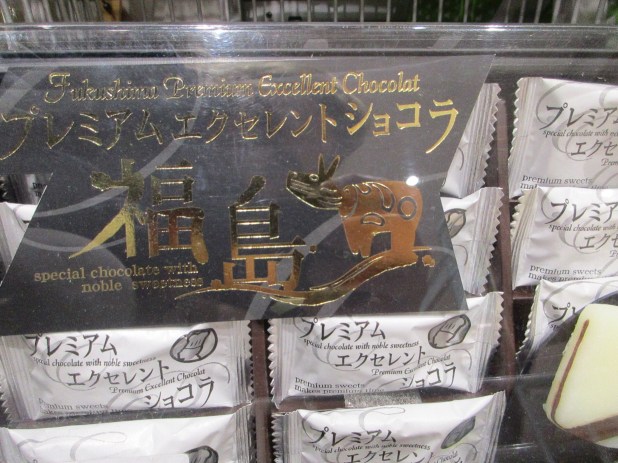
“Fukushima Premium Excellent Chocolat”

Where food items are grown. The nuclear power plant (now no longer functioning) is in the white part, on the coast.

A cute sign. The sales staff were very friendly and helpful. They were not aware of Boris Johnson consuming the peach juice, so I printed off some articles to bring to them and show them……  🙂


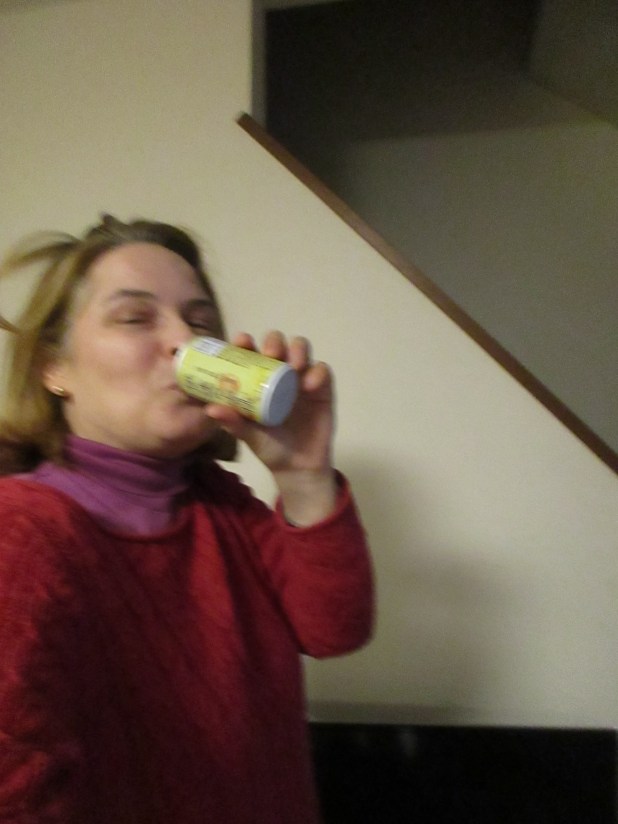
I rarely take selfies….but this is a photo of me with some Fukushima peach juice. (Specifically peach juice from a town called Date, just north of Fukushima city. ) It’s delicious, it really is!  However, I don’t drink it for two reasons: it is expensive, and I don’t drink fruit juices because they are high in calories (I drink tea or water.)