Ikebana Exhibit

There are many traditional forms of art in Japan.   They are all wonderful, and many have long, long histories.   Centuries of perfection.

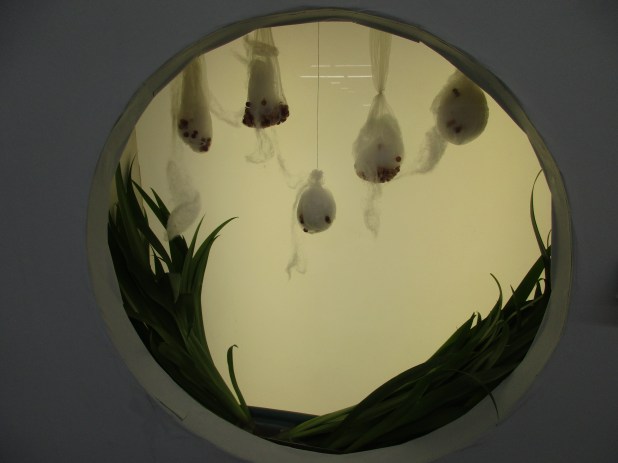
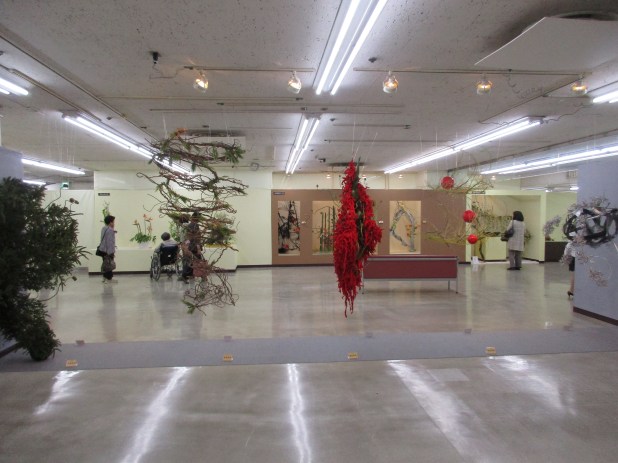
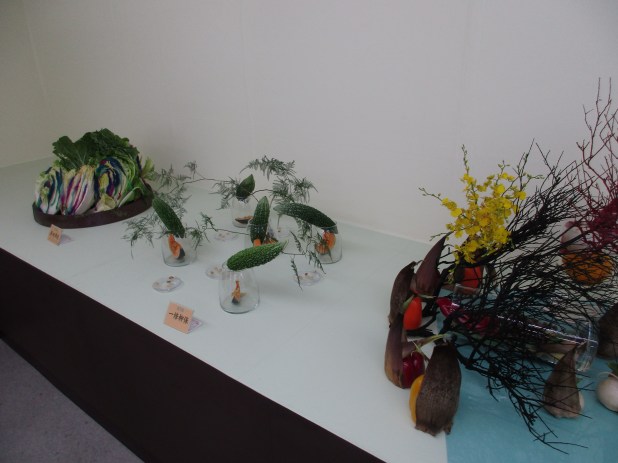
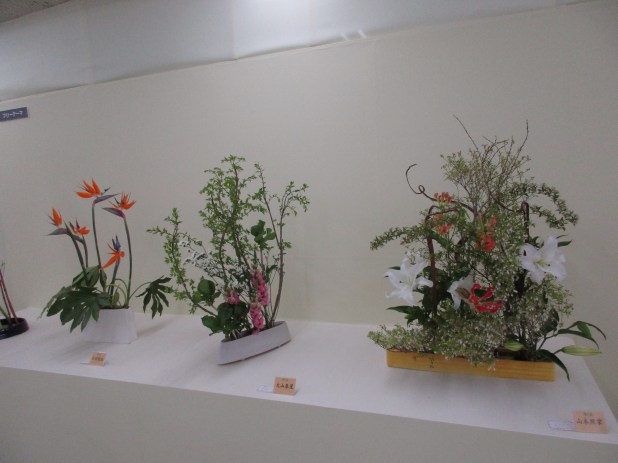
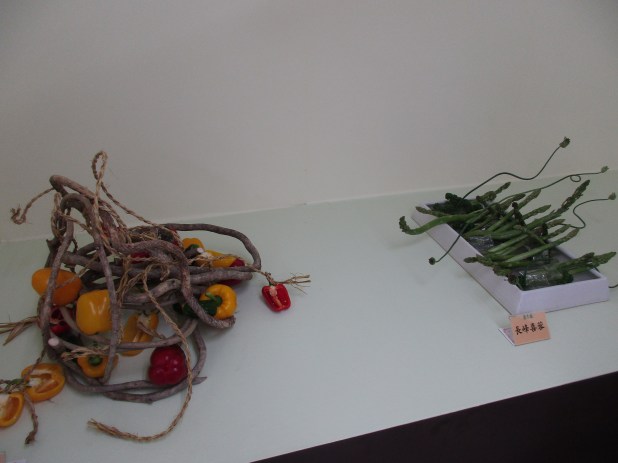
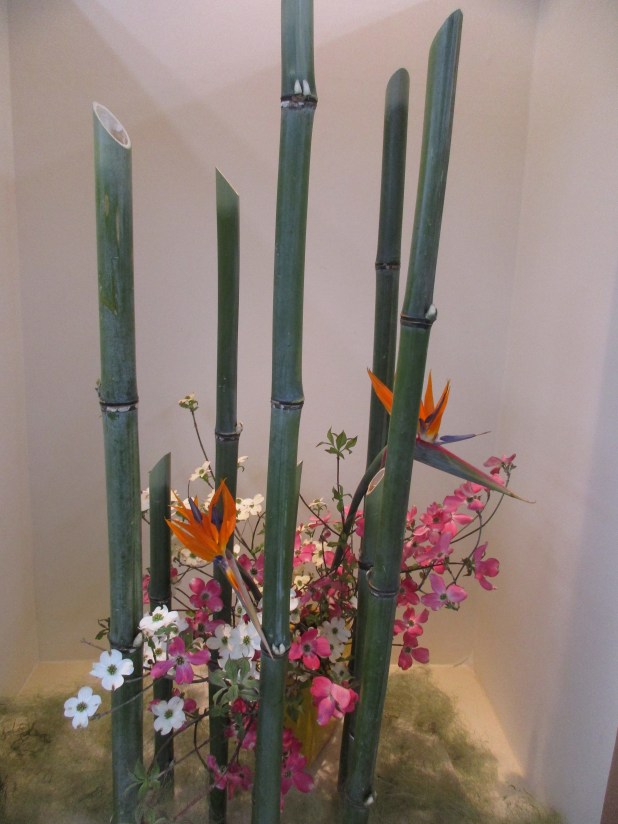
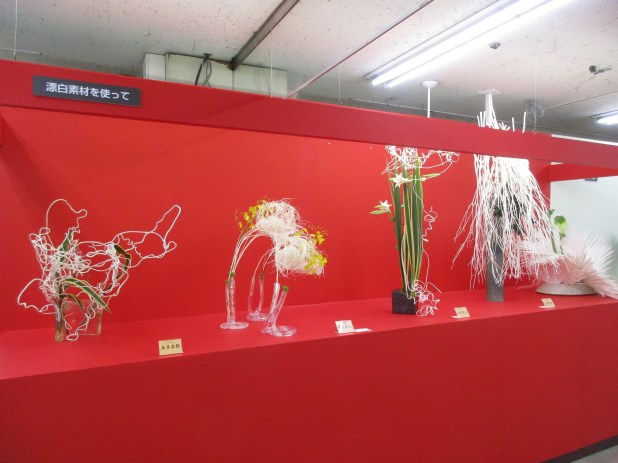
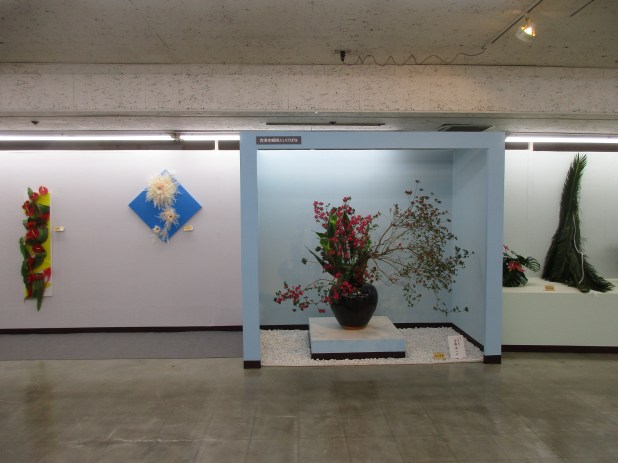
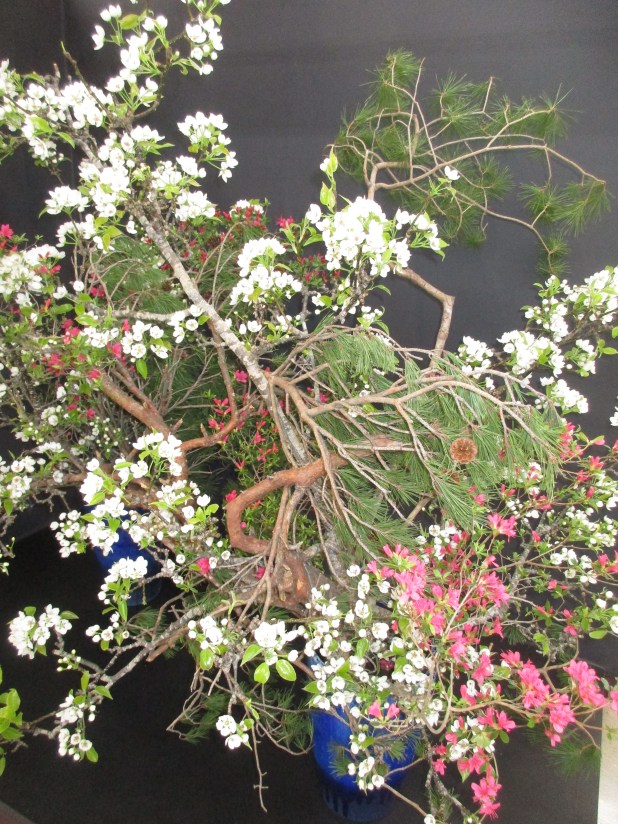
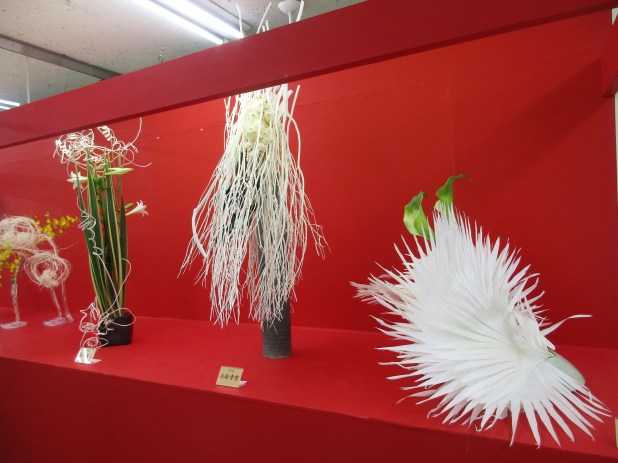
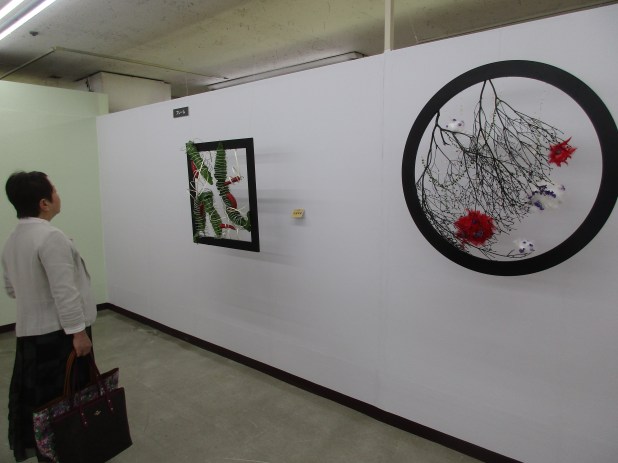
One traditional art form is flower arranging.   (Ikebana)  Recently I went to an ikebana exhibit that was for the twenty-first century, for the millennium generation, for the avant-garde and the risk-takers among us.   Yeah, it was cool.

And it was ikebana!!!!!!!

I never knew flowers could be so awesome.


This exhbit was held last month in Nakago Department Store in downtown Fukushima City.

By the way,

calligraphy–shyuuji 習字               (literally “learn character”)

tea ceremony–sadou 茶道                    (literally “tea road/way”)

flower arranging–ikebana 生け花   (literally “living flower”)


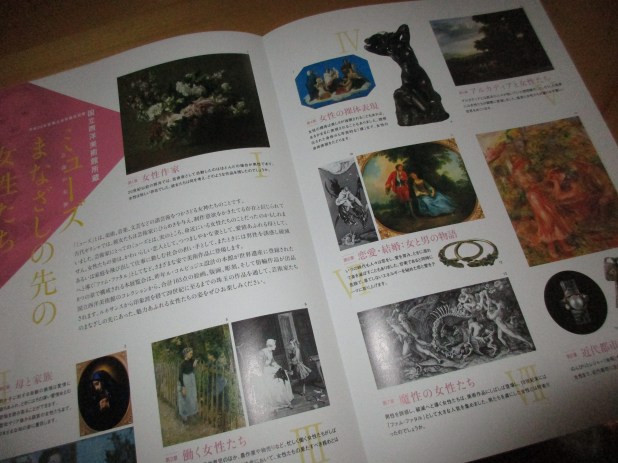
“Muse” Exhibit at Fukushima City Art Museum

Last Wednesday I went to the Fukushima City Art Museum to see its current exhibit.  I have a membership to this museum, so I like to go alone, and then go back if I wish–with my son or husband, or just plain alone again.  It’s an easy bike ride from my home.   If you arrive by train, it’s an extremeley short train ride (but you have to change to a small, slight hidden station that is next door to the regular station.  It’s easy, but you may have to ask somebody for help.)  Or you can rent a bike–a ten minute bike ride!  For directions to the art museum, check their website.  (It has English information.)  If you walk, it’ll take about twenty or thirty minutes.

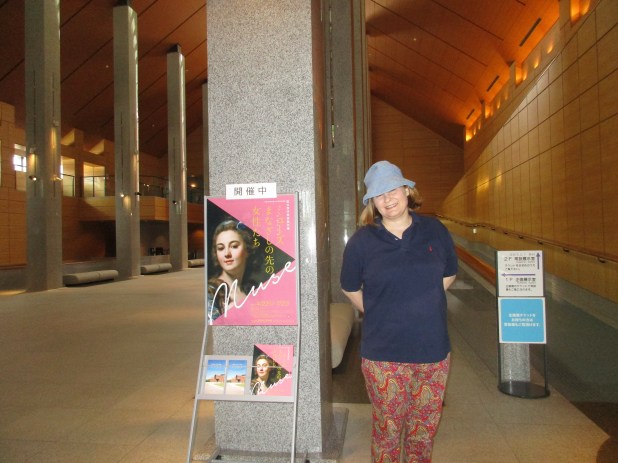
This is me in the lobby of the museum.  The travelling exhibit is “Muse: Women before the Artists’ Eyes
from the Collection of the National Museum of Western Art, Tokyo.”

There were many famous European artists represented.  However, the signs inside the exhibit only listed their names in katakana.  So Monet looks like this: モネ.

If you can’t read katakana Japanese, you won’t be able to read Monet’s name.   And even though I can read katakana, I was unable to decipher it for artists that I am unfamiliar with.  Since the artists were all European, I felt that signs should have included the names of the artists using the Roman alphabet.

Earlier in the week I had asked my son to go with me, and he said, “Is it famous?  Will there be lots and lots of people there like at the Dutch Masters exhibit?  And the Jyakuchu exhibit?”

Both of those travelling exhibits were EXTREMELY crowded.

However the Muse exhibit—despite having equally famous artists–was not crowded at all.  I think the reason is that the Dutch Masters was on loan from a European museum and the Jyakuchu (despite being Japanese art) was on loan from an American museum.  That meant they can’t be normally viewed in Japan, and lots of Tokyites came up to Fukushima’s art museum especially to see those exhibits.  However, the Muse exhibit is from a Tokyo museum–and therefore Tokyoites don’t need to make a trip up here to see it.

Actually, the Jyakuchu paintings were loaned to Fukushima especially to promote revitalization of the area and get tourists coming here.

But anyway….enough of that!  Let’s go outside and explore the grounds of the museum…….


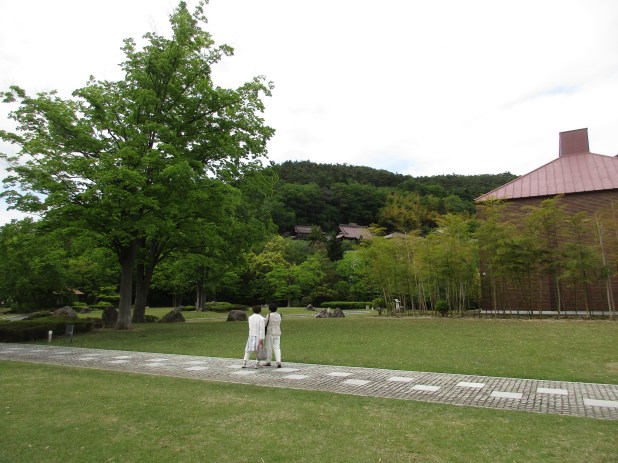
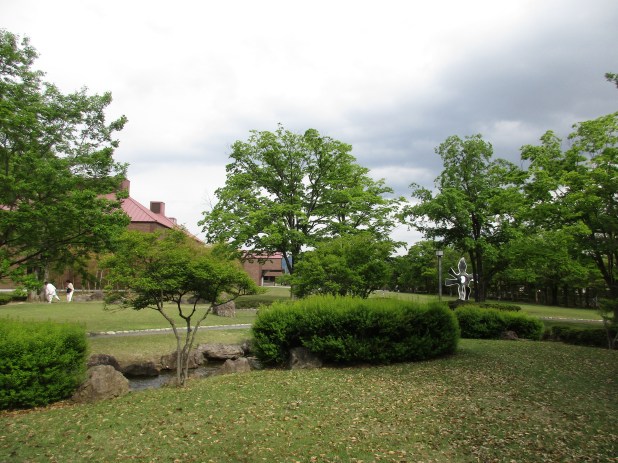
The premises of the museum and the adjoining library are so pleasant.  You can play on the grass, walk around.  It’s a wonderful place for kids!

Cultured museum goers stroll down a path.

On a day with nice weather, you should come here.  There’s also Mount Shinobu right next to this area if you like hiking.

Fukushima’s art museum does not always have a travelling exhibit, but they do always have a permanent exhibit (that I have been to many times, and thus never go to anymore!)  The permanent exhibit is upstairs.

Let’s just stay here all day and read books and enjoy the May weather!  Pretty soon it will get uncomfortably hot, so I am taking advantage of these spring temperatures.

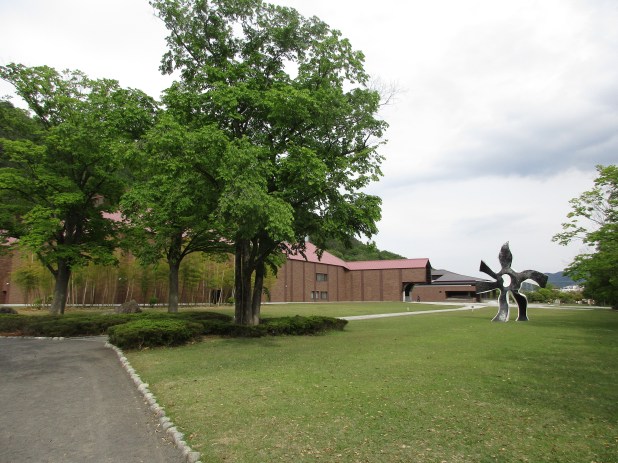
That’s the art museum building…and in the far distance is the prefectural library.  Check that out too, if you are a book lover!

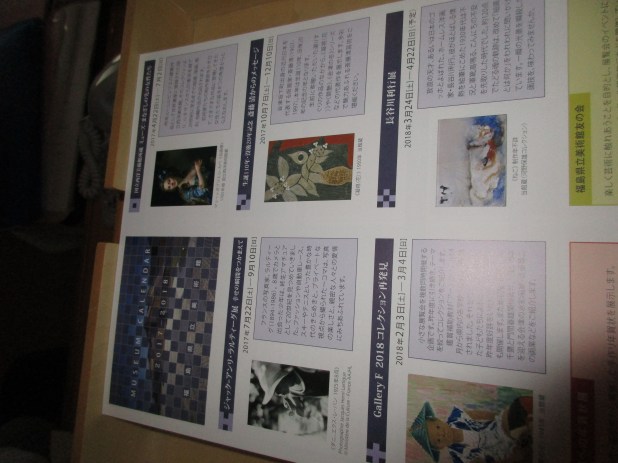
If you are in Fukushima City during the next year, here are the upcoming exhibits!  Please come and visit!

Muse: Women before the Artists’ Eyes
from the Collection of the National Museum of Western Art, Tokyo
April 22 – July 2, 2017
Jacques Henri Lartigue : Photographs  May 28 – July 3, 2017
Message from SAITO Kiyoshi October 7 – December 10, 2017
Gallery F 2018  February 3 – March 4, 2018
 HASEKAWA Toshiyuki Retrospective March 24 – April 22, 2018

Spring Parade of Fukushima City Elementary School Students

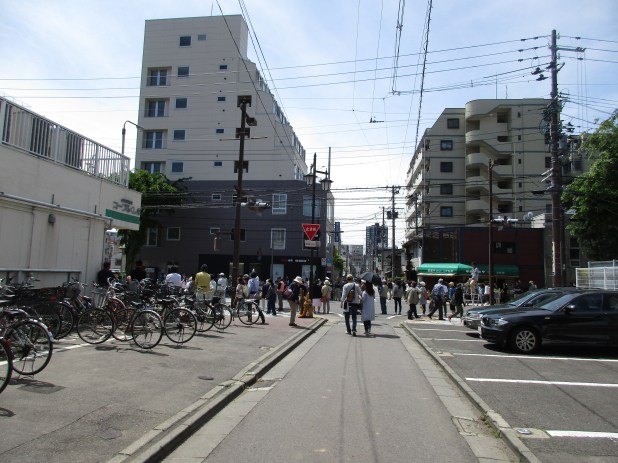
Hey! Hey!  What’s the event?!  Why are so many people gathered at the street near my home?!?!

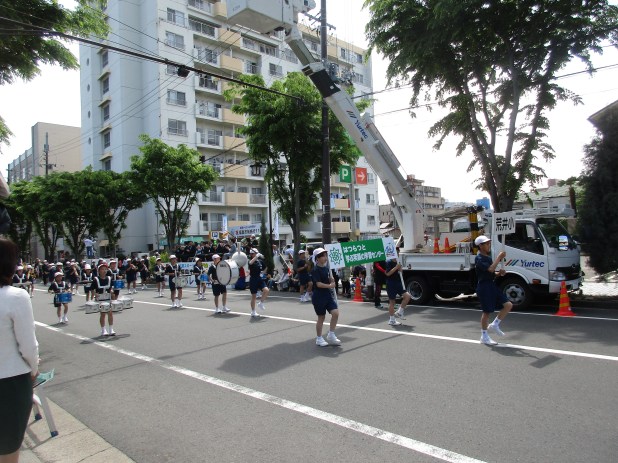
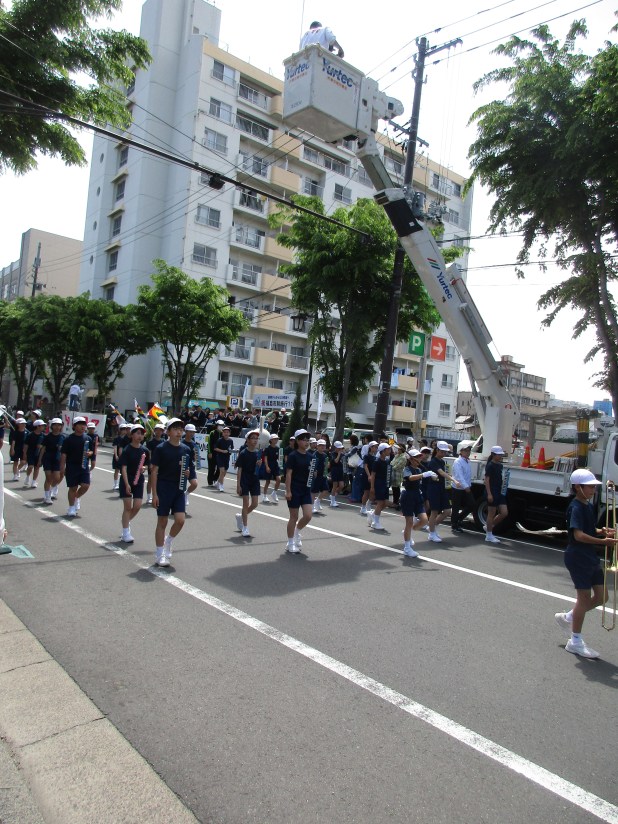
It’s a parade!  Every spring, the fourth, fifth, and sixth grade elementary school students of Fukushima City march and perform.

Here they come!  They are divided up by schools.  Each school marches down the street, playing drums, waving flags, and so on.  They’ve been practicing for this day for a long time!

Since it goes school by school, that means that it takes about three hours for the entire parade to finish.  On a warm day like today, that feels like a long time!  (By the way the bucket truck has a cameraperson inside it.)

Congratulations, kids!  You did a good job!


The kids who are now in the fourth, fifth, and sixth grades (in the year 2017) were born in the years 2005, 2006, and 2007.  The Tohoku Earthquake (the big one!) happened in the year 2011.   That means those kids were ages six, five and four, and three at that time.  (Depending on their birthdays.)  So while some of them remember the earthquake, probably some of them don’t.

What’s the first really big event YOU can remember?  For me, probably I remember the ruckus of Watergate and how Nixon was a bad guy.   I remember that the war of the United States and Vietnam was over, and that was a good thing.   I remember how 1976 was the bicentennial year for the United States, and everything was red, white, and blue!  Yes, I was a seventies child….  (Did you guess?)

Tohoku de, yokatta.

This is old news, about one or two months old.   What happened is that the reconstruction minister responsible for rebuilding Tohoku said something that got him fired.

He said, “Tohoku de, yokatta.”

What does this mean?

It’s hard for me to translate, but literally, “It was good that it (meaning, the earthquake) was in Tohoku.”  Obviously his meaning is “It was good it was in Tohoku because if it had been in Tokyo, that would REALLY have been bad.”

This minister, Masahiro Imamura, is NOT a native of the Tohoku region.  He is a native of Saga, a prefecture way way way down south on the island of Kyushu–very far away from the Tohoku region.  (I personally think of Kyushu as just a totally different world.)    He will be replaced by a native of Fukushima Prefecture, thank goodness.

This is ostensibly a blog for children, so I don’t like to post links.  However, for the first time ever, I will post English links to this news story.  If you’re a kid on the internet, you can probably handle a few links, I suppose!  Just don’t go crazy, kids, and go to weird sites that’ll corrupt your sweet little innocent minds.

These two links are to the Japan Times (an English language paper for news in Japan.)

This first link is about the scandal itself.

http://www.japantimes.co.jp/news/2017/04/25/national/politics-diplomacy/gaffe-prone-tohoku-reconstruction-minister-strikes/#.WRTYzYVOJEY

This second link is how people from Tohoku are embracing the use of the word “Yokatta” on Twitter, saying (basically) “Tohoku is good. It’s the most beautiful place evah.”

http://www.japantimes.co.jp/news/2017/04/27/national/twitter-users-spin-turn-ministers-tohoku-gaffe-praise-region/


What do I think of Imamura’s “gaffe?”

Well, I do he’s an idiot.   I guess I know what he possibly means…..better sparsely populated Tohoku than densely populated Tokyo!  But considering that thousands of people died in the disaster, it’s not really something anybody can ever be happy about, or appreciative of.  Lots and lots of people live in Tohoku.  It’s not exactly a barren wasteland up here.

So many people died all along the east coast of Tohoku, so many communities were destroyed.  I don’t know how that can ever be considered “good.”   Sad is all it will ever be.  I personally don’t live on the coast, so I can’t report on news from there very well….but hearing the stories from those regions breaks my heart.


Residents Gradually Returning to “Forbidden Zone.”

There is an area around the nuclear power plant where residents have not been allowed to live since March of 2011, due to high radiation levels.  Indeed, people are not allowed to visit there without getting a permit.   This area is comprised of small towns.  It’s a rural area.   Gradually people have been allowed to return as their areas have been deemed safe.  Some residents want to return.  Some don’t.

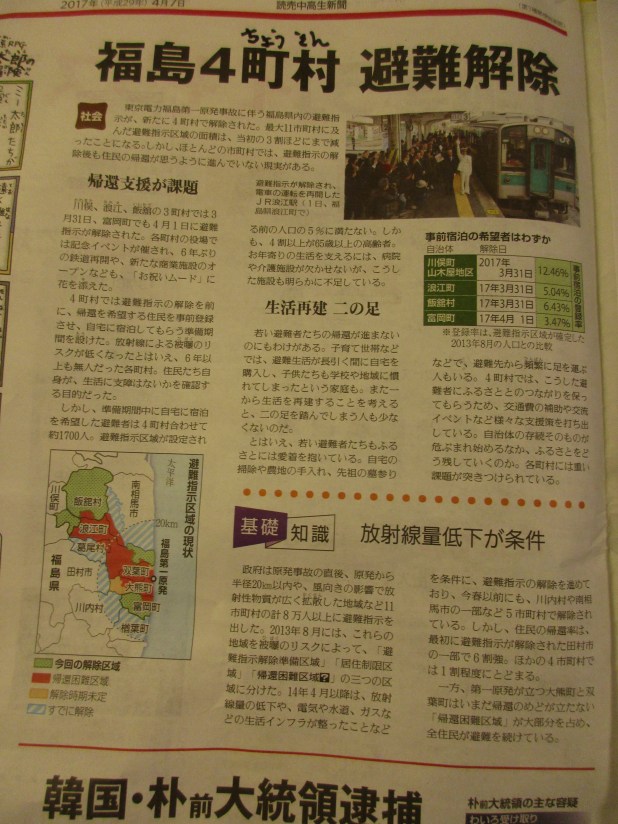
Here is an article from the junior high newspaper I read weekly.  I’m sorry, it’s at least a month old.  (I have been busy!)   The news is continually relevant though.

In the map in the article, the tiny black ringed circle is the location of the stricken power plant.  (Fukushima Dai Ichi Nuclear Power Plant)  If you look at the green areas, those are areas where people are allowed to return.  The blue and white areas are places where people have already returned.

In other news, recently I went to a meeting in which a researcher explained about the situation on the decommissioning of the power plant, and listened to the viewpoints of us foreign residents of Fukushima.   (He has held other groups, listening to other residents’ opinions–like students, housewives, etc.)  My husband said he is a famous researcher.

Anyhoo…..he told us that the biggest problem currently is the groundwater that is CONSTANTLY being radiated by the power plant.  When I say constantly, I mean on a daily basis.   They are attempting to rectify this problem by building ice walls.  Will this solve the problem?  Gosh, I certainly hope so.  It’s really a worrisome dilemma.   Keeping my fingers crossed…..

Something we foreigners discussed is the lack of trustworthy news about the situation.   News is either nonexistent, or (often on the internet) it’s provocative and exaggerated and often untrue.

I know people who don’t live in Fukushima frequently tell me that it’s as though Fukushima has just dropped off the radar…  Trust me, we’re still here.  The power plant’s still there.   It’s a situation that’s not going away for a LONG time.

Fukushima City…….Trains in Love!

Early in May, there are several consecutive holidays in Japan (known as “Golden Week”) and many people go on mini-vacations during this time.  I myself always go to my husband’s parents’ house in nearby Yamagata Prefecture.  A lot of people drive to their destinations, but my husband doesn’t really like going by car–so we take the trains.
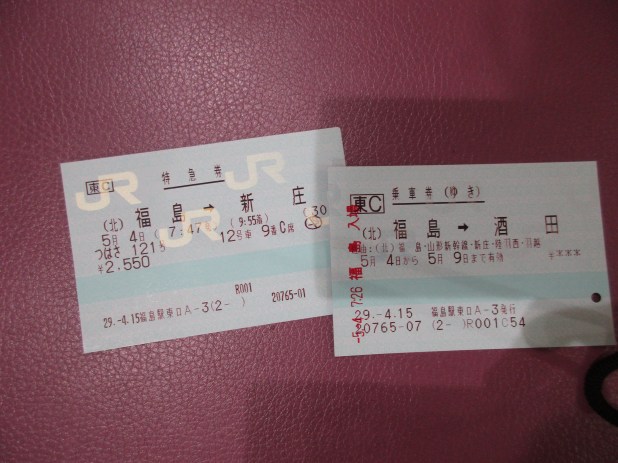
Here are the tickets (for one person.)

Can you find the word “Fukushima”?  In Japanese it is 福島  (Hint:  It is written on each ticket.)

The ticket on the left is a bullet train ticket.  The ticket on the right is for the regular train that we take after the bullet train.

These tickets have only Japanese on them, so I thought these tickets may be confusing for people who don’t read Japanese.  However, my friend Helen said that one can request tickets that use romaji (the Roman alphabet system.)
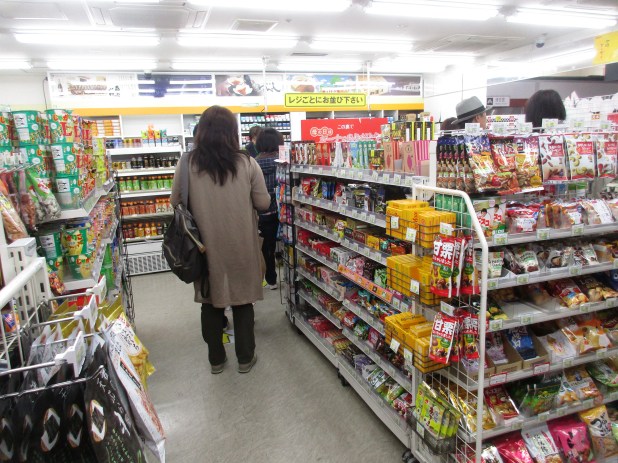
Once you enter the bullet train area at the train station, there is a little shop where you can buy drinks, food, newspapers, and so on.
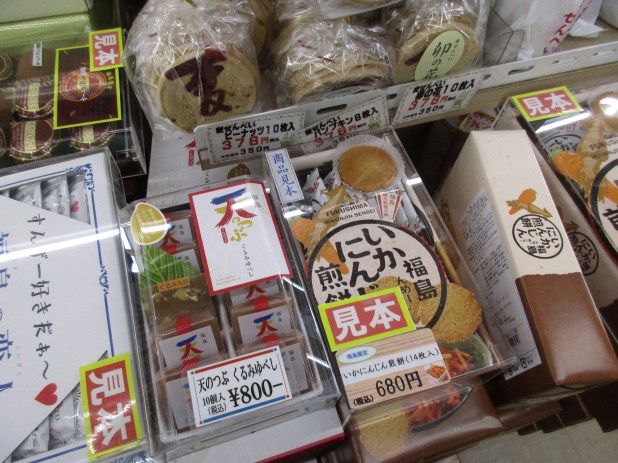
This shop has a lot of “only in Fukushima” items.  Japanese love to give souvenirs that were made in the region that they visited.  There is a HUGE market for these specialty items.   When I say HUGE, I mean GINORMOUSSSSSS!!!!!!
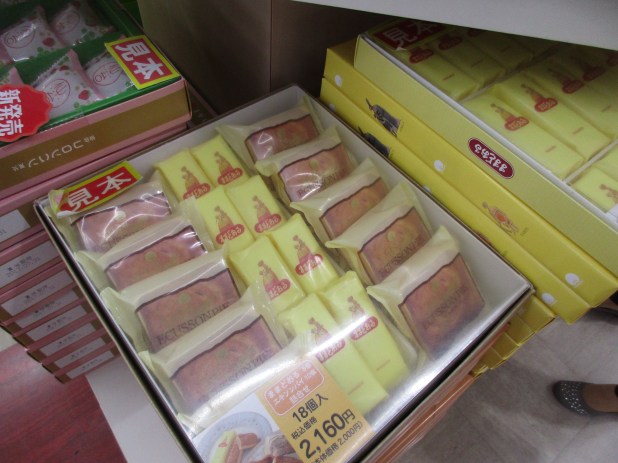
Possibly Fukushima’s number one snack “Mamadoru.”  Filled with your mother’s love!!!!!

The commercial on TV says (In Japanese):

Mama!  Mama!  Mamadoru

Filled with milk

Taste of Mother

Mama! Mama!  Mamadoru
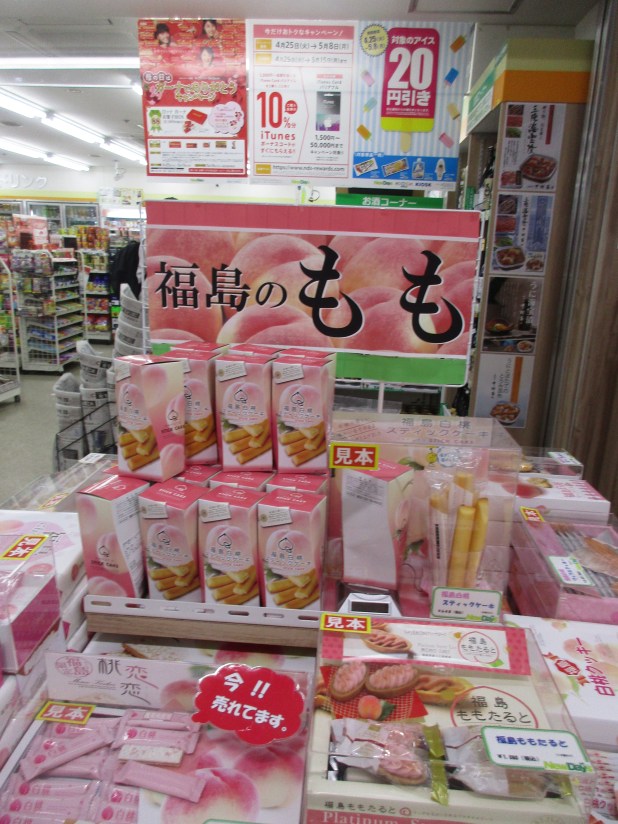
Fukushima is famous for peach orchards, so peach-flavored goodies are popular.  The sign at the top 福島のもも says “Fukushima’s Peaches.”

もも Momo =Peach
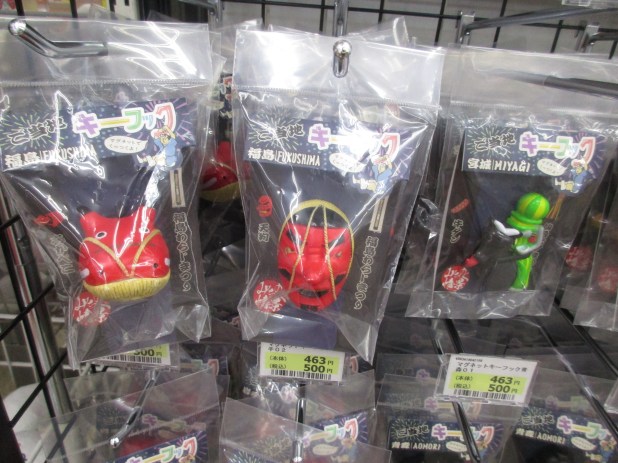
Fun Tohoku trinkets

And plus, regular chocolate (for those of us who get the munchies on the train….)
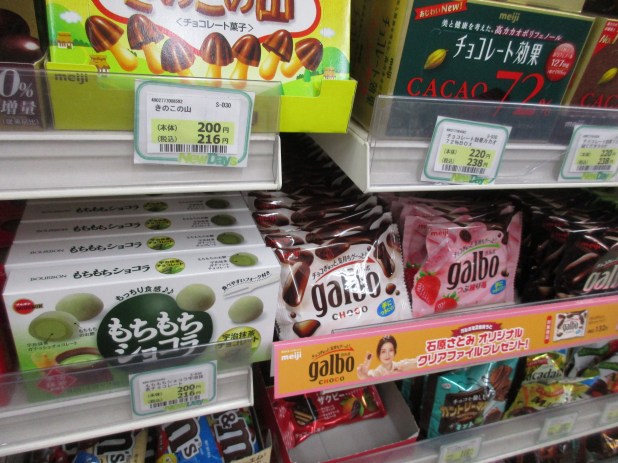
Hmmmmmm….which should I choose…………..

Here’s the train….the BULLET TRAIN!
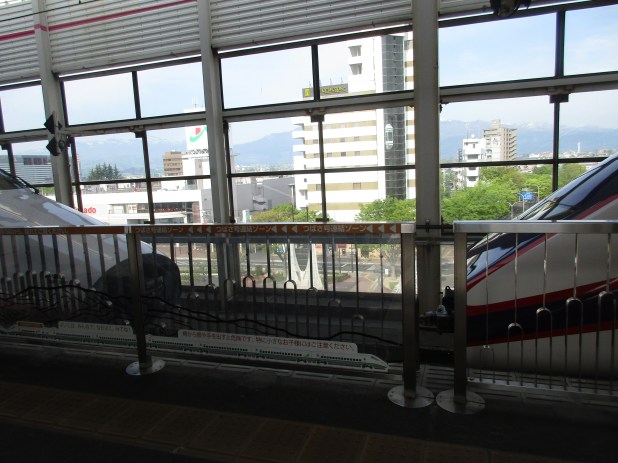
What??!!??  Are they going to collide?   Are we witnessing the first head-on bullet train collision ever?

No, of course not, silly.  Everybody knows the bullet train never has collisions.
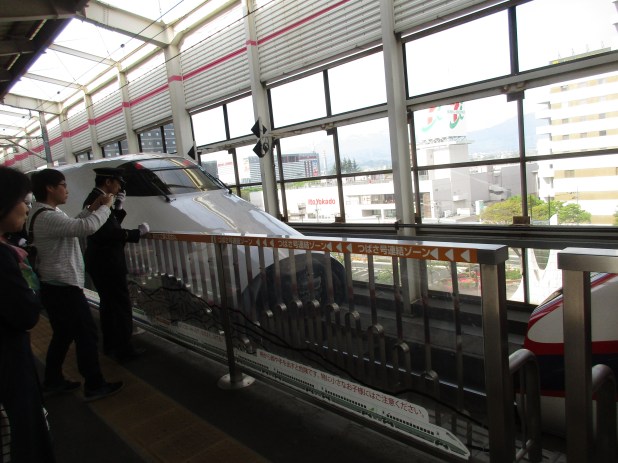
What is happening here is that two bullet trains are connecting together.  This makes the train longer so it can accommodate more passengers.
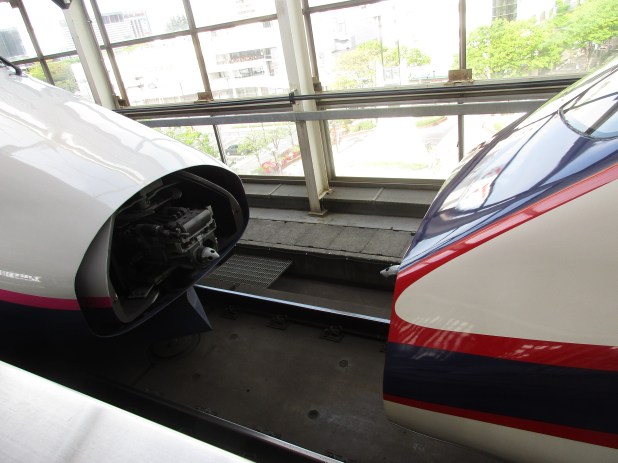
Why?  Well, these two different trains came from northwest Tohoku and northeast Tohoku.  Tohoku (comparatively) is sparsely populated, so the trains didn’t have to be so very long.  In Fukushima city, the tracks converge, so they join up to go to Tokyo together.
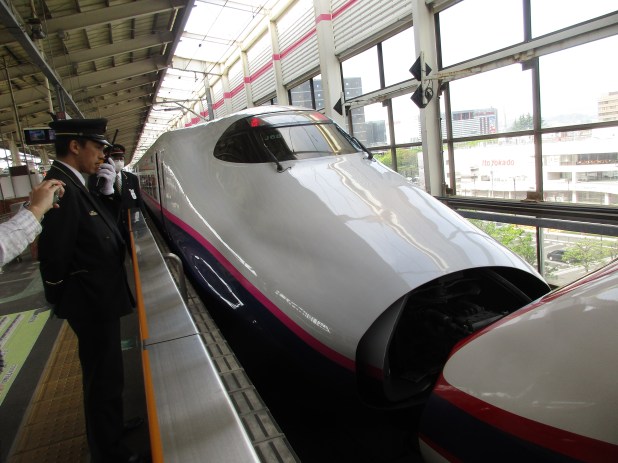
I always tell my son the trains are kissing.  It’s true love, railway style.
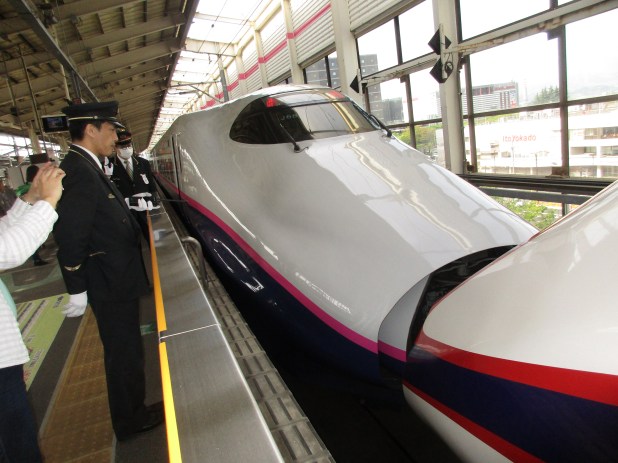
Ah, so romantic!   The man in the black uniform is saying “I now pronounce you man and wife!”

“Oh, I’m so happy!  We met online!  They say commuter dating doesn’t work, but we are really attached and plan to spend the next two and a half hours together!”
Congrats to the happy couple!

Children’s Day

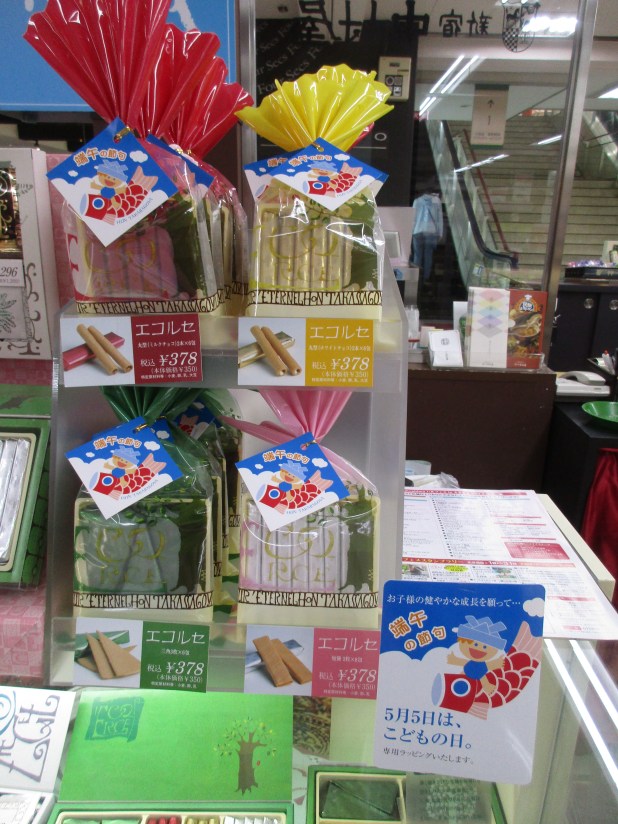
May is here!   The beginning of May means Golden Week in Japan.  That’s many holidays in a row.

Children’s Day used to be known as Boy’s Day, but the name was changed in 1948.  I was complaining to my husband about how it used to be known as Boy’s Day, and he said it was fair because there is a Girl’s Day.

Children’s Day, however, is a national holiday and Girl’s Day is not!  That means no work or school on Children’s Day, but Girl’s Day is a regular day for work and school.

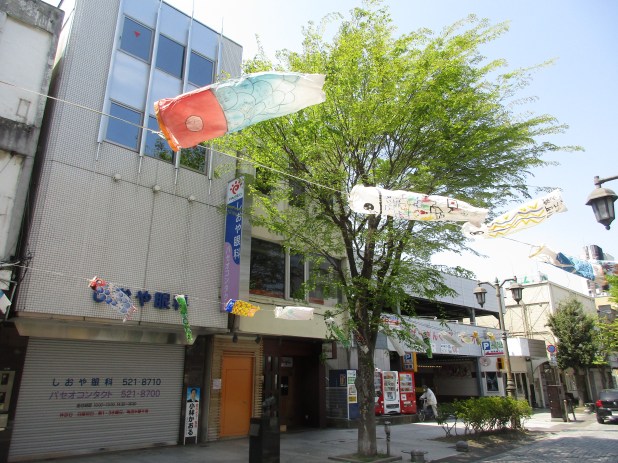
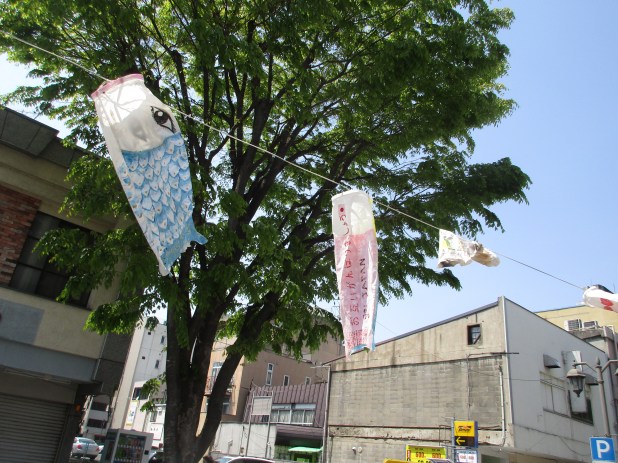
One symbol of Children’s Day is the carp.  The idea is that a child (originally—the boy) is supposed to be strong and fight against the current of the water.

This is the shrine down the street from my home.  A banner of carp fly here.  They represent the members of the family.

When I first came to Japan, I was impressed with the flying fish I would see here and there in Japan.  (Usually at places like schools, parks, etc.)  I am still impressed!  They are simply beautiful.  Since Children’s Day is early May, you can only see them this time of year.

Here they are in a park in Koriyama City.  (This photo was taken about a year ago…on a very rainy day!)

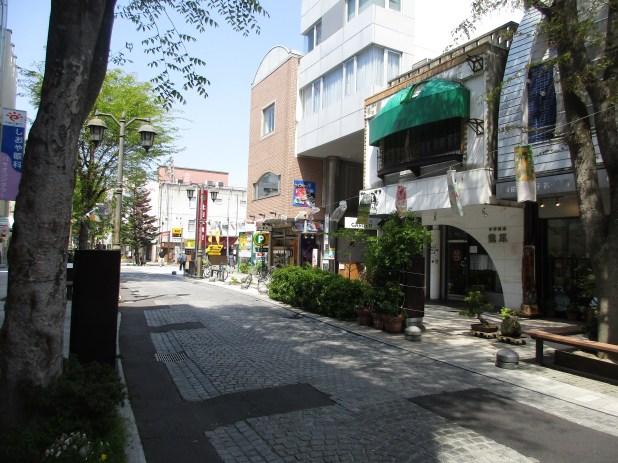
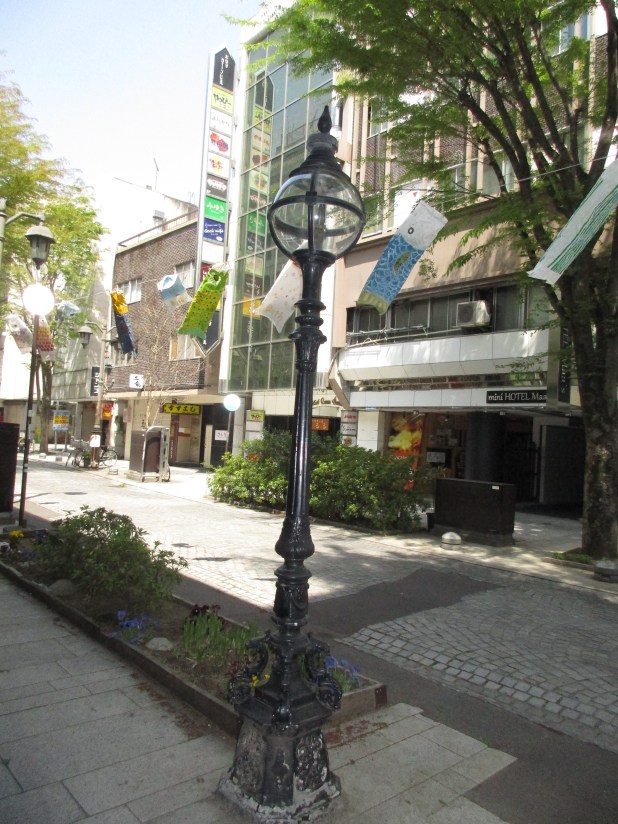
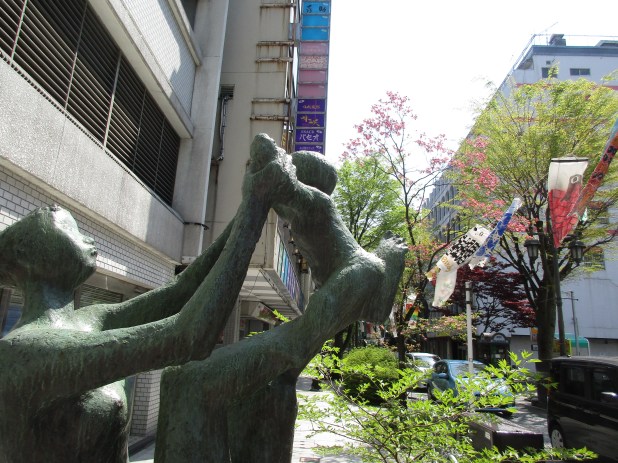
Paseo Dori Street is my favorite street in Fukushima City, and you can see the carp here, too.

Let’s give a big thanks to the moms and dads out there raising the youngsters of the world!  Mother’s and Father’s Day will be here soon….  (And my birthday!!!!!!!)  May is a wonderful month.

This blog is meant for children (although anybody may read it.  Including my mom’s best friend Mary Sue ❤ and my ever lovely Japanese teacher Ms. Sagi!  ❤ )   It’s all my own opinions.  It’s meant to represent Fukushima (although mostly Fukushima City because that is where I live!)   There’s not a lot out there about the tragedy for kids.  There’s not even a whole lot available for adults!   If anything looks like fake news, well, it probably is!   Your best bet is reading the literature available because it’s been carefully researched.  One of the best books is “Strong in the Rain.”   Wow, I got off topic here, didn’t I?  I’ll provide a better list of books at a later date.

Anyway, what I meant to say, is hooray for you, kids!   Kids are some of my favorite people!  You guys and gals are the future and, yeah, it looks like we adults are sure messing things up big time, but hopefully we can get back on track to a more healthy and environmentally conscious world……….   Sending lots of love to you kiddos this Children’s Day!
 

Sakura Zensen

Cherry blossoms are a long tradition in Japan.  Long, long ago and nowadays, Japanese people like to visit areas with lots of sakura trees and relax, or party…or whatever.

You may be wondering:  How do people know when cherry blossoms will be blooming in the area in which they live?  Japan is a long and thin country, stretching mostly from south to north.   So each year, there is a map that predicts when the blossoms will be blooming.  It’s the cherry blossom front, in Japanese:  sakura zensen.

さくら開花前線

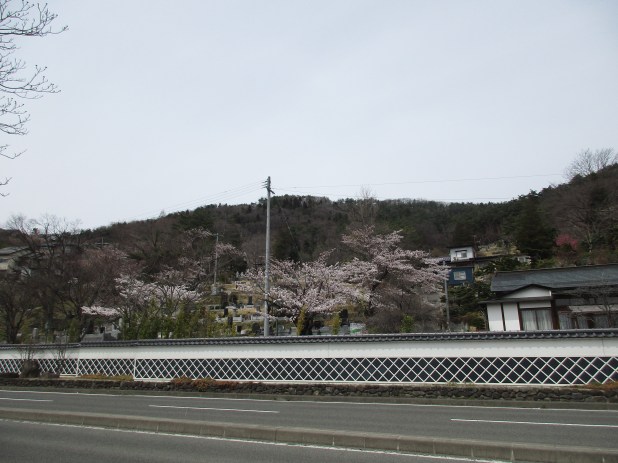
It’s the end of April here in Fukushima, so for me the cherry blossoms are long gone.  However, I’ll show some photos I took on the way home from Mochizuri Kannon (which I visited in my last post.)  What’s interesting is that on the SAME DAY that it was too early for cherry blossoms at Mochizuri Kannon, the blossoms were already blooming in Fukushima City.  A slight change of temperature changes when the blossoms bloom.  It can be really tricky then to plan one’s cherry blossom party at the right time.  A little early, a little late… just right!

Heading back towards the city.  This is inside Fukushima City limits, but it’s not the downtown area.  I don’t usually go to this area–there’s nothing out here for me.

Now we are very close to downtown Fukushima City.  This is Mount Shinobu (Shinobuyama).  I love this mountain!  A little mountain near my home.

This is the Fukushima City’s culture center.  (Bunka Sentaa)  Often, if there is a live performance, this is where it will be held.    That’s still Mount Shinobu in the background.  It’s a low mountain, but quite long.

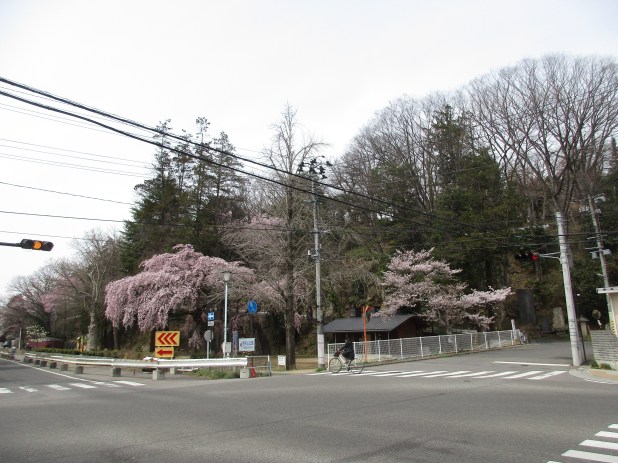
Again, still Mount Shinobu.  (I had been biking alongside it.)  This is a park…and if you climb up at this point you will find the mountain’s famous cherry blossom spot.   I’m quite close to home at this point.

Down the street to my house.  This is a local high school.   What’s interesting here is that you can see two different types of cherry blossom trees in this photo.  One at the left (purplish) and one on the right (whitish.)

So I made it home safe and sound!  Every year, it feels that cherry blossom season comes and goes so quickly.  It’s a lovely time when the weather is so comfortable.    After May, we will enter the rainy season….and then a horribly humid and hot summer!  Can’t wait to be sweltering!  Well, for now, I will appreciate warm breezes and gentle sunshine.


Mochizuri Kannon Temple


It seems that in Japan, every place of importance has at least one cherry blossom tree.  Parks, schools, temples, shrines….

So I rode my bicycle out to Mochizuri Kannon with the hope of seeing the cherry blossoms there in full bloom.  Unfortunately, the temple has only one cherry blossom tree.  (It is more famous for its autumn leaves.)  And also, it was too early–it wasn’t blooming yet!

Mochizuri Kannon is about a forty minute bike ride from downtown Fukushima City.  It’s kind of out in the countryside, away from the city.  I have been told it is the largest temple in Fukushima in terms of land area.

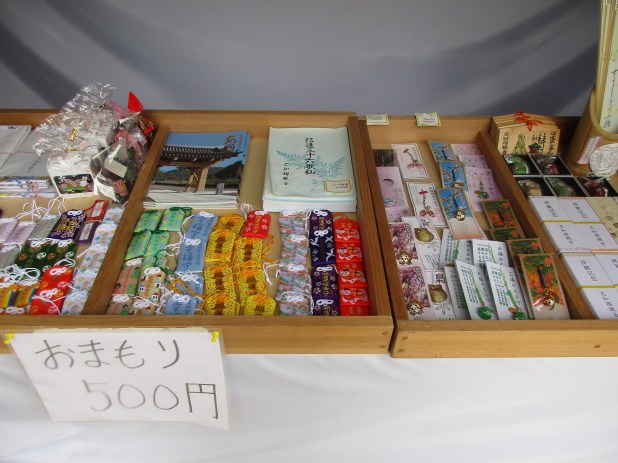
These are “Omamori.”  As you can see on the sign, each one costs five hundred yen.  (Approximately five U.S. dollars.)  Omamori is often translated as amulet.

Believers purchase the amulets and keep them as charms.  So as you can see on the amulets in the photos, some have pencils on them.  Students might buy those in hopes of doing well in school, and then attach them to their school bags.

Mochizuri Kannon is most famous because it was visited by Matsuo Basho.  He was the most famous poet of the Edo Era.  He was born in 1644 near Ueno.


Basho visited this rock and wrote a haiku here.

sanae toru temoto ya mukashi shinobuzuri

planting seedlings
with the hands—ancient patterns
from the fern of longing

A different view…

Walking on the grounds…  I have lots of photos so I will just show them from here on out and not say anything.

Imagine yourself on a spring day, a slight breeze, exploring a temple in Tohoku….

Pardon me for interrupting your meditation, but I want to say that this structure was damaged in the earthquake of 2011.  When I visited a couple years ago, it was being repaired.  The repairs seem to be finished now.

This is a box where one can donate money if one so wishes.  Usually a person throws in some coins (or bills) and prays.  The slats prevent theft.

These are “Omikuji.”  You donate money (usually 100 yen) and pull out a piece of paper.  It tells you if your luck will be good or bad.

If a person recieves a fortune with bad luck, he or she will leave the bad luck behind at the temple.

Nobody wants bad luck!

This is the temple’s one and only cherry blossom tree….I arrived MUCH too early!

Here it is on the map!  Easy to ride a bike to, so I recommend it!

Haneda Airport

Tokyo has two main aiports.  They are Haneda and Narita.  (Narita’s official name is “New Tokyo International Airport.)

Haneda is an older airport, and is supposed to be for domestic flights (within Japan.)  Narita is a newer airport and is supposed to be for international flights.  However, many people in Tokyo do not like the Narita airport because is rather far away for them.  (At least an hour by train.)  So there is a lot of controversy that goes on concerning these airports.

Every single international flight that I have taken has departed from and arrived in Narita.

Until now.

Our flight from Los Angeles arrived in the Haneda Airport.  This is so unusual for flights from the U.S. that the flight attendant kept saying “When we arrive in Narita…”  This made me nervous, because I was hoping that the pilot wasn’t making the same mistake!  Luckily the pilot did a good job and we arrived safely in Haneda Airport.


Pulling into our gate…

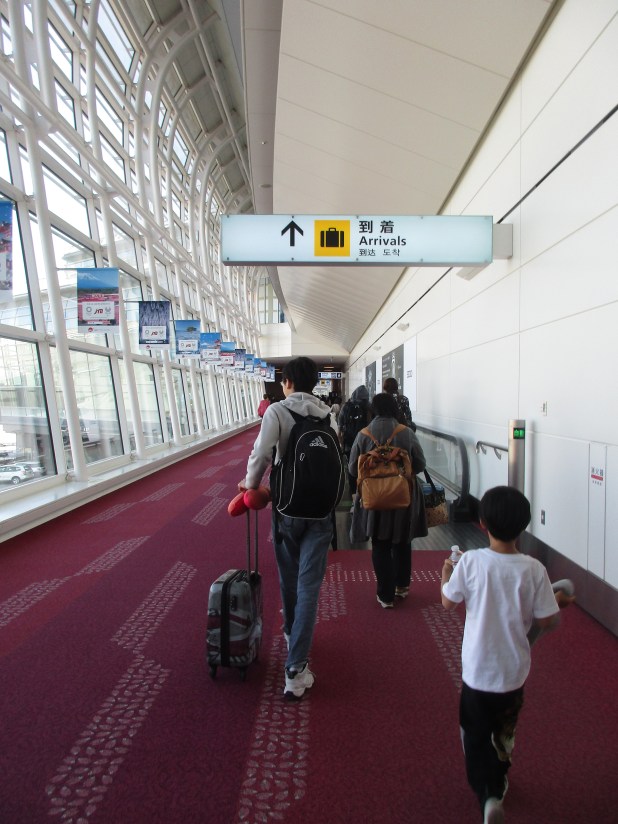
After we deplane, we must go to the area of customs and immigrations (if we are entering Japan.)

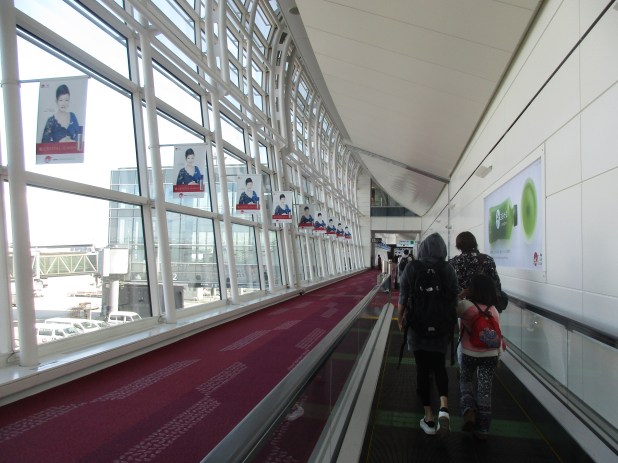
It’s kind of a long walk, but both Haneda and Narita have moving sidewalks to quicken the trip.

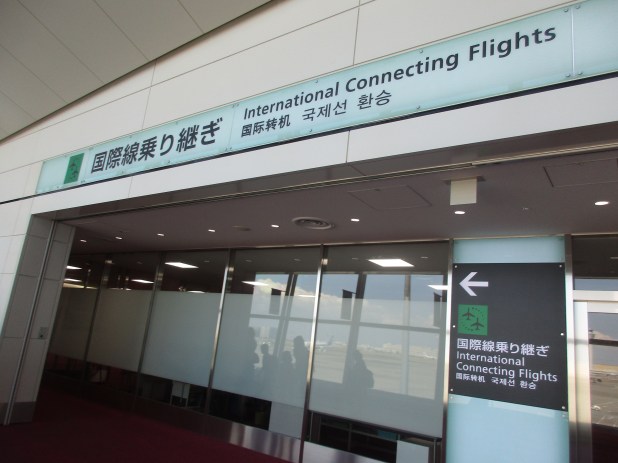
If a person is NOT entering Japan (instead they are flying on to another country), they will not need to proceed to customs and immigrations.  Instead, they head to this area and then wait for their plane to the Philippines or China or wherever they happen to be going.  It’s a very long trip for these people!
However, my son and I must go through immigration control.  I show our passports and  pick up our luggage.  Then I either declare something or don’t declare anything and pass through customs.

There are signs in the customs and immigrations area that say “No Photos” so of course I have no photos to show you of that area.

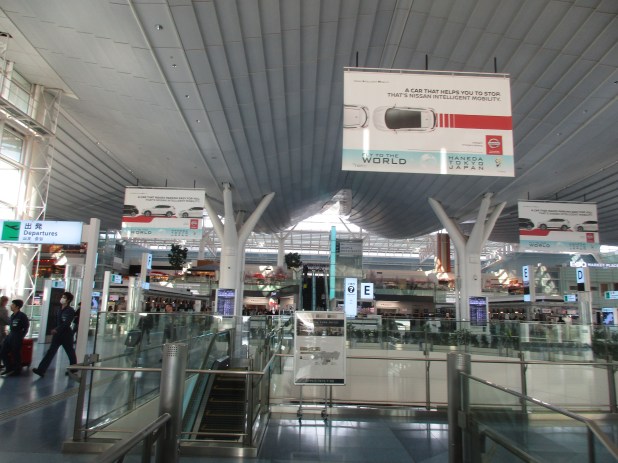
This is Haneda Airport, our terminal.

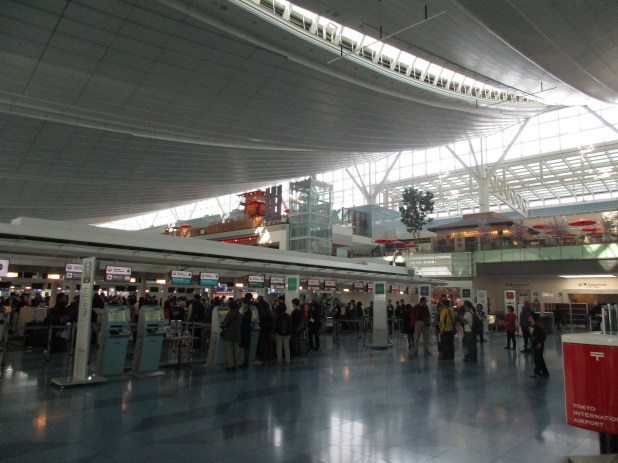
This is the area where people check in their luggage and receive their boarding passes.  However, if you look towards the top of the photo, you can see a touristy area up on the upper levels.  Let’s go up there.

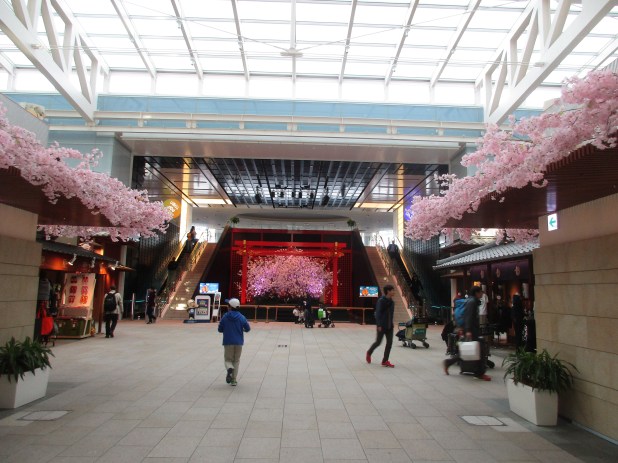
Lovely!

Shopping in stores that have been recreated to look like “Old Japan.”

Both Haneda and Narita airports have observation decks.  So much fun to watch the planes take off and land!

A flight similator.  (It costs money, like a video game.)

So you can see that even at the airports, there is stuff for tourists to see and do.  We used to live in Narita City, and people there would just go to the airport for shopping and enjoyment….without even taking a flight!

Have you ever been to an airport?  Next time you are at an airport, please look around and notice how it is run!  Every airport is different….