Grocery Store Rice

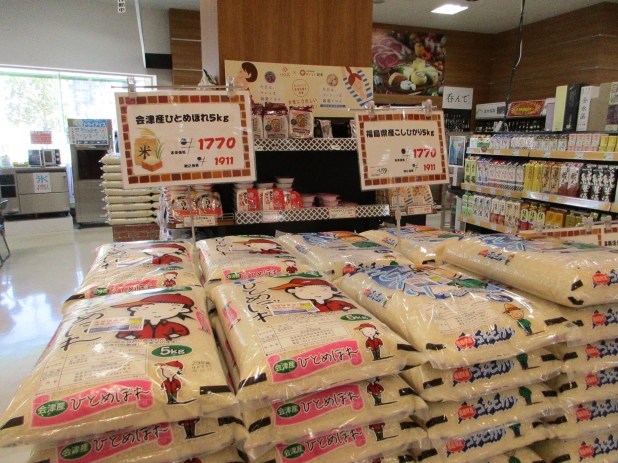
One can also buy rice in a regular grocery store, of course.  Japanese people take their rice VERY seiously.

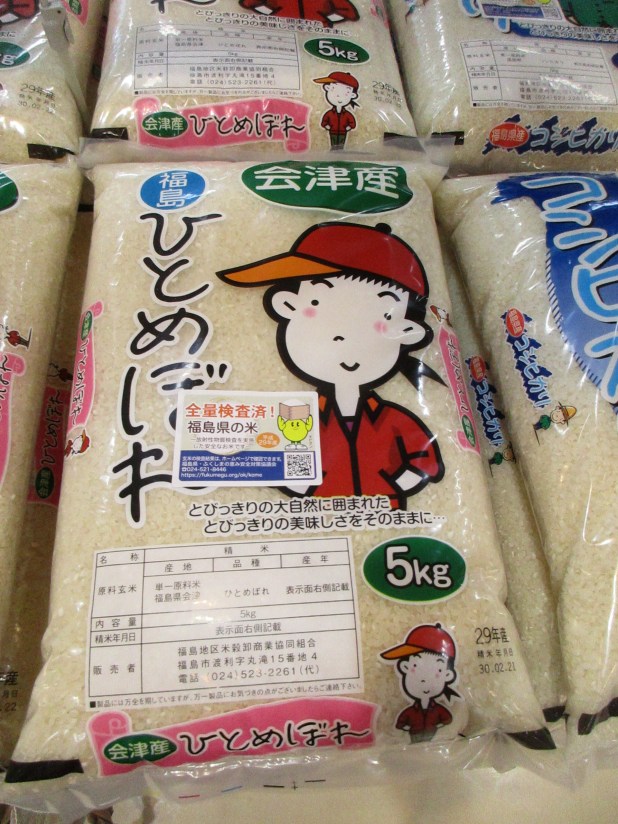
This is the grocery store near my home, and it has a section devoted to rice. In the photo, you can see Fukushima grown rice.

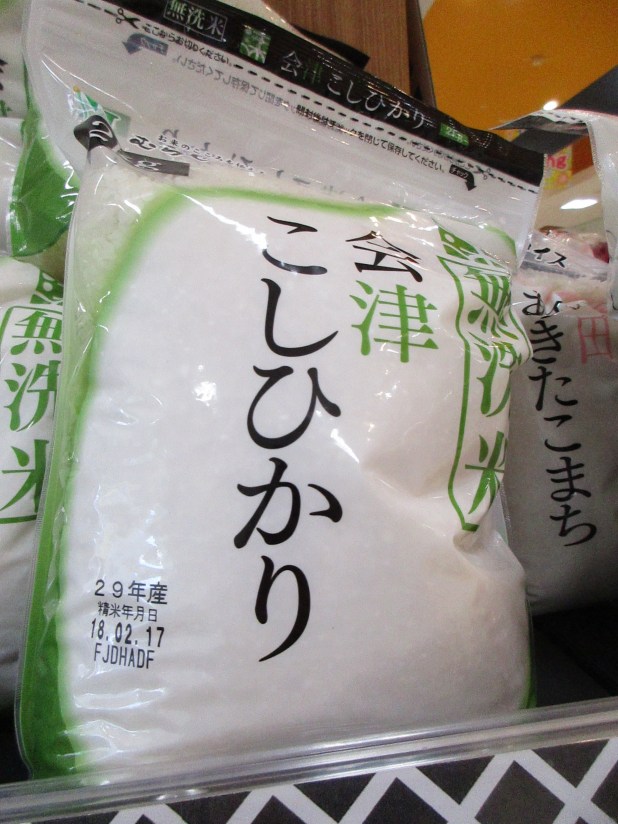
Top left, in the blue circle, it says: Fukushima

This particular rice is from the Aizu region. (Western part of the prefecture.)

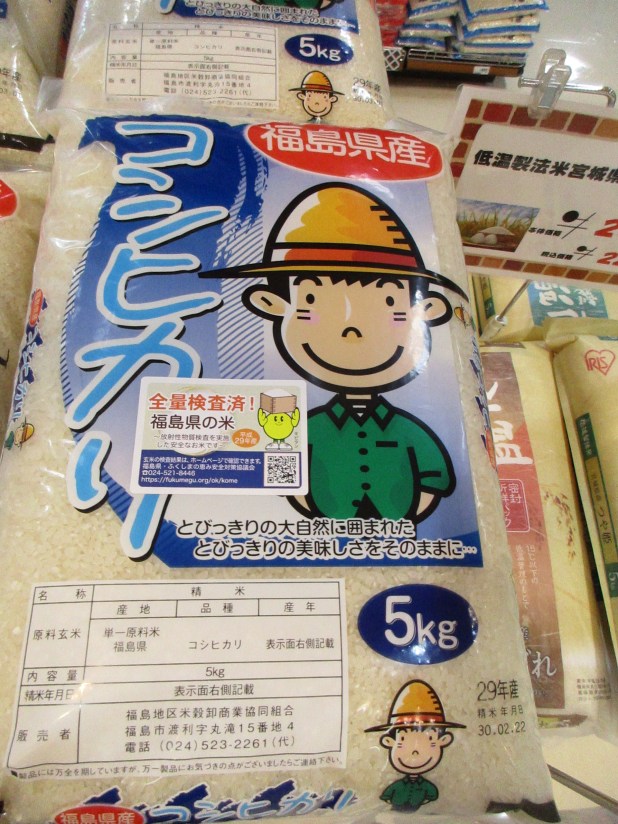
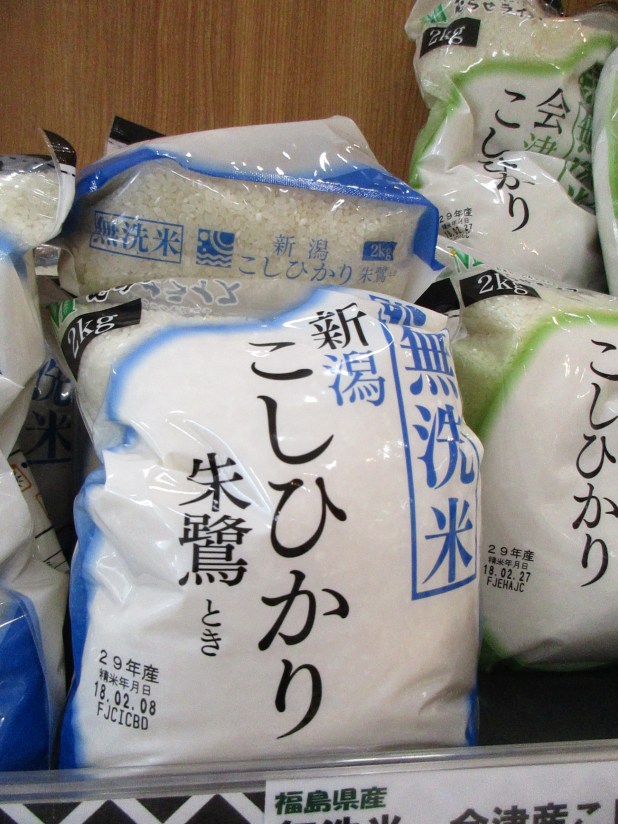
The above rice was also grown in Fukushima Prefecture.

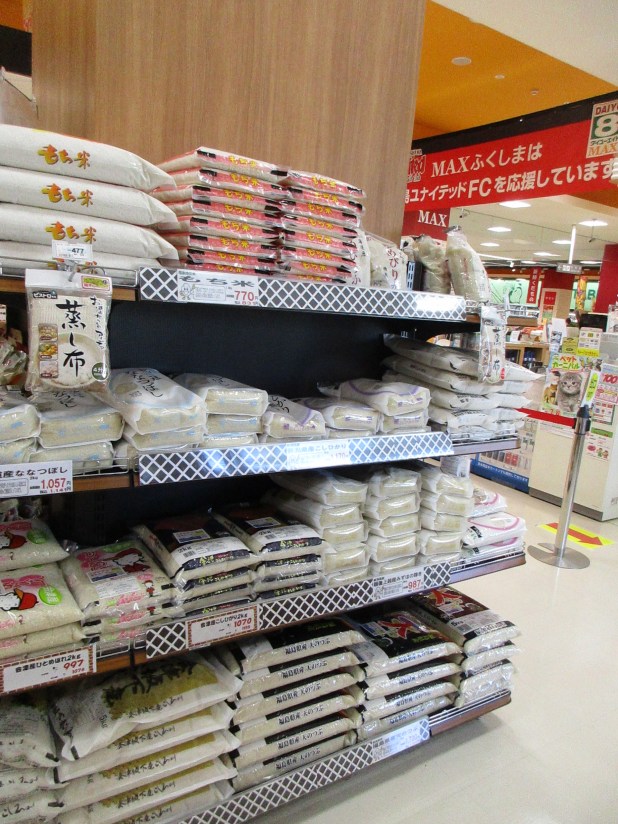
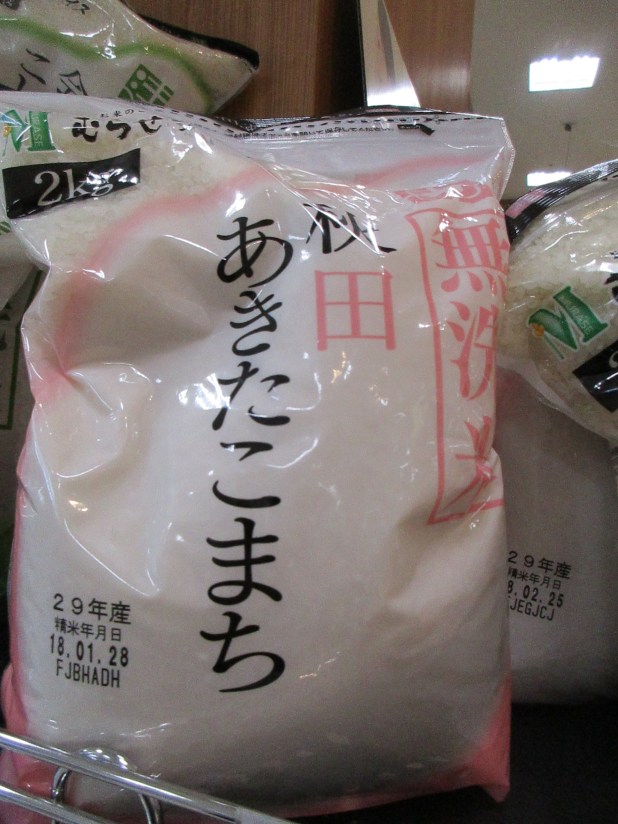
More varieties of rice, from different regions.

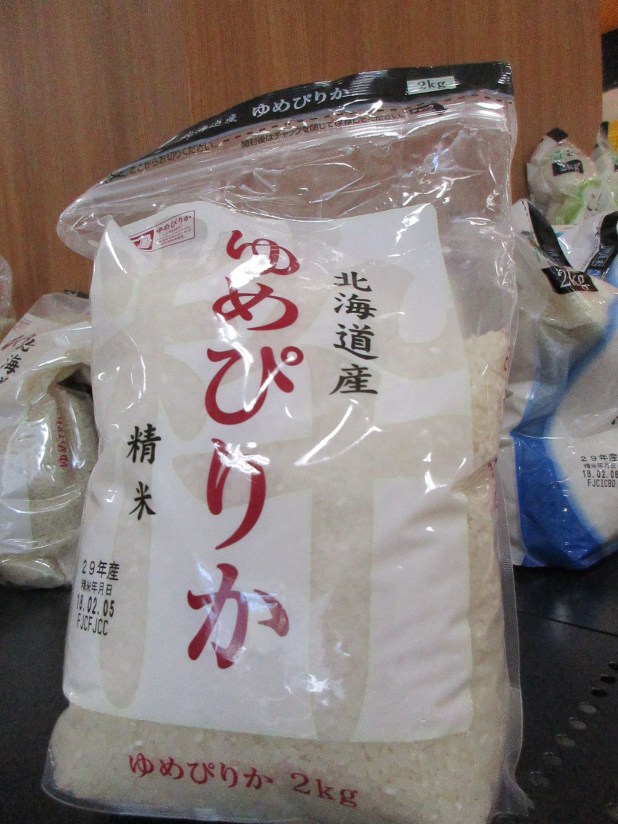
Written in black: Hokkaido

Akita rice

Aizu rice (Aizu is part of Fukushima Prefecture.)

Niigata rice

Yamagata rice

My husbands’ parents are rice farmers in Yamagata Prefecture, so my husband likes this rice!

You can see there are lots of choices in Japan. If you live in the United States or Canada (or most parts of the world) I very much suspect you are NOT eating Fukushima rice. I simply don’t think that Fukushima exports to the U.S. in any great quantity.

Although this link is for exports in general, it claims to show which countries export the most rice. (Japan is NOT one of the countries.)

Rice Exports by Country

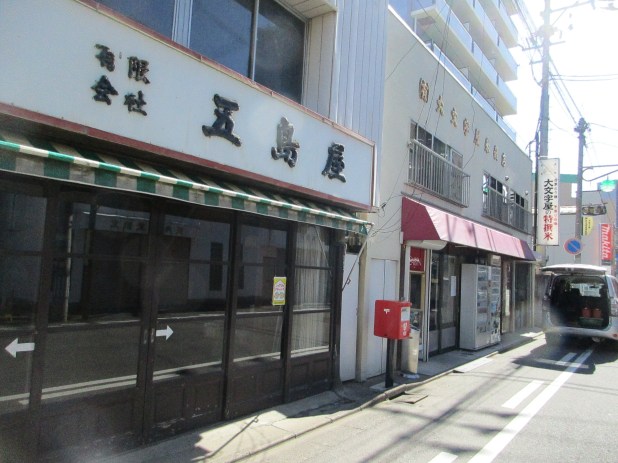
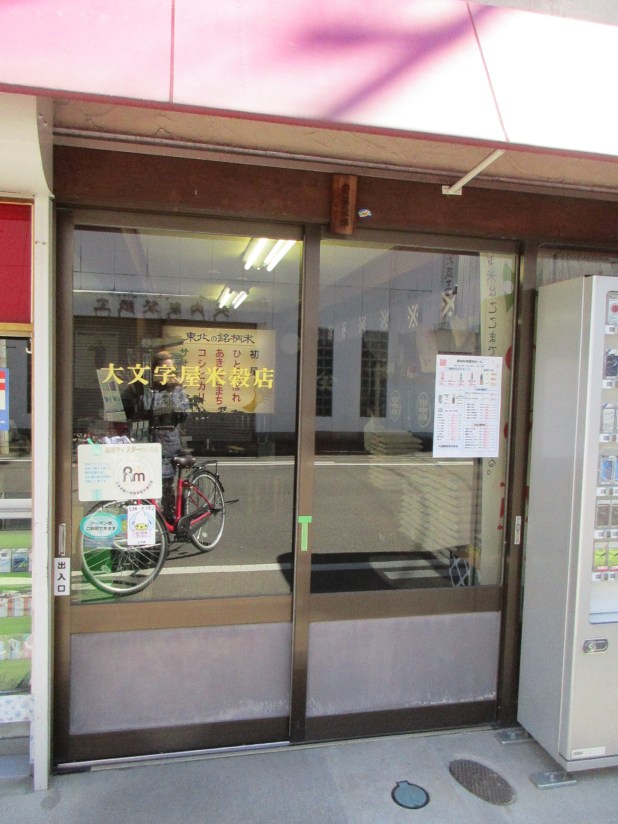
Rice shop near my house

Currently, all rice grown in Fukushima is tested for levels of radiation, and can be sold only if the rice passes the test. The governments wants to change the testing procedure from ALL rice to SAMPLES of rice. It appears it is a burden for farmers to haul all the rice to the testing centers.

Here’s an article about it:

https://www3.nhk.or.jp/nhkworld/en/news/20180302_34/

The following photos show a rice shop very close to my home.

A very quiet street

The rice shop. The owners’ children go to my son’s junior high, and also his former elementary school. (So they know me from my library volunteer at the elementary school.)

Fukushima rice. Tomorrow I’ll show rice from other regions of Japan. Basically each region has its own rice. Professions like farmers (one of the main industries in Fukushima Prefecture) were very much affected by the meltdowns.  It appears (to me) that crops in most parts of the prefecture (remember that Fukushima is one of the larger prefectures in Japan) were not affected by the radiation, or minimally so. And of course, crops have been tested since 2011. However, most people don’t follow what is going on in Fukushima……and therefore they avoid Fukushima food because they assume its dangerous.

My own husband’s parents are rice farmers, although not in Fukushima. Rice farming is a hard job, with low pay. Furthermore, the rice here in Tohoku is usually high quality, gourmet rice, grown with lots of love and care. I’m not telling you to go out and eat Fukushima rice if you don’t want to. But don’t be ill-informed.

This rice shop is special to me because immediately after the earthquake, my husband told me to come here and purchase rice. In all shops, all the food was being bought until the shelves were empty, and he wanted to make sure there would be plenty of rice in our home. (Shortly after, my son and I left to stay with his parents in another part of Japan, but he stayed behind to work.)

The seventh anniversary of the quake is on March 11–next Sunday. I plan to attend a ceremony of remembrance during the afternoon.

Swans and Wild Ducks

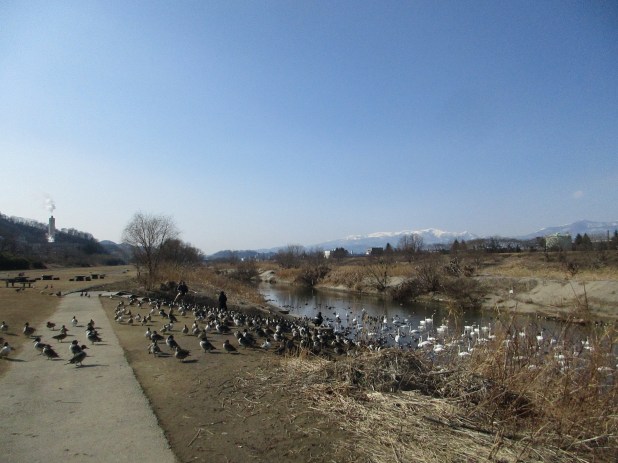
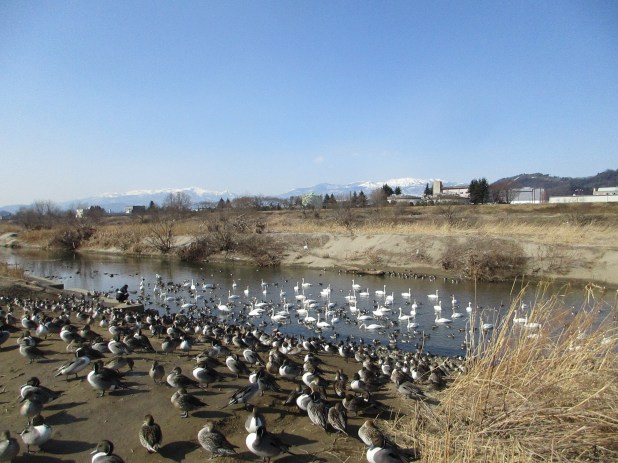
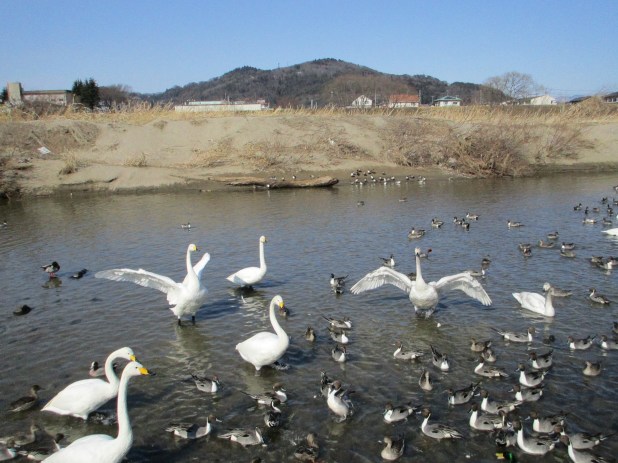
Here we are! This is the Abukuma River in Fukushima City.

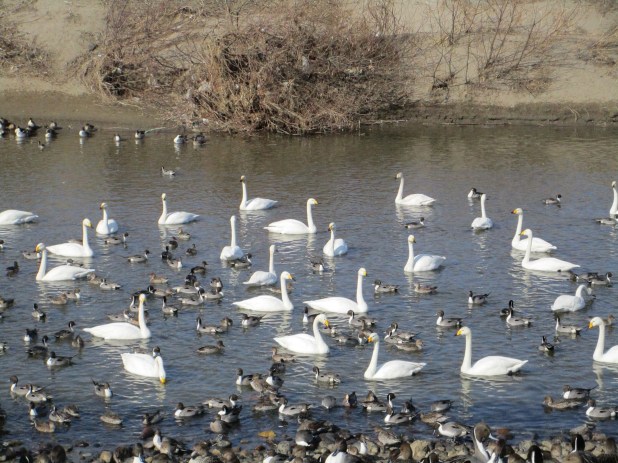
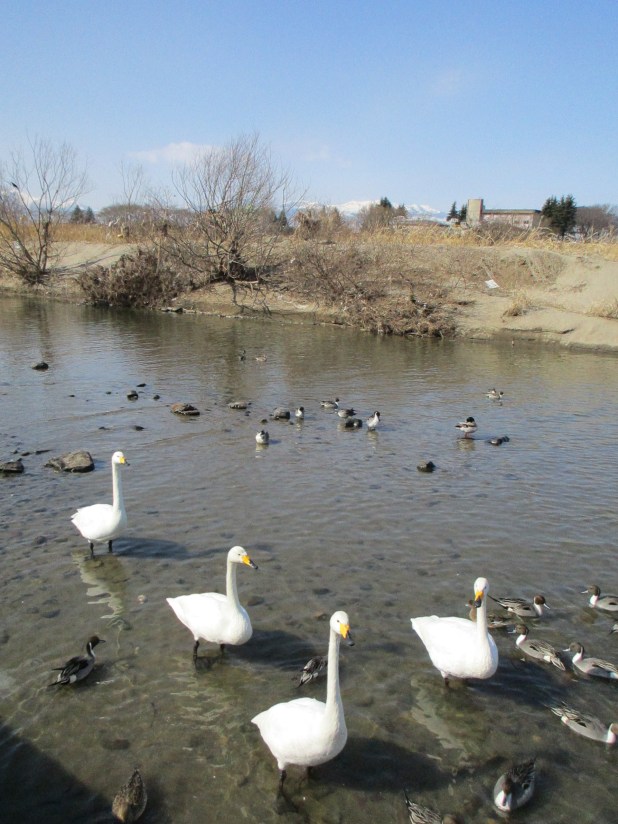
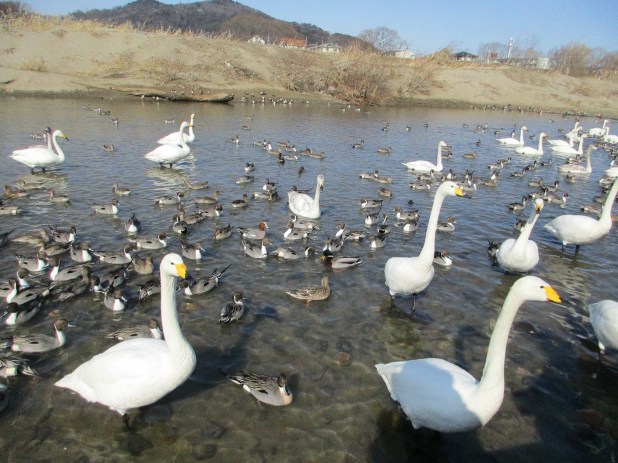
Ducks and Swans

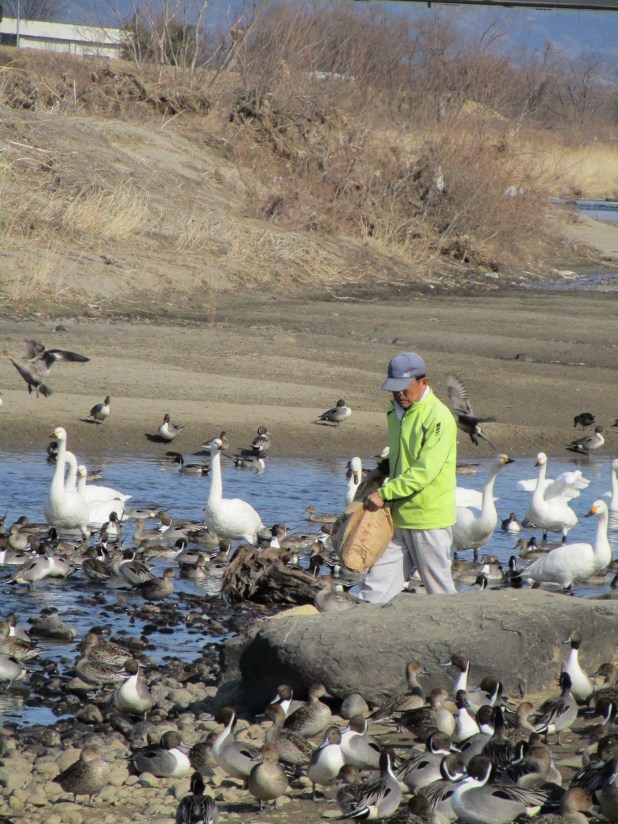
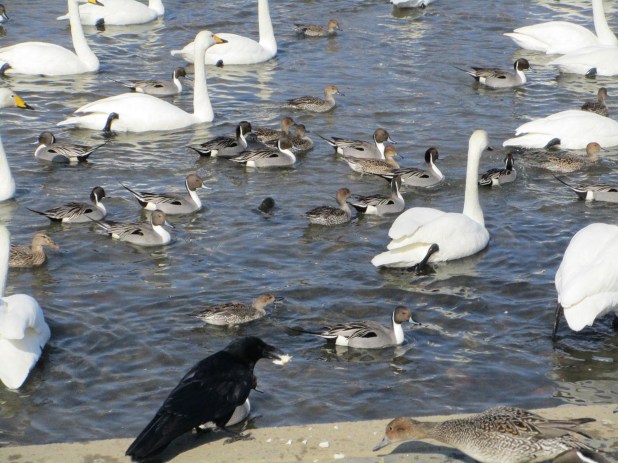
Wild ducks and swans.

They get fed here…

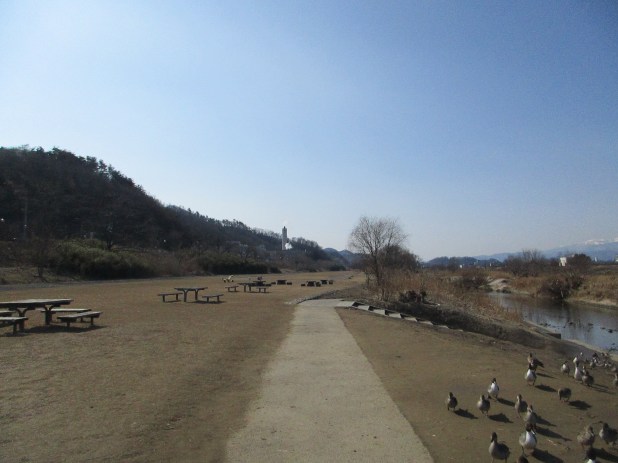
If we look to the left, we see that there are no birds…

They are attracted to this spot by the food.

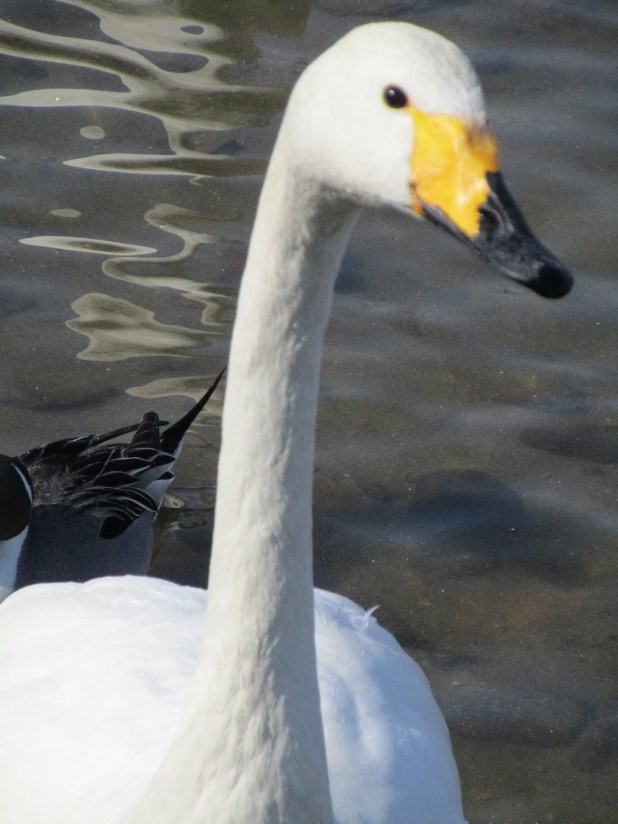
Pretty swan

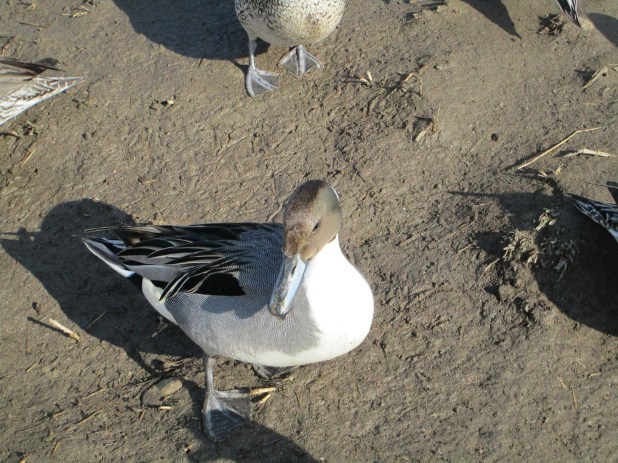
A pretty wild duck

IMG_6092

A pretty crow! (This was the only crow in this flock. I think she has figured out where to snag a free breakfast!)

Do you see any cranes?

No, you won’t see any cranes here. Cranes no longer live in Tohoku. In Japan, they live in Hokkaido nowadays. (I learned this doing research for my manuscript.)

Soaring…

What a lovely spot to visit!

Bicycling to …..?

Last Monday morning, I left early on my bicycle and rode about twenty minutes (or so) away.

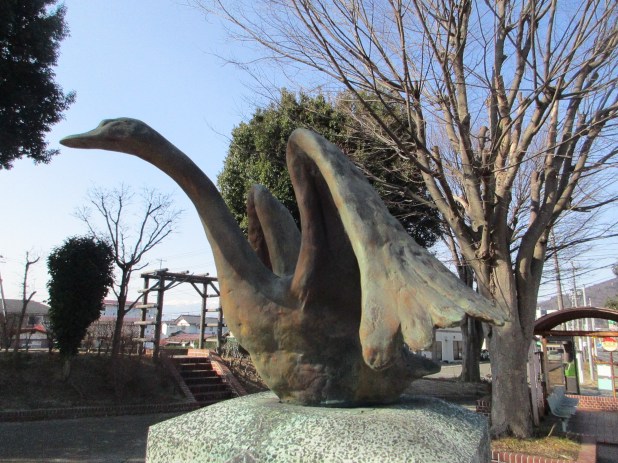
Do you know what I wanted to see? The sculpture above is a huge hint!

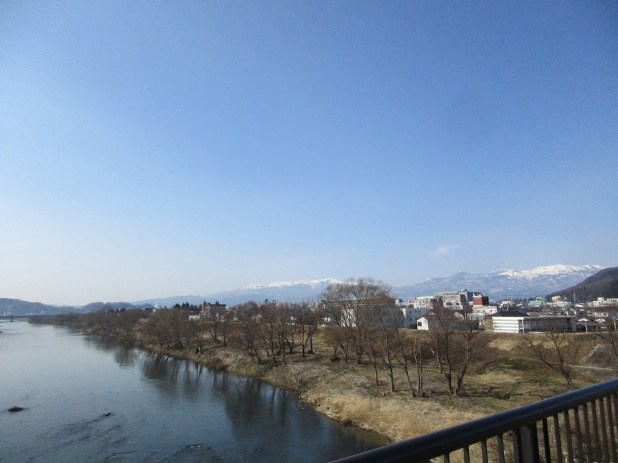
A river

A river bank.

A bridge.

A special spot……..

Can you see? Can you see? Well, I’ll show much better photos tomorrow. Today is just a teaser before the main event.

Hina Dolls in Ichii Grocery Store in Fukushima City

Hina Festival is March third. I thought I would give more information about the dolls.

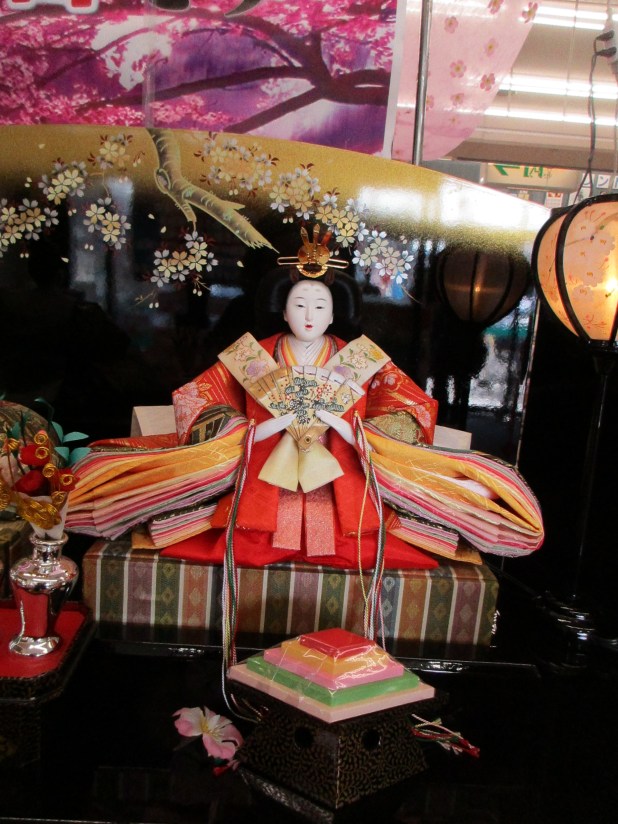
I saw a Hina doll set at a local grocery store called Ichii, and the following photos are of that set. (The stairway is in the same grocery store.)

The emperor doll

What’s the proper name of this doll in Japanese?

I’m not quite sure because there are various names for the emperor (and his actually name is rarely used.)

But the emperor can be called Tennou Heika. 天皇陛下

The empress doll

Called “Kougou Heika.” 皇后陛下

(Heika is an honorary title, like His Majesty.)

This is one of the three Ladies-in-Waiting. As a group, they are Sannin Kanjyo. 三人官女

Here is a photo of Ichii’s entire set:

It’s lovely, isn’t it? This is a three tier set.

There are lots of kinds of sets, with various levels of tiers. (Although people nowadays tend to buy smaller sets that fit in small homes.) Hina Festival dolls are unique to Japan. Not borrowed from other countries or cultures!

Here is a link which explains the Hina doll sets in more detail.

https://www.juho-tougei.com/english/sekku3_en/what/hina.html


Hina Dolls at Nakago Department Store in Fukushima City

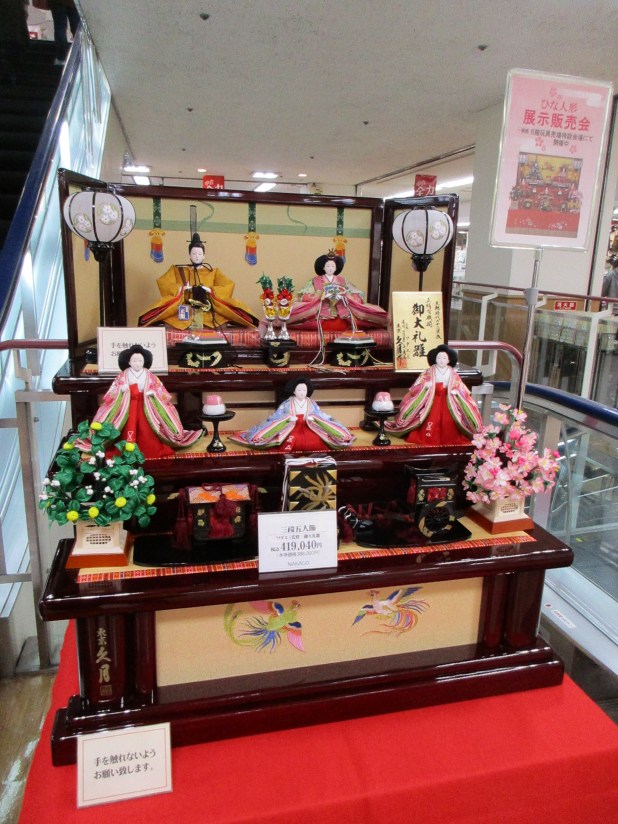
These are Hina Dolls. Sets like these are very expensive. This particular one (you can see the price) costs around 4,000 U.S. dollars.

Also, there is a sign (left bottom corner) saying “Please don’t touch.” For Japanese people, this goes without saying, actually. Everybody knows not to touch a lavish set like this. Hina dolls are decorations–NOT toys.

The Empress…Notice her many layers of Kimono. On a princess’s wedding day, she wears MANY layers of of kimono.

Her husband, the emperor.  Royalty passes through the males.

The three woman below are servants. Some sets have more servants than this.


WAIT! HOLD EVERYTHING! I just realized that you may not know who is the emperor and empress of Japan. I can’t copy and paste their photos here because that would be illegal, so I will use a link.

http://www.kunaicho.go.jp/e-about/genealogy/koseizu.html

Akihito Sama (I am using his name but NOBODY uses his actual name. He’s the emperor) is currently the emperor. Like England’s queen, he has no true power. He’s a figurehead.

His wife (Michiko Sama) was not royal, but came from a wealthy family. Their marriage was not arranged. The story about them meeting while playing tennis is very famous. She is very well-liked in Japan.

They have two sons, the heir and the one who is allowed to grow out his hair because he’s not the heir. (If you don’t believe me, go look at their photos in the link I provided.) The emperor and empress also have a daughter. She married, and because she has married, she is no longer considered royal. (Yeah, it sucks. Feminists, come to Japan. You have a job to do.)

THIS IS WHERE IT GETS CONFUSING. PAY ATTENTION NOW.

Both sons are married.

The first son and his wife have only one child–a daughter.

The second son and his wife had two children–two daughters.

UH OH!!!!!!!!!!!!!!!!!

Wait, wait, wait. Did you read this line above? The one that says, “Royalty passes through the males.

UH OH!!!! AND YIKES!!!!

Three girls….no male heirs. Japan is doomed.

Wait, second wife saves the day.

Years after her second child, she gives birth again—to a boy.

JAPAN IS SAVED!!!!!!! Yay!

There is now a male heir to carry on the line.


All girls be like “um, hooray  ?”
 

Hina Festival Snackies

The Hina Festival (also called the Doll Festival) falls every year on March third. It’s primarily a girls’ festival.

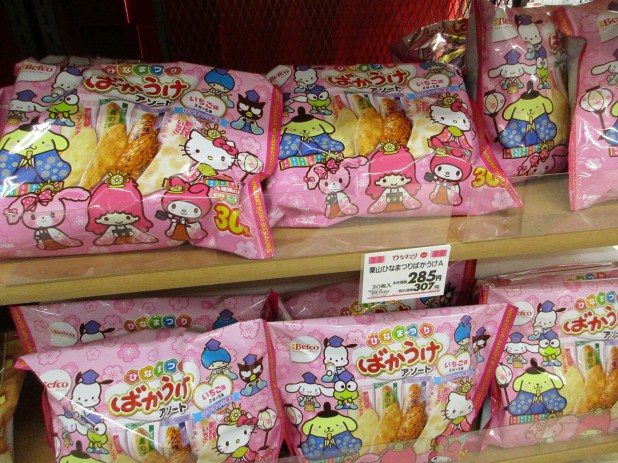
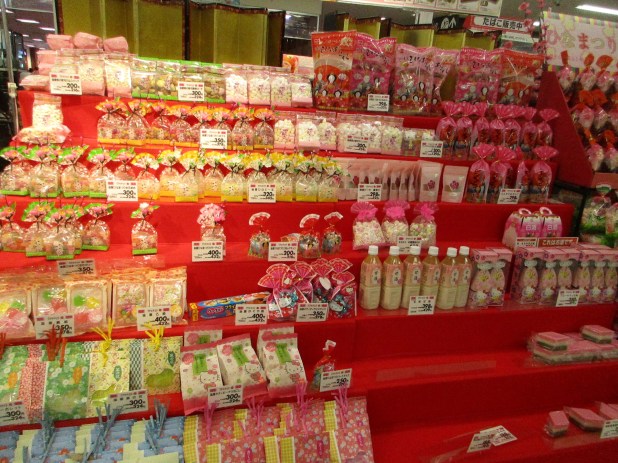
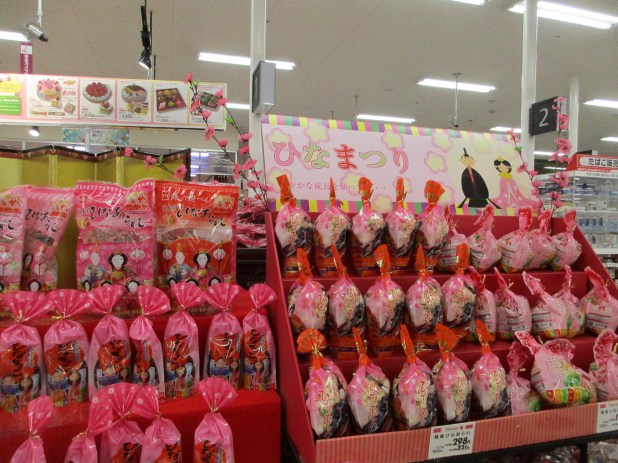
When I was shopping at a local grocery store (AEON), I snapped these photos of seasonal snacks for the Hina Festival. In the above photo is senbei (rice crackers.) I don’t think the rice crackers being sold here are any different than other rice crackers, really. It’s just that the packaging is cute and pink and Hina-y.

I was thrilled to find these Hina Tirolle chocolates! I’ve seen these on the internet, but only AEON seems to have these particular Hina ones in Fukushima City.  (Not the other grocery stores.)

I bought a package and set them up as a miniature (and very cute) doll decoration.

Various Hina snacks. I’ll tell the truth…I don’t buy these snacks. I am sure they taste fine, but I have a son, not a daughter. And YES I know boys can love pink….but my son doesn’t love pink. He knows these are for girls….and he won’t eat them. So if I buy them, they will go uneaten, unless I eat them….(and I don’t need the calories.)

The colors of Hina Festival (for snacks) are white, pink and light green. This is Hina Arare, a famous Hina Festival snack. It is a LOT like Super Sugar Puffs cereal (an American cereal) but without all the sugar and sweetness.

Arare is just slightly sweet. (Not sweet enough for most Americans, I think.)

You can see a man and a woman on the sign and on the snacks–that’s the emperor and empress. (Not necessarily the current ones. I’m speaking figuratively.) Their dolls are the symbol of the Hina Festival.

Riding my bike around the neighborhood

This morning I rode my bicycle around. I stopped right at this point because I saw a  a cute orange and white cat. But the cat kept running from me, hiding under cars. She did not want to be photographed! And then swans flew over my head in a beautiful V formation, but I missed a photo of that because I was concentrating on the cat.

Typical house style for Fukushima City.  I walked up the stairs of the embankment to the right.

Looking down towards the downtown of the city. That’s Mt. Shinobu in the background.

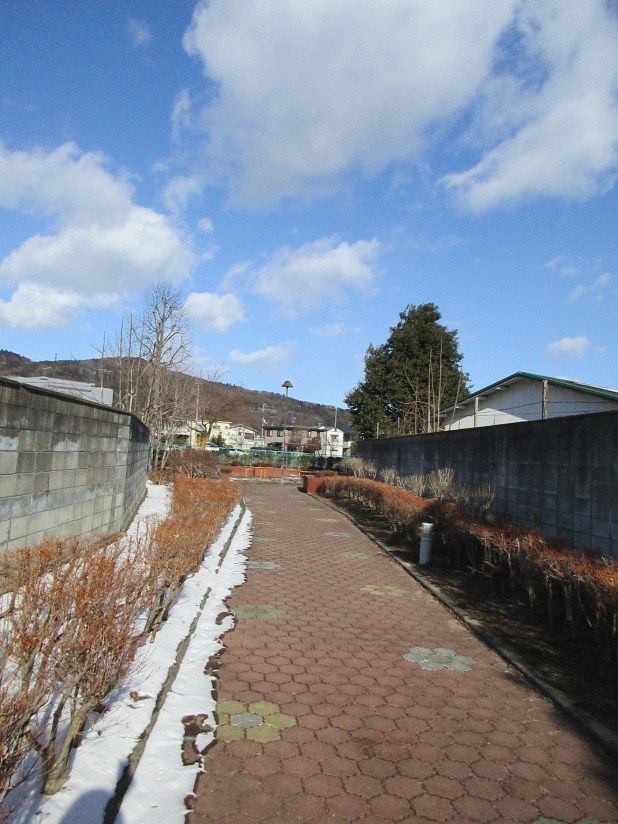
Path to my left.

Straight ahead. (That’s a river below the mountain, but it’s hard to see well.)

Path to my right.

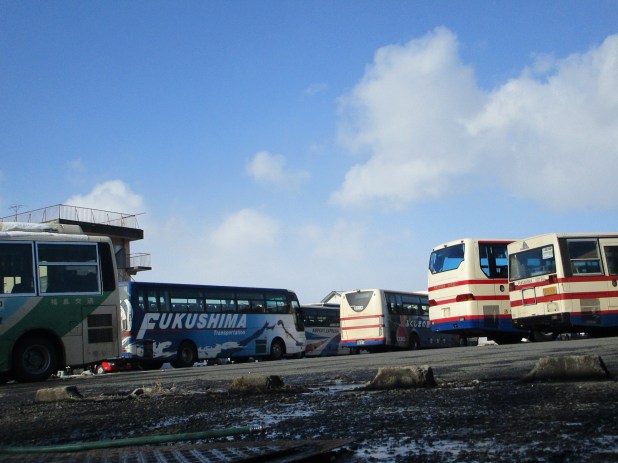
Back on my bicycle, passing by the Fukushima bus depot.

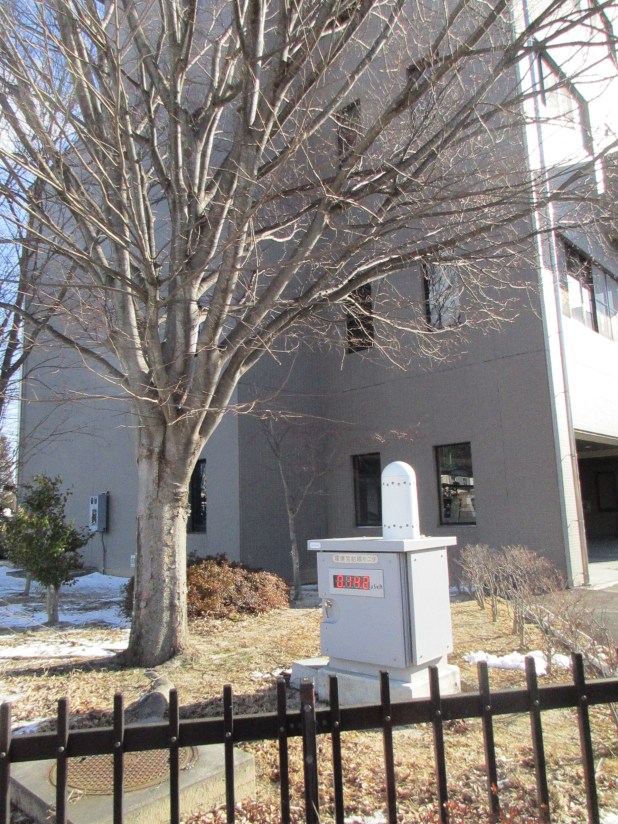
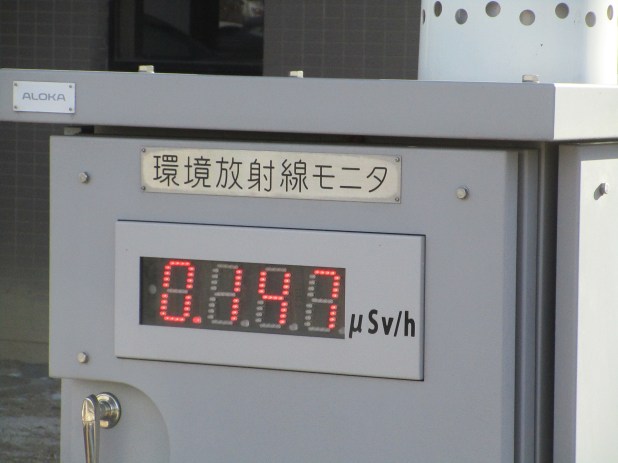
Here’s a radiation dectector–now a very common sight in our area.

.147 usv/h

That’s considered a safe amount.

Close to the amount (.127) in my home with my personal dosimeter, shown in this post a few weeks ago:

Today’s Radiation Detection results….

I decided to go down this path.

Singing to myself. I’ve got a fantastic singing voice. (One of the previous two sentences is a lie.)

Oh, another R2-D2.

Beep Beep Blurp .120

Thank you, R2.

You can tell by the design on the left that we are by the horse racing track. It’s only open when there are horse races, which are usually on the weekends.

Oh, I found a kitty! My mission is a success! Her human servant told me that her name is Mike. (Pronounced “Mikay.”) Mike means calico, a Mike Neko is a calico cat. (“Neko” means cat.)

I hope you enjoyed our bicycle ride. Now take it easy and go pet a cat!

Nuclear Power: From Fukushima to Niigata

Let’s do a  recap about the nuclear power plant situation in northern Japan.

1.) On March 11, 2011, a power plant in Fukushima Prefecture melted down due to a tsunami (which was caused by a huge earthquake on the ocean’s floor.)

2.) Despite being located in Fukushima, the power plant was owned by a Tokyo company (TEPCO) and supplied electricity to Tokyo. So while it was a source of jobs for Fukushima workers, it wasn’t really related to Fukushima much at all.

3.) After the nuclear plant melted down, all nuclear power plants in Japan were shut down. Tokyo no longer had a reliable source for its electricity. Now, years later, some nuclear power plants have started up again, but TEPCO still very much wants to replace electricity supplied by the Fukushima two power plants (one which melted down, one which didn’t.)

So…TEPCO wants to start up a (currently) idle nuclear power plant in Niigata.

https://www.theguardian.com/world/2017/dec/28/fears-of-another-fukushima-as-tepco-plans-to-restart-worlds-biggest-nuclear-plant

As a long-time Fukushimer… I see that TEPCO is getting its electricity from…where? Again, where? From a prefecture in a distant galaxy, far far away.

I made this cartoon, based on a popular meme that is going around:

It’s like TEPCO is tired of its old girlfriend (Fukushima) and wants a fresh new girlfriend (Niigata.)

Where is Niigata? It’s about as far away from Tokyo as Fukushima. So, in my opinion, very far away.

WAIT!!!!!!!!! (You may be saying.) Weren’t people in Tokyo horribly troubled by the earthquake and the radiation scare?!?! It was a disaster for THEM!

Well, it depends on who you ask. If you ask people in Tokyo, the answer may very well be yes. And if one looks at international news (which focuses almost solely on Tokyo) it appears so. But from the point of those of us in Fukushima….Tokyo had it extremely easy.

That may sound like Tokyo-hate, but it’s not. I don’t hate Tokyo. It’s the truth, though–where would you rather have been during the meltdown in Fukushima? In Fukushima? Or much further away in Tokyo? Yeah, um, me too.