Okawa Elementary School Decision Reached by Court: Money paid to Families (and this will be appealed!)

I subscribe to the Yomiuri Junior High/High School newspaper. While it is easier than their regular newspaper, it’s still hard for me (or rather I should say, time-consuming) It doesn’t have very much furigana, so I have to look up the kanji that I don’t know.

Anyway, I was reading this article (above.) After the earthquake in March of 2011, a huge tsunami hit the coast of northeast Japan. Many students at Okawa Elementary School died due to the tsunami. Of all the horrible consequences of the tsunami, it is definitely one of the most heartbreaking.

The news article says that the court has decided that the school was not adequately prepared in the case of a tsunami. Money must be paid by the government to the families of the victims.

You can read an article about it in English here:

https://mainichi.jp/english/articles/20180426/p2g/00m/0dm/073000c

https://www.japantimes.co.jp/news/2018/04/26/national/crime-legal/sendai-court-blames-lack-local-government-plan-deaths-school-children-2011-tsunami/#.Wv_5FExuKoA

But the government is appealing. I’ll bet this is making them VERY unpopular as it was a horrific tragedy. And yeah, if those numbskull teachers (May They Rest In Peace) had just gone to higher ground, the children would have been saved (and also the numbskull teachers who died in the tsunami would have been saved.) Obviously nobody wants to die. So the numbskull teachers who were killed were just following the school’s numbskull tsunami plan* that the numbskull government had devised.

One good thing about Japan is also its bad thing:  It’s a nation of rule followers. That’s wonderful, except when rules SHOULDN’T be followed (as in the case here. Rather than going to the previously chosen designated spot, the school students and teachers should have gone to higher ground, easily doable because there was a large hill/mountain next to them.) I know that hindsight is 20/20. Yet, when one hears reports that students were begging their teachers to allow them to run up the mountain…and the teachers didn’t listen to their pleas…it’s heartbreaking.

https://www.japantimes.co.jp/news/2018/05/09/national/crime-legal/ishinomaki-appeal-ruling-students-tsunami-deaths/#.Wv_5KExuKoA


*Upon reading this a few days later, I realize I made a mistake with my wording. The school did not have tsunami plan. They school had an EARTHQUAKE plan. I think that the government, as well as teachers probably, felt that a tsunami plan was not needed because the school was inland enough that a tsunami (from the coast–which was far, but still sort of near) would never hit the school.

This was COMMON thinking. Many people died because they thought they were in a safe location (far enough from the beach.) They didn’t anticipate that the quake was so incredibly big at the floor of the ocean, and they didn’t anticipate that the resulting tsunami would be so incredibly huge.  We see this also in the nuclear power plant. TEPCO did not believe that such a huge tsunami would ever occur, and thus did not make the wall between the power plant and the sea large enough to protect the power plant.

The teachers themselves did not know what was going on–there were reports they were arguing among themselves about what to do. (It must have been horrible.) Remember that the typical time for the tsunami to occur after the quake was about forty minutes or an hour. (This is all the time people had to prepare.)  This is VERY little time, as you can imagine, especially considering nobody knew what was going on, where the epicenter was, etc.

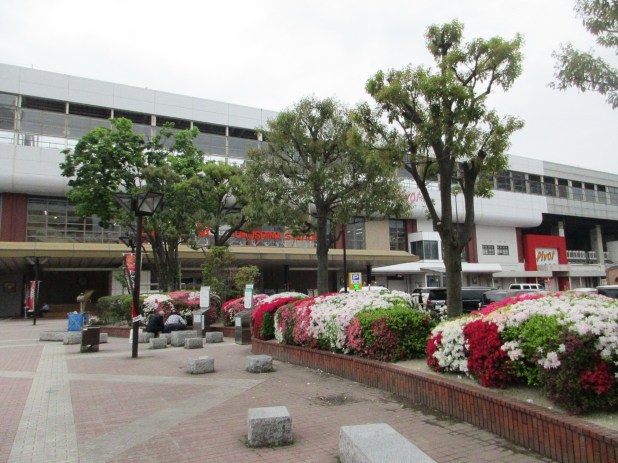


Fukushima City Train Station, West Exit

I live on the east side of the Fukushima City main train station. I think the east side is actually the more touristy side. However, if you arrive by bus or by bullet train in Fukushima City, you may arrive on the quieter west side. (To get to the east side on foot, take the stairs under the station. There’s an underpass.)

I don’t go to the west side very often, except to shop at ItoYokado (not a tourist destination! It’s a regular shopping area for people who live here. So if you want to see regular Fukushima residents buying socks and laundry detergent, it’s a good place to go.)

It’s May now and the flowers are so pretty. Train stations are often the main part of a town or city in Japan.

Not every town in Japan has a train station, though. Smaller towns may only be accessible by bus or car.

If you are a tourist, the main place you’ll want to visit is the Corasse building, the glass building in background. The reason is because it has a store devoted to products from all over Fukushima Prefecture. It’s a great place to buy presents for people. (I often shop there for people who live outside of Fukushima, but I don’t shop there for myself as it is quite gourmet and therefore rather expensive.)

The tracks on the right are the bullet train tracks.  Notice they are raised high. The bullet train starts at Tokyo, travels north to Fukushima City, and then (depending on which one you are on) veers to the north-west or goes up straight north. Yes, bullet trains are expensive, but they are fast. If you are in Japan as a tourist, try to take a bullet train at least once so you can brag about it back in your own country. 🙂

Bob-tail

I don’t talk about my writing process for fiction here much. I write middle grade. Middle Grade is the industry term for books for kids approximately ages ten to twelve, or so. Young Adult is for teens, but I can’t write young adult because I was an extremely boring teenager. (Meaning I did not have a boyfriend who was a vampire, I did not engage in any battles to the death, and I never left behind audiotapes blaming thirteen people for the reasons why I died. Yep, I was boring.)

So anyway, I do middle grade. As yet unpublished. But still very very very very very very very good. (My mom thinks so.) Anyway, I wrote a cat into one of my manuscripts. It was set in Japan, and at first I made the cat an exotic “American shorthair.” (I was amazed when I first came to Japan, and discovered that one can buy pedigreed American Short Hair cats at pet stores for the yen equivalent of hundreds of dollars.) To me, American Short Hair is the kind of cat that almost everybody in the U.S. keeps as pets, and they always get them for free.

Anyway, I thought about it, and thought about it, and I changed the cat in my manuscript to a Japanese Bobtail. Why?

I had never seen a Japanese Bobtail in the U.S. NEVER! The very name sounded exotic.

But then in Japan, I saw one almost immediately! “Wow!” I exclaimed. “Japan really does have Japanese Bobtails!!!!!!!!”

The Japanese Bobtail cats are free cats here, not the pet store cats. (You know….your neighbor’s cousin’s friend’s cat had kittens and you want a kitten, and well, you’ve heard there’s two tabby brown and one gray, but the gray’s been taken so you have your choice of the male tabby brown or the female tabby brown, and they’re both really cute and sweet and free and they’ve got bobbed tails.)

Roughtly ten to twenty percent of the cats here in Japan are bobtails? (I’m guessing. This statistic is NOT scientific.) Their tails are naturally bobbed. They were not cut off! It’s a genetic thing.

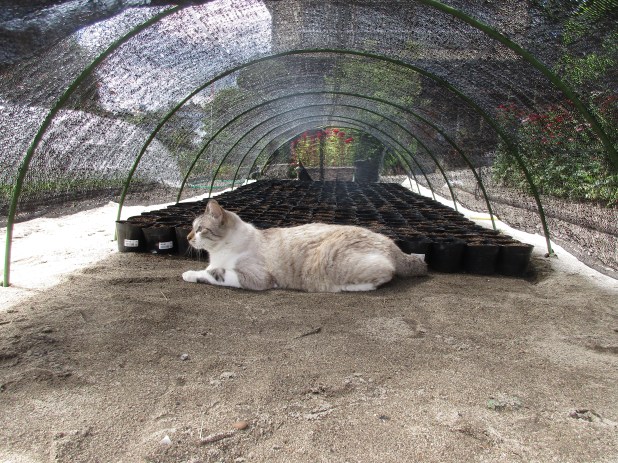
So anyway, my parents’-in-law cat is a cat that they got from somebody for free, and he is a Bobtail. His photos are below.

My son named him “Hiro” (pronouced Hero), but my MIL calls him Shiro when my son leaves the room.  Shiro means “White” and is a common name for white pets. (But I use the name Hiro/Hero because it is a cool name and I love my son.)

This is our local park in Fukushima City, last Sunday morning. Another Bobtail. This is a Calico so she is probably female.


So basically, for my characters in Japan, Bobtails are “regular” cats and American Shorthairs are “exotic” cats. Funny how it reverses like that! In Japan sushi is “regular” food and turkey with mashed potatoes is “exotic.” Different countries have different points of view….

Hi, Mom! Hi, Baba!

For Mother’s Day, I’d like to express my love to my sweet and caring mother, Maxine. She is such a giving person! True story: Once (in Wichita, Kansas) my dad was driving to work on the Wichita highway. (Quiet by big city standards.) Further ahead, a bank truck accidentally released money when its doors flew open!!!!!!!!!!!!!!  Yes, it happens in real life. It sounds like a movie plot, but my dad was there and my dad is not a liar. Anyway, my dad did not stop because he had to get to work. But when he drove home that night, there were two one dollar bills on his car grill. AND MY MOM RETURNED IT. That’s how honest she is.

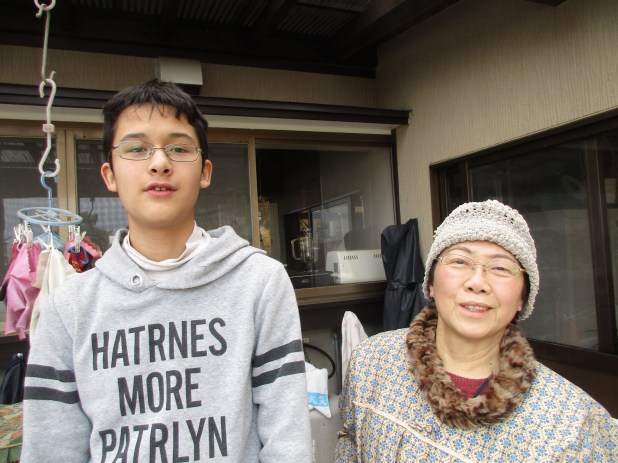
My husband’s mother, Mizue, is a hard-working woman who is also a good person. She is Obaasan (Grandmother) but we call her Baba (Granny/Gramma.) She took me and my son in after the quake in eastern Japan (she and her husband live on the west coast.) She is also very honest. How did I get so lucky to have a great mother and a great mother-in-law?

This sweatshirt was a present from Baba for my son. I think this shirt is neat because I’m always trying to figure out what it means, exactly.

Happy Mother’s Day!

and

HATRNES MORE PATRYLYN!!!!!!  Because everybody needs more Patrlyn in their lives. 🙂

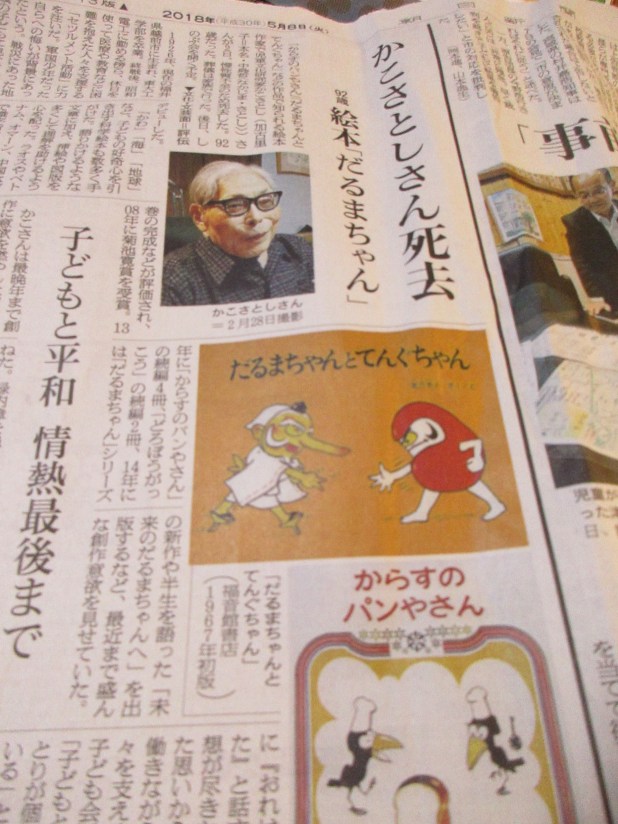
Kako Satoshi (famous Japanese writer of children’s books, and also scientist) passed away

This news has absolutely nothing to do with Fukushima. However, I enjoy books so it interests me.

A famous writer (and scientist) named Kako Satoshi has died at the age of ninety-two.

He wrote many books for kids, and also illustrated them. This is the display of some of his books at our local public library.

He is such a famous writer that some of his picture books have been translated into English. (It’s very rare for Japanese picture books to be chosen to be translated to English. Unfortunately, there are many wonderful Japanese picture books that never get translated.)

Kako is his family name and Satoshi is his given name. Interestingly, Kako Satoshi is his pseudonym. Pseudonyms are VERY common for writers in Japan.

———————————————————————————————————————————————————————————————–

What would my pseudonym be? Hmmm……that would be interesting to pick your own name!

Pen Name—–Real Name

Kako Satoshi—–Nakajima Satoshi

Natsume Souseki—-Natsume Kinnosuke

Yoshimoto Banana—–Yoshimoto Mahoko

Beat Takeshi——Kitano Takeshi

Koizumi Yakumo—–Lafcadio Hearn (I think he officially changed his name to Koizumi Yakumo, and therefore it was not only his pen name.)

Comu Comu Children’s Library in Fukushima City

Recently I have been working on a manuscript that is set in the United States, but has some Japanese themes. I haven’t written much because I feel I have to do a lot of research to get the parts relating to Japan right. I’ve been going to the public libraries in Fukushima, checking out books for kids and reading them. (A book for adults is too difficult for me. I can read an adult book, but it would take me too long.) Children’s books are short and to the point.

One of the best libraries for children in Fukushima City is the library on the first floor of the Comu Comu Building (a large building devoted to children’s activities.)

What a modern library! It was built shortly before my family arrived here (in 2006.)

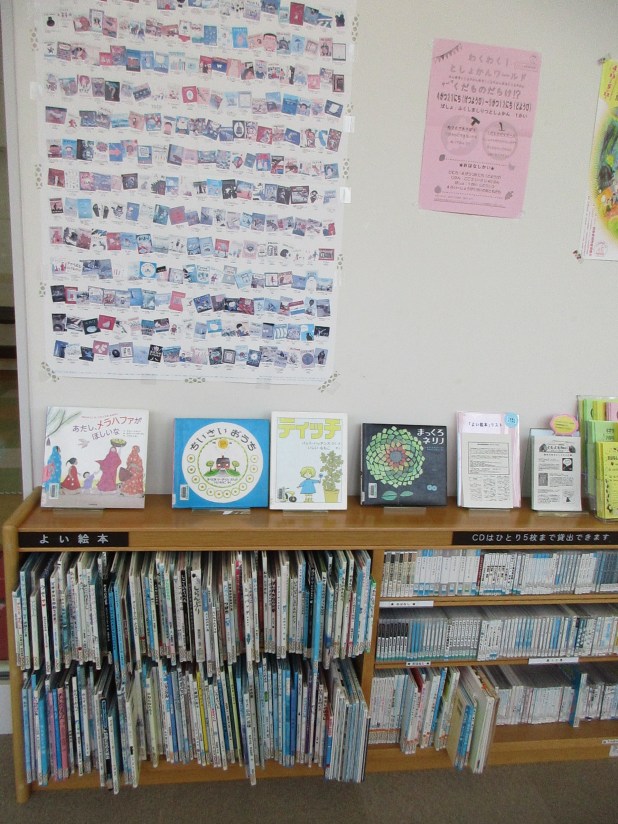
The sign says, “Yoi Ehon” “Good Picture Books”

Actually, I think these are award winners. The poster shows books which have won an award in Japan (I’m sorry, I don’t know the name of the award. I think it is sort of similar to the Caldecott.)

Child-friendly!

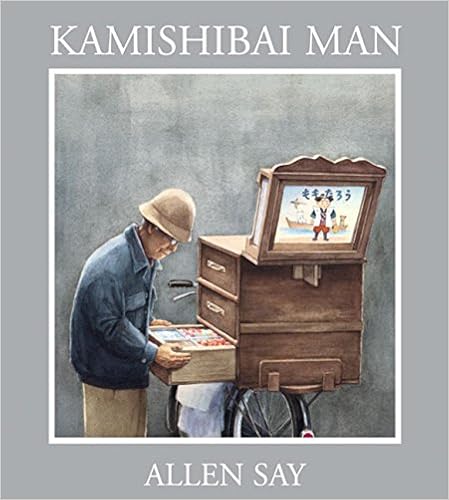
By the way, at the bottom of the photo above, you can see the Kamishibai books.

(If you’ve read Allen Say’s “Kamishibai Man”, you know the sort of book I am talking about.  )

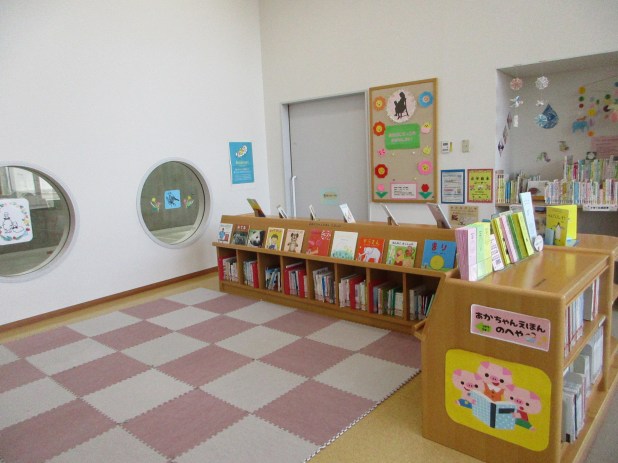
Toddlers’ area

Books in English (The main library has far more, especially in its stock room.)

More library……..

Cute decorations!

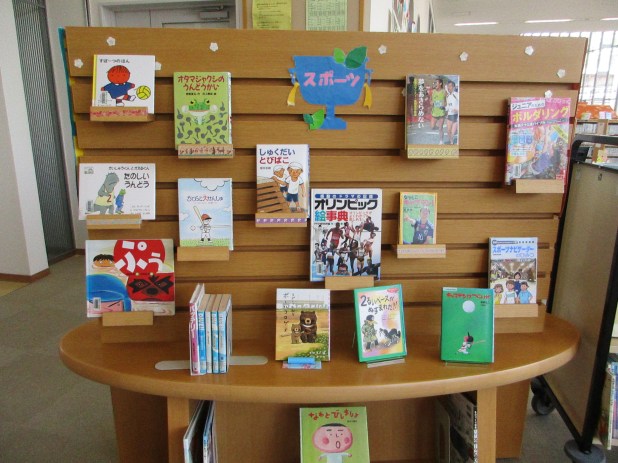
There are always a theme of books on display when one enters this library. This is the theme of “Sports.”

I love the library at Comu Comu and its friendly and helpful librarians! Comu Comu is completely free of charge to visit, and it has lots more than a library (although it is all child-related.)

Tsubasa? Tsubasa! TSUBASA!!!!!!!!!!!!!

I wanted to write about Fukushima and when I first began, I was going through dictionaries looking for names of my characters. (They are all Japanese and therefore must make sense as names to Japanese people.)

The first names I came upon were the names of two women. They are Japanese women, but in my writing I translated their names into English, and in Japanese, their names make a clever pun. (If I do say so myself.) While writing, I CONSTANTLY asked myself, “If this were translated in Japanese, how would it be translated? What would it sound like to Japanese ears?

So I found the two women’s names first, and I love their names. Their names began the book, and the feel of the book. (This book is not yet published.)

Next, I needed the names of my main characters. Combing throught my dictionaries, I decided on Haruka from my female protagonist and Tsubasa for her younger brother.

One reason is because both these two names are currently very much in use. Go to any school in Japan, and you’ll likely find a Tsubasa or a Haruka (or possibly both.)

Haruka was chosen for its meaning: Far Away. I imagined that for kids in America, Fukushima is “far away.” Thus for this reason (and other reasons) became Haruka’s name.

Tsubasa’s name means “wing.” My feeling was flying. I’m not as attached to his name as to Haruka’s. In fact, I’ve thought about changing it something else.  But obviously I must still like it, because I’ve never changed it.


So WHY did I type all that out? Well, bullet trains (shinkansen) all have names. The one we take to get to the proximity of my husband’s hometown is called “Tsubasa.”

Cool, huh?


For more info about the bullet trains:

Click to access map_en.pdf

Yonezawa Beef in Fukushima City

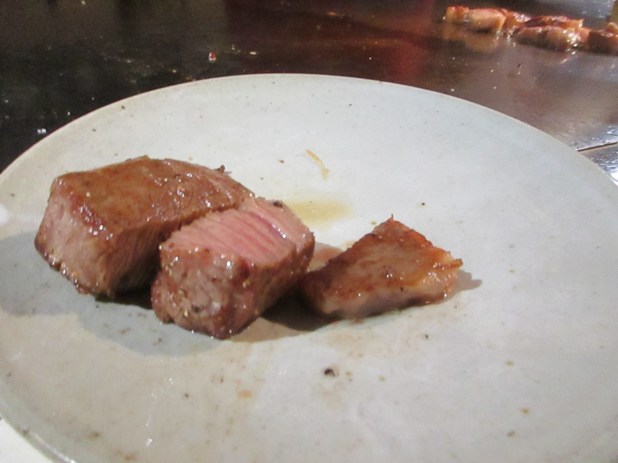
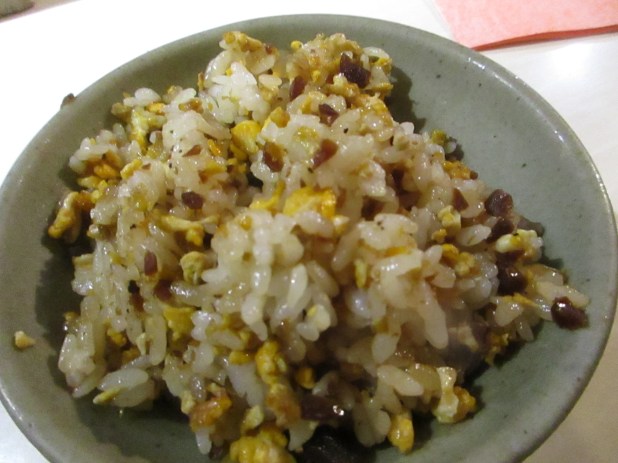
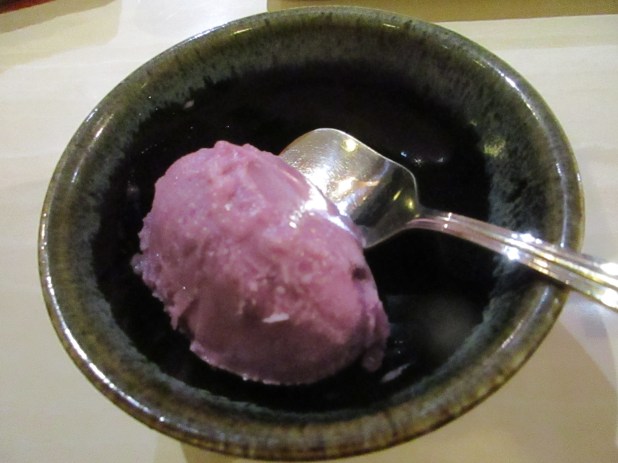
Because my son was accepted into the high school of his choice, we took him out to a restaurant to celebrate. Husband asked him what kind of food he wanted. Son said he wanted steak. So….my husband took him to get steak made from Yonezawa Beef.

We’re at the restaurant…..Classy!

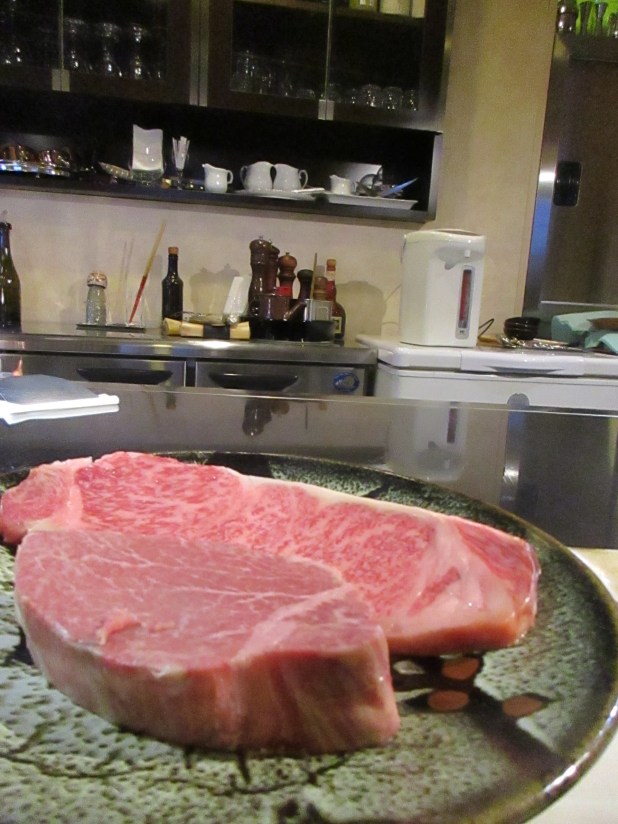
You have probably heard of the world-famous Kobe beef. (You know, the beef that Kobe Bryant’s mom named her son after.) Yonezawa beef is one of the top kinds of beef in Japan, in addition to Kobe and Matsuzaka. Here is a link of the “best” beefs

https://fastjapan.com/en/p109031

It’s listed first, second, third, fourth, etc. but they are ALL high quality and the rankings is the journalist’s opinion.

Two different cuts. We wanted to try both.

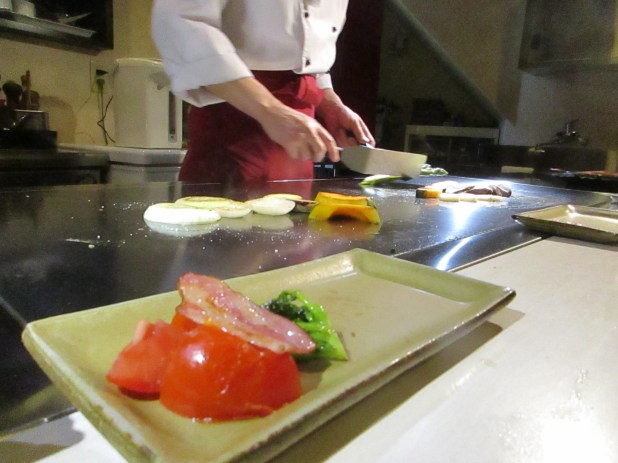
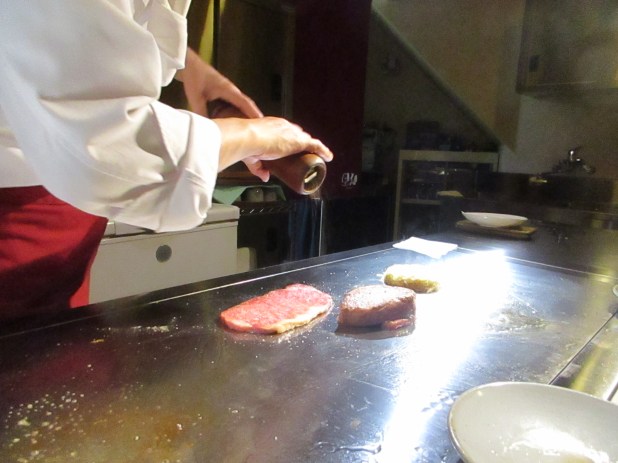
The chef cooked in front of us. He chatted with us the whole time, but did not do tricks, like in some restaurants in America.

The chef told me to get my camera ready to take a photo of this!!!!

Of course, it was delicious. Very tender.

Seafood is traditional (as it was plentiful) in Japan, and still extremely common, but nowadays chicken, pork and beef are also eaten frequently.


Yonezawa is a city in Yamagata Prefecture. (My husband is from Yamgata Prefecture.) Yamagata Prefecture is the directly northwest of Fukushima Prefecture.


Tea Ceremony

I take Japanese lessons on Wednesday morning and Friday morning. The class are run and taught by volunteers. So EXTREMELY kind of them!!!!!!!!! I ❤ my senseis (or, using the correct plural form, my senseitachi.)

Anyway, one of my Wednesday teachers is a man who is 95 years young. He is still very genki (active, good spirits, healthy.)

He himself does not do tea ceremony, but he enjoys attending it, and he invited me to go with him. We don’t have photos of the actualy tea ceremony because it is not allowed.

He told me not to wear jewelry and so on. So I dressed in subdued colors, and nothing the least bit revealing, of course. (Not that I every do. LOL Or have ever done. LOL LOL Although I probably will tomorrow.)


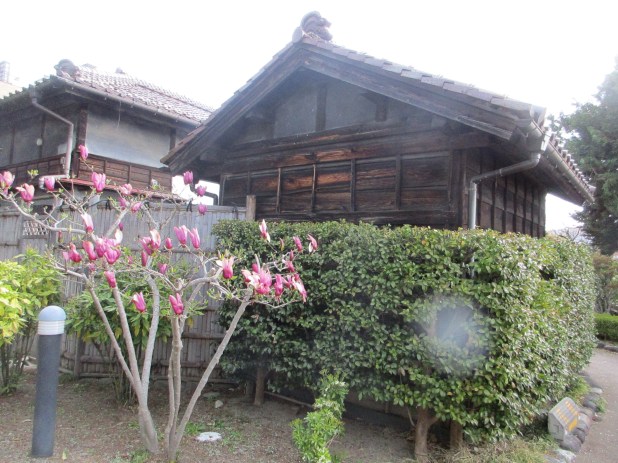
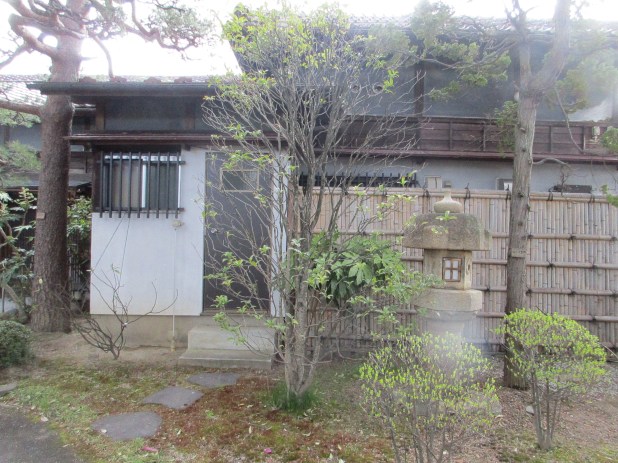
The building. It used to be a bank, but now it is a tourist attraction in Fukushima City. Sometimes tea ceremony is held in this building. (Free of charge.)

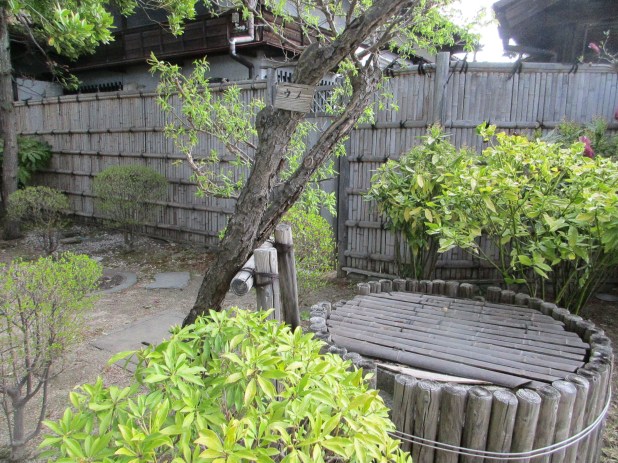
The covered well. When I see a well, like this, I imagine people coming here for water–a hundred, two hundred years ago.

For what it’s worth, my ninety-five year old teacher did not have electricity when he was young. I asked him, “Which is better? Life without electricity? Or life with electricity?”

He was like, Duh. “Having electricity is better.” Duh.

I myself have never known a life without electricity or running water. (Not counting the few days after the earthquake, of course. )

I don’t particularly like modern Japanese architecture, but this old-style is charming. True everywhere in the world, I suppose.

(In one hundred years, I wonder if Americans will say, Look at that building. It used to be a Target. Isn’t it beautiful? So charming. My gramps told me at one time people used to actually shop in stores. Hard to believe.)

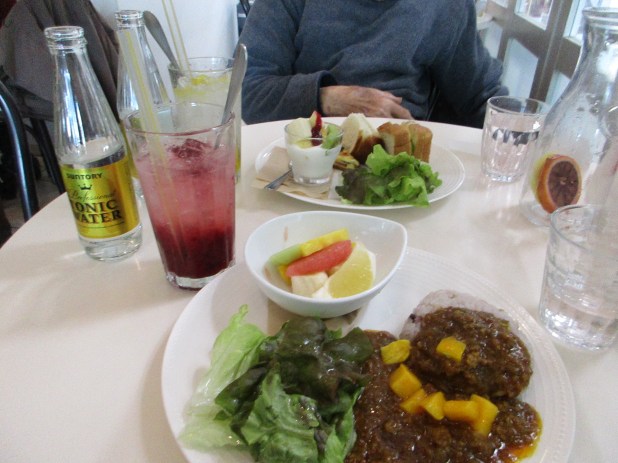
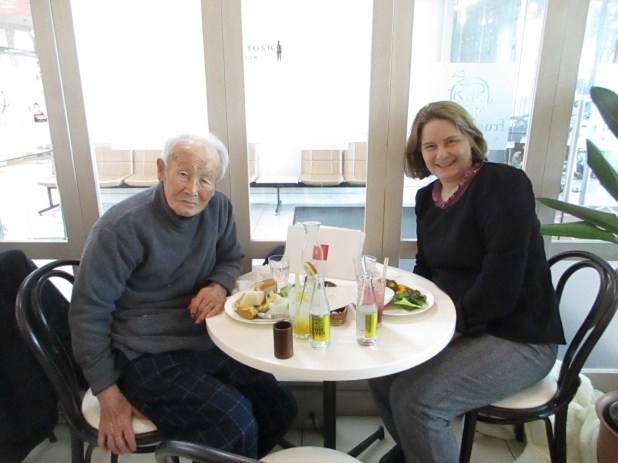
Afterwards, I invited him to lunch. He chose the same restaurant we ate at last time we got together.

We had a great time! Don’t be fooled by his non-smile. He actually smiles a lot and is a cheerful person.


Here’s a (chosen at random) youtube video about the art of Tea Ceremony. (In Japanese, it is The Way of Tea. Sadou. 茶道)